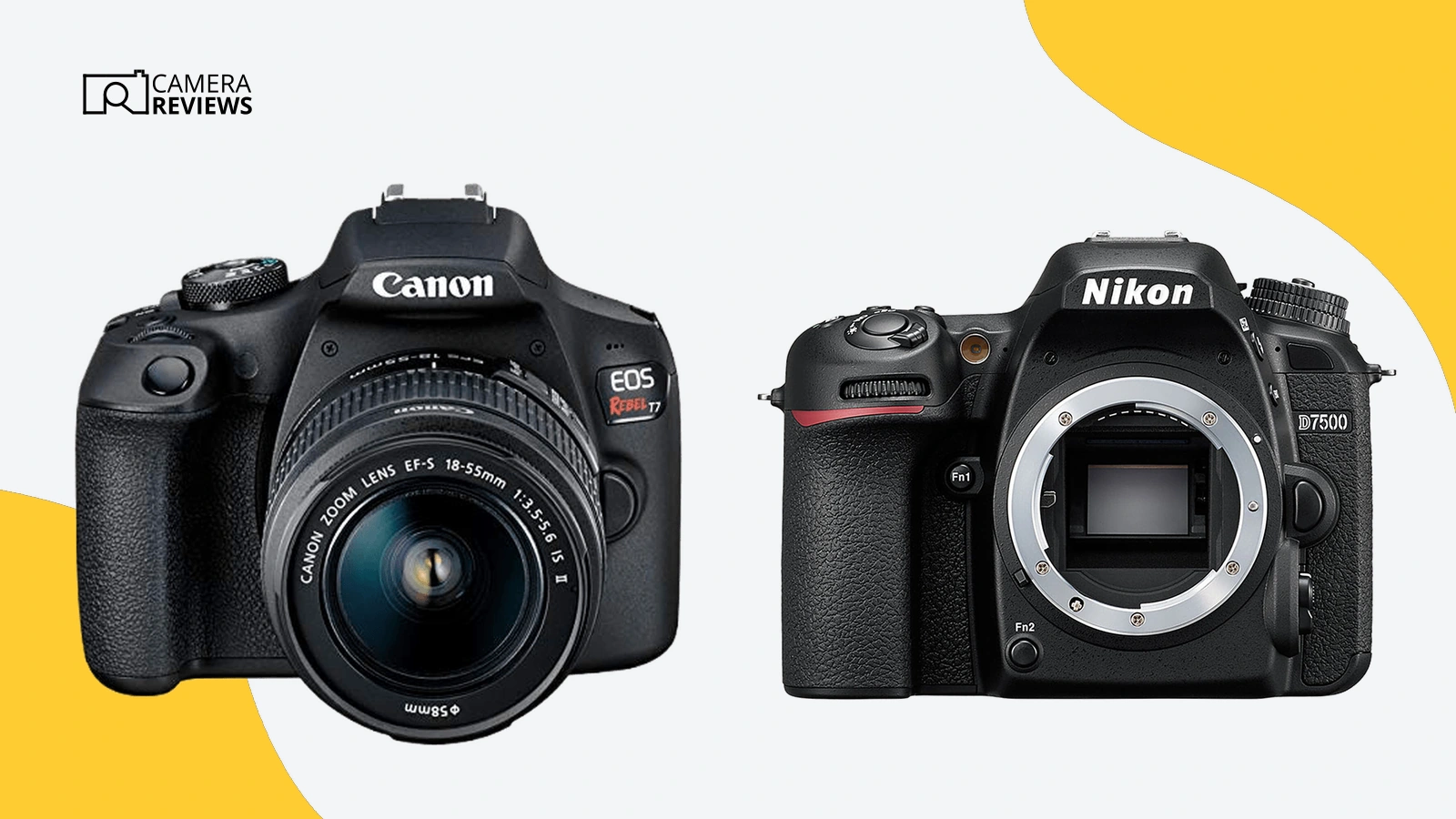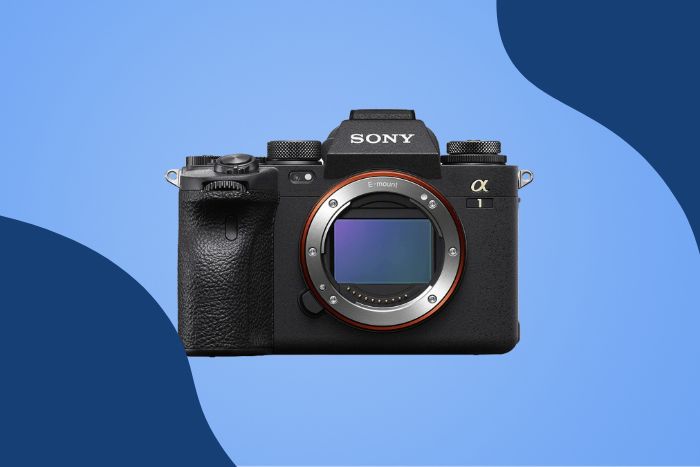
The Canon EOS R50 is our best budget travel camera for most people. Its small 18–45mm lens kit combines a viewfinder with a flexible touchscreen and autofocus that recognizes people and animals. It is a useful step up when you want more control over your travel photos without carrying a large kit.
If you rarely change lenses on a trip, a pocket zoom can bring distant details closer without a second lens. For swimming or snorkeling, choose the waterproof compact.
Our Picks at a Glance
All 7 Cameras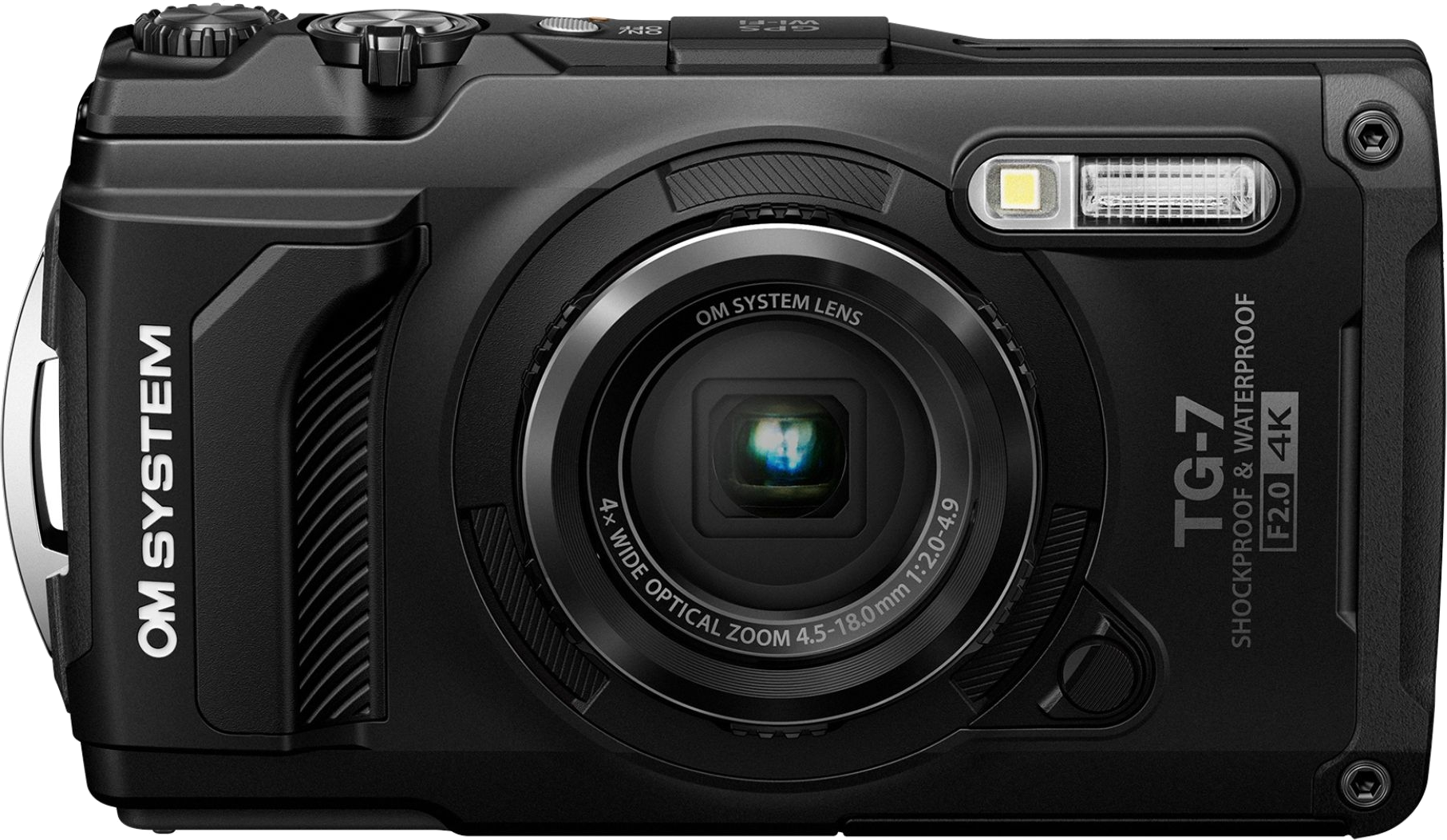
A waterproof camera with a real zoom for beach trips.
Budget Travel Cameras for Different Trips
Start with the camera you will carry all day. The three interchangeable-lens cameras need a lens as well as the body, so choose the small kit discussed below. The fixed-lens cameras keep the setup simpler, but each trades some flexibility for its smaller size or tougher build.
- People and animal detection
- Side-hinged touchscreen
- Uncropped 4K up to 30p
- Viewfinder for eye-level framing
- APS-C sensor and RAW photos
- Electronic viewfinder
- Small stabilized kit lens
- Interchangeable RF-mount lenses
- Five-axis body stabilization
- Retracting 14–42mm EZ kit lens
- Electronic viewfinder
- Tilting touchscreen
- 30x optical zoom
- Tilting touchscreen
- RAW photo capture
- USB-C charging
- Waterproof to 49 ft
- 4x optical zoom
- RAW still-photo capture
- Close-focus shooting modes
- Wide 20mm-equivalent f/2 lens
- Screen faces forward
- Microphone windscreen included
- External microphone input
- 4K video up to 120p
- Electronic video stabilization
- Front and rear touchscreens
- 47 GB usable internal storage
The Best Budget Travel Cameras in Detail
For everyday sightseeing, give more weight to a useful lens and easy framing than to the largest video number. For water or action, protection and mounting can matter more than still-photo flexibility.
Canon EOS R50
- Camera Weight
- 13.2 oz
- Sensor
- APS-C
- Photo Resolution
- 24 MP
- Max 4K
- 30p, uncropped
Strengths
- People and animal detection
- Side-hinged touchscreen
- Uncropped 4K up to 30p
- Viewfinder for eye-level framing
Trade-Offs
- No in-body stabilization
- Short-range starter zoom
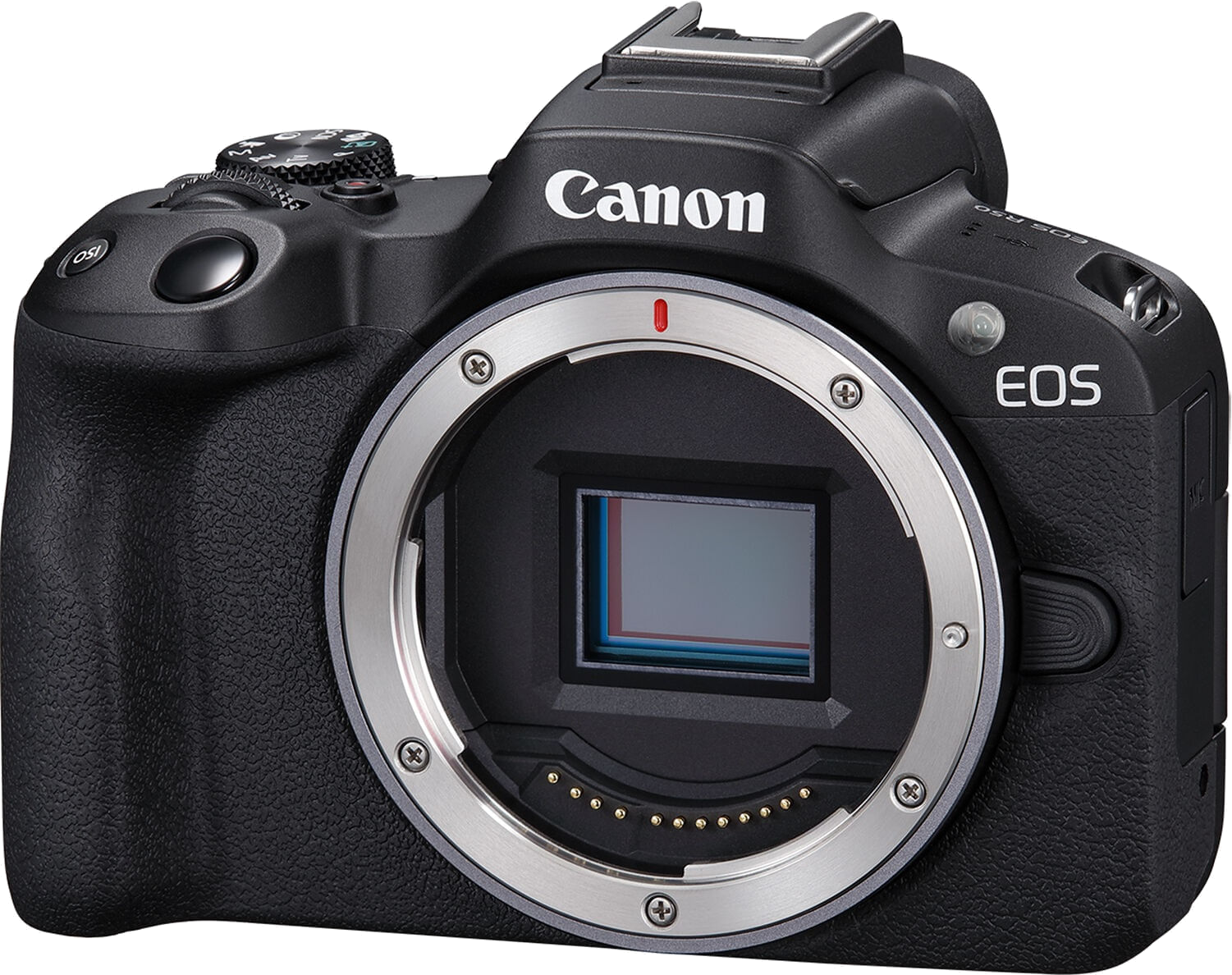
The Canon EOS R50 is a good fit for a trip that mixes family pictures with architecture and short videos. Its subject-detection autofocus can recognize people, animals and vehicles. The touchscreen swings to the side for low viewpoints or filming yourself. You also get an electronic viewfinder for framing at eye level.
Choose the RF-S18-45mm lens kit if you are starting from scratch. The camera and lens together weigh about 17.8 oz with the battery and card. The zoom covers a useful range for general scenes and portraits, although its roughly 29–72mm equivalent view will not bring distant wildlife close. Lens stabilization helps reduce camera shake. The body has no stabilization of its own.
The R50 records uncropped 4K at up to 30p, which preserves the lens's width for travel clips. That makes it a more adaptable camera for photos and video than the cheaper Canon EOS R100. The R100 is still worth choosing if most of your pictures are taken at eye level and the lower kit cost matters more than a moving screen.
For quiet interiors and evening streets, the Olympus OM-D E-M10 Mark IV is the closest alternative. Its body stabilization helps with stationary scenes. The R50 gets our overall vote for its broader subject recognition and more flexible screen.
Canon EOS R100
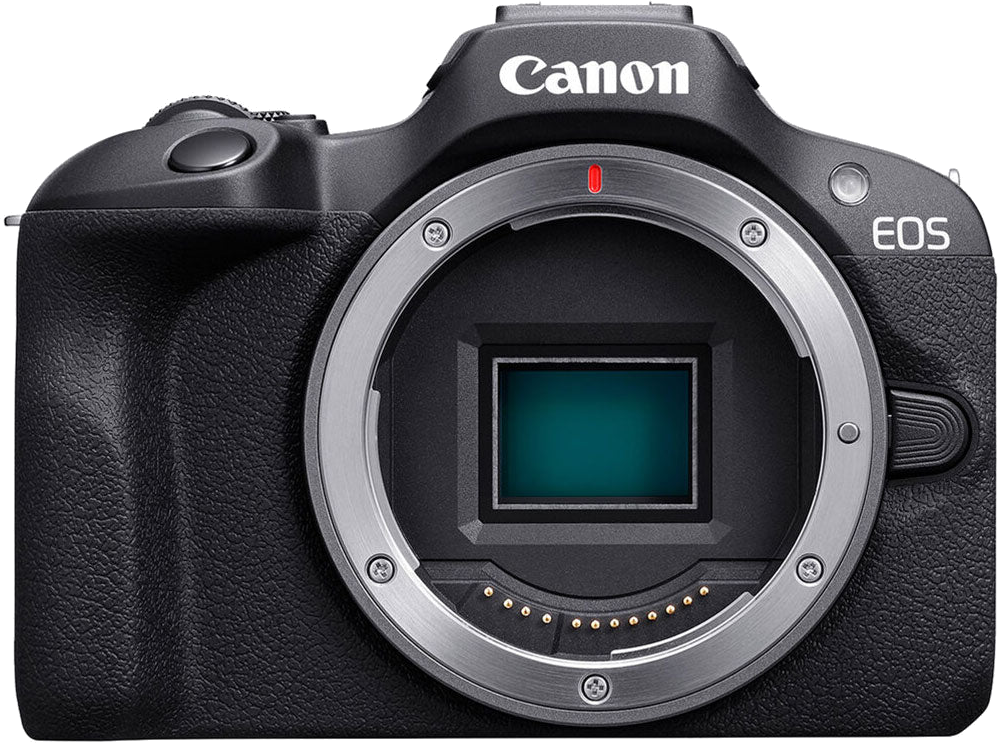
- Camera Weight
- 12.6 oz
- Sensor
- APS-C
- Photo Resolution
- 24 MP
- Max 4K
- 24p, cropped
Strengths
- APS-C sensor and RAW photos
- Electronic viewfinder
- Small stabilized kit lens
- Interchangeable RF-mount lenses
Trade-Offs
- Fixed screen without touch
- Cropped 4K and no USB charging
The Canon EOS R100 puts an APS-C sensor and a viewfinder into a low-cost travel kit. It suits someone who wants to learn photography or take more deliberate holiday pictures. You can shoot RAW files for later editing and change lenses as your interests develop.
The 18–45mm kit weighs about 17.1 oz with the battery and card. It is slightly lighter than the equivalent Canon EOS R50 setup, but the two occupy a similar place in a bag. The reason to choose the R100 is the lower complete-kit cost.
Its compromises show when you move away from eye-level stills. The rear screen is fixed and does not respond to touch. The 4K mode crops the view and tops out at about 24p in NTSC mode. Full HD offers smoother frame-rate options, but the R50 is the better choice if video is a large part of your trip.
Charging also needs planning. The R100 does not charge its battery through USB, so pack the supplied wall charger. The R100 is good value if those limits fit your routine. Choose the R50 when a moving screen and better video options justify the extra cost.
Olympus OM-D E-M10 Mark IV
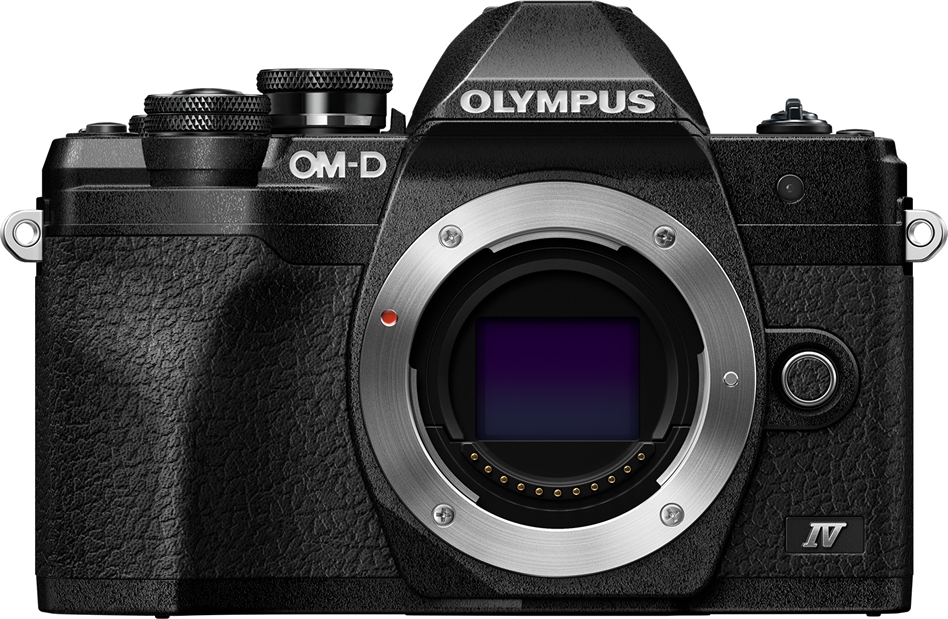
- Camera Weight
- 13.5 oz
- Sensor
- Micro Four Thirds
- Photo Resolution
- 20 MP
- Max 4K
- 30p
Strengths
- Five-axis body stabilization
- Retracting 14–42mm EZ kit lens
- Electronic viewfinder
- Tilting touchscreen
Trade-Offs
- Contrast-detection autofocus
- No weather sealing
The Olympus OM-D E-M10 Mark IV is especially appealing for a trip built around still photography. Choose the 14–42mm EZ kit for its short retracting lens. The camera and lens weigh about 16.8 oz with the battery and card. Its 28–84mm equivalent range gives you a little more reach than the Canon starter kits.
The main advantage is five-axis stabilization inside the body. It helps reduce blur from hand movement when you photograph a stationary building or an interior at a slower shutter speed. It cannot freeze a moving person. That distinction makes the Olympus more compelling for quiet sightseeing than for children running through a scene.
An electronic viewfinder and direct controls let you work at eye level. The touchscreen tilts for high or low framing and flips down for self-portraits. That downward movement is less convenient on a tripod than the side-hinged screen on the Canon EOS R50.
The Olympus uses contrast-detection autofocus and lacks the R50's people, animal and vehicle recognition. Choose it for its compact lens and stabilization rather than expecting the same tracking features. It also lacks weather sealing. The OM System Tough TG-7 is the more suitable option when the camera needs to go into the water.
Panasonic Lumix ZS99
- Camera Weight
- 11.4 oz
- Sensor
- 1/2.3-inch type
- Photo Resolution
- 20.3 MP
- Max 4K
- 30p
Strengths
- 30x optical zoom
- Tilting touchscreen
- RAW photo capture
- USB-C charging
Trade-Offs
- Small 1/2.3-inch-type sensor
- No viewfinder
The Panasonic Lumix ZS99 is the most useful choice here when you want a long zoom without packing separate lenses. Its 30x optical zoom covers a 24–720mm equivalent range. You can frame a wide street scene, then pick out a distant detail on a building from the same spot. None of the small lens kits in this guide offers that reach.
At about 11.4 oz with the battery and card, the ZS99 is lighter than the three interchangeable-lens kits. The touchscreen tilts for low viewpoints and self-portraits. RAW capture gives you more editing freedom than the JPEG-only Sony ZV-1F, and USB-C charging keeps the travel setup simple.
The trade-off is its small 1/2.3-inch-type sensor. The lens also narrows from f/3.3 at the wide end to f/6.4 at full zoom, so distant details in daylight are a better match than moving subjects in a dark room. There is no viewfinder: you frame every shot on the rear screen. Choose the Canon EOS R50 if a larger sensor, eye-level framing and the option to change lenses matter more.
The ZS99 records 4K at up to 30p, but its reason to be in your bag is the zoom. Choose it for dry sightseeing with faraway details. For snorkeling and wet trips, the OM System Tough TG-7 gives up much of that reach in exchange for water protection.
OM System Tough TG-7
- Camera Weight
- 8.8 oz
- Sensor
- 1/2.3-inch type
- Photo Resolution
- 12 MP
- Max 4K
- 30p
Strengths
- Waterproof to 49 ft
- 4x optical zoom
- RAW still-photo capture
- Close-focus shooting modes
Trade-Offs
- Small 1/2.3-inch-type sensor
- Fixed rear screen
The OM System Tough TG-7 is the choice for a beach or snorkeling trip when you still want a conventional camera. It is waterproof to 49 ft without a housing when its covers are properly closed and its seals are in good condition. Follow the cleaning and depth limits in the TG-7 manual, especially after saltwater use.
Its 4x optical zoom covers a 25–100mm equivalent range. You can move from a broad scene to a tighter view without relying entirely on a digital crop. RAW capture gives you more scope to adjust the image afterward. The close-focus modes add another reason to carry it for small details along the shore.
The small 1/2.3-inch-type sensor is the compromise. The TG-7 is more about getting the picture in wet conditions than replacing a larger-sensor camera for every scene. Its fixed screen also gives less freedom for unusual angles than a moving screen would.
Choose the DJI Osmo Action 5 Pro instead for mounted action video. The TG-7 earns its place through its optical zoom and still-photo controls. For dry sightseeing where image quality and lens choice take priority, the Canon EOS R50 is the more versatile starting point.

Sony ZV-1F
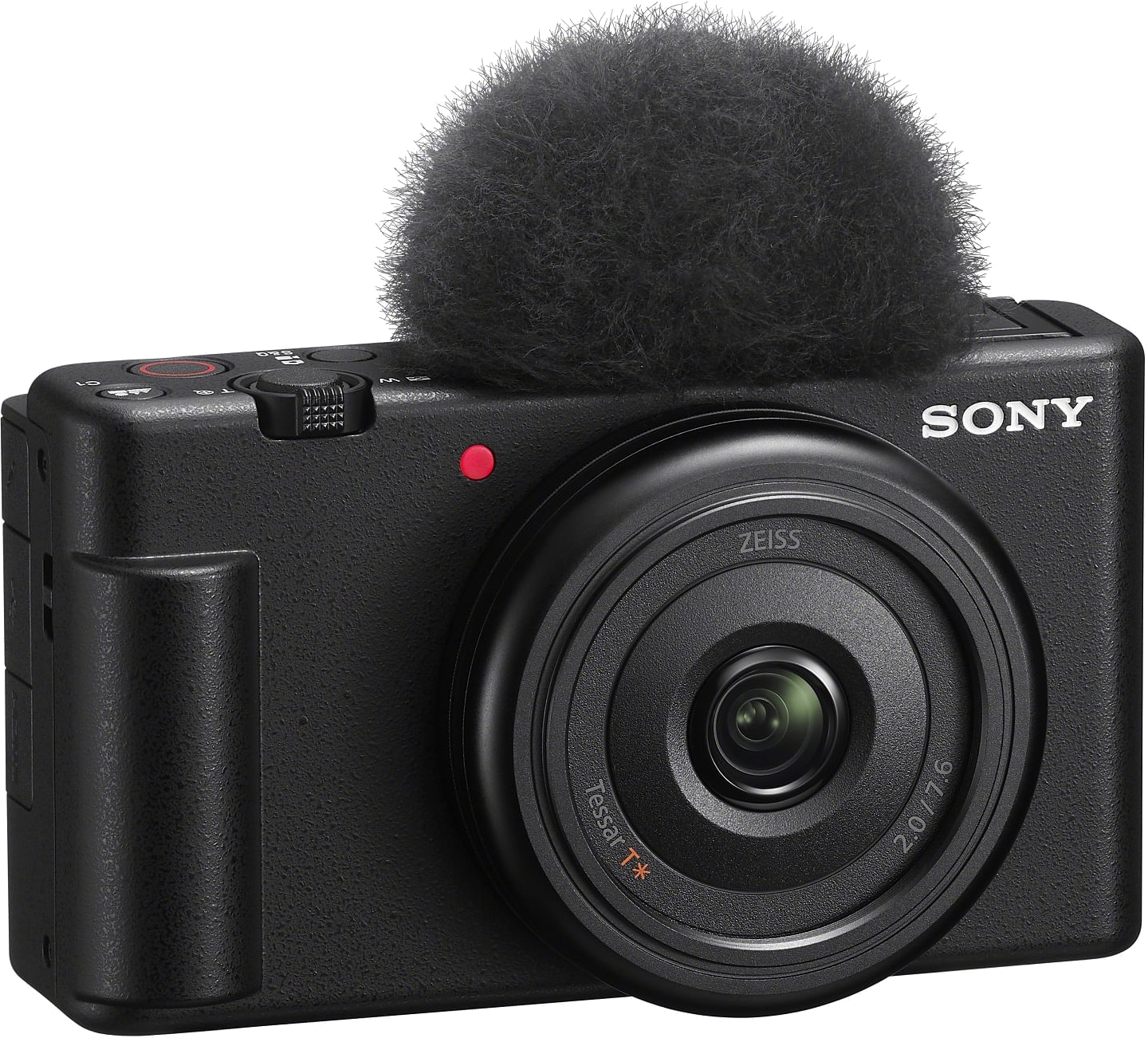
- Camera Weight
- 9.0 oz
- Sensor
- 1-inch type
- Photo Resolution
- 20 MP
- Max 4K
- 30p
Strengths
- Wide 20mm-equivalent f/2 lens
- Screen faces forward
- Microphone windscreen included
- External microphone input
Trade-Offs
- No optical zoom
- JPEG-only still photographs
The Sony ZV-1F suits travelers who mainly want to speak to the camera. Its fixed 20mm-equivalent lens gives a wide view for arm's-length framing. The screen turns toward you, and a supplied windscreen fits over the built-in microphone. You can start filming without selecting a separate lens or microphone.
At about 9 oz with the battery and card, it is an easy camera to add to a small travel bag. The one-inch-type sensor and f/2 lens are useful features in this size. An external microphone input also gives you a route to improve sound later.
Be certain that you want the wide view. There is no optical zoom, so the ZV-1F is a poor match for distant details or tightly framed travel portraits. Still photographs are JPEG-only. It lacks a viewfinder and flash synchronization, which further limits its appeal as a camera for learning still photography.
The Canon EOS R50 gives you a more flexible lens system and stronger general still-photo options. The Sony makes sense when those additions would turn a small video setup into more equipment than you want to carry. Its electronic video stabilization crops the view, so keep that narrower framing in mind when filming yourself while walking.
DJI Osmo Action 5 Pro

- Camera Weight
- 5.1 oz
- Sensor
- 1/1.3-inch type
- Photo Resolution
- 40 MP
- Max 4K
- 120p
Strengths
- 4K video up to 120p
- Electronic video stabilization
- Front and rear touchscreens
- 47 GB usable internal storage
Trade-Offs
- Fixed ultra-wide view
- Some activities need extra mounts
The DJI Osmo Action 5 Pro is the most useful choice here for mounted travel video. Electronic stabilization helps steady moving footage, and 4K recording at up to 120p lets you slow action down in an edit. Front and rear touchscreens also help when you switch between filming the surroundings and yourself.
The camera is waterproof to about 66 ft without a housing under DJI's stated conditions. Its battery cover and USB cover must be closed, and the lens cover must be secure. DJI recommends a waterproof case for prolonged underwater shooting or high water pressure.
The 47 GB of usable internal storage is a practical advantage if you forget a card or fill one during the day. A microSD card adds capacity. The Standard Combo provides the camera and basic mounting parts, but a specific bike or chest setup may need another mount.
Its fixed ultra-wide lens is the main reason not to buy it as your only travel camera. It cannot give you the optical reach of the OM System Tough TG-7. Choose the DJI for movement and video, or the TG-7 for waterproof stills with a zoom. A large photo-resolution number does not remove that difference in lens flexibility.
Is a Separate Travel Camera Worth Carrying?
Keep using your phone if you mainly take daylight snapshots and want to share them immediately. A separate camera earns its space when it adds something you need: a viewfinder, changeable lenses, RAW editing, optical zoom or a setup you can mount for action. Buying another device only to leave it in the hotel is poor value.
For a long zoom in one small camera, consider the Panasonic Lumix ZS99. For a first interchangeable-lens camera, compare a kit that includes the lens you intend to use. The small zoom kits in this guide cover general travel, but none is a long-lens wildlife setup. Budget for a memory card and the charging equipment your chosen camera needs before adding optional lenses.
Which Budget Travel Camera Should You Choose?
Choose the Canon EOS R50 for a small kit that can grow with your photography. The Canon EOS R100 is the lower-cost route if its fixed screen and charging limits suit you. For trips centered on water, start with the OM System Tough TG-7.
Our Three Top Picks Side by Side
- Optics
- 66 (highest)
- Video
- 91
- Features
- 72 (highest)
- Storage & Battery
- 35
- Optics
- 58
- Video
- 91
- Features
- 57
- Storage & Battery
- 21
- Optics
- 49
- Video
- 83
- Features
- 70
- Storage & Battery
- 35