
Canon EF 50mm F/1.4 USM vs Canon EF 85mm F/1.4L IS USM — Which Is Better?
Side by side38 specifications |
Canon · f/1.4 · Canon EF mount
Canon EF 50mm F/1.4 USM
53
SCORE
|
Canon · f/1.4 · Canon EF mount
Canon EF 85mm F/1.4L IS USM
79
WINNER
|
|---|---|---|
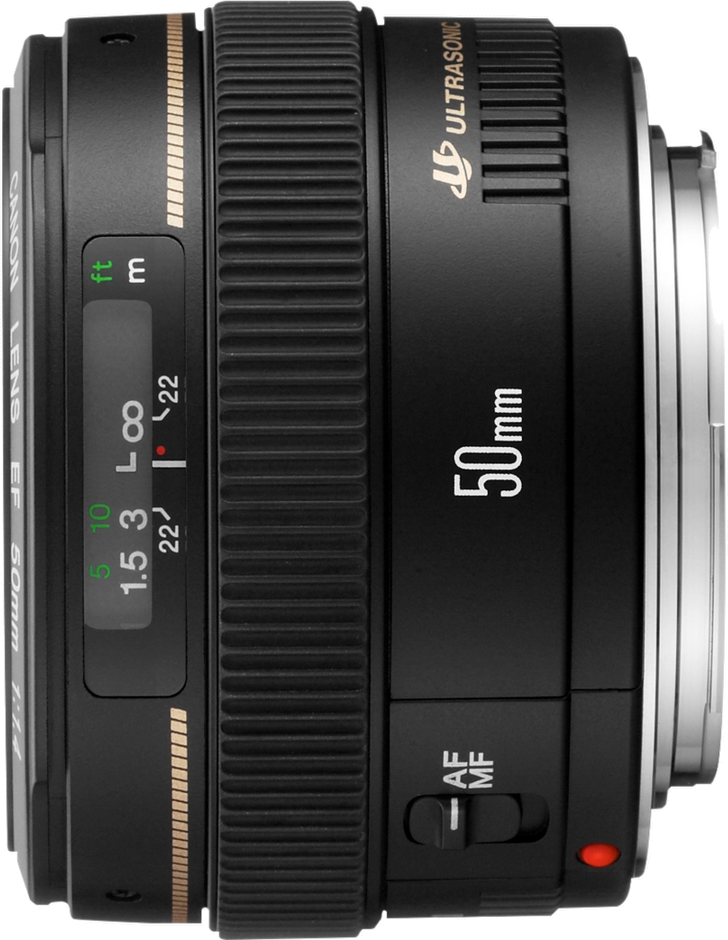 | 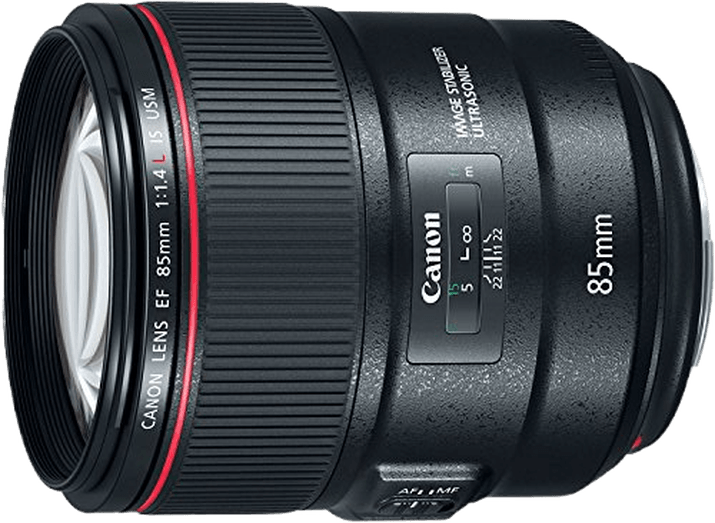 | |
| General | ||
Read the General ComparisonGeneralThe Canon EF 50mm F/1.4 USM and the Canon EF 85mm F/1.4L IS USM are both full-frame prime lenses for the Canon EOS system, so each mounts directly on any Canon EF camera body. Both provide autofocus and a dedicated manual focusing ring for full control. The 50mm arrived in 1993 as a standard prime, while the 85mm followed in 2017 as a longer lens carrying Canon's L designation. | ||
| Release Year | 1993 | 2017 |
Production Status ⓘCurrent status of lens manufacturing (e.g., in production, discontinued). |
 In Production In Production | In Production |
Pro Branding ⓘSpecific branding codes used for professional-tier lenses. |
N/A | L |
Lens Mount ⓘThe lens mount will tell you what type of lens range you can fit onto the camera body. Often the same camera company will have different lens ranges for different cameras. |
Canon EF | Canon EF |
System ⓘIndicates which camera system the lens is designed to attach to. |
Canon EOS | Canon EOS |
Maximum Format ⓘLargest sensor size compatible with the lens. |
 Full Frame Full Frame | Full Frame |
| Physical | 43/100 | 100/100 |
Read the Physical ComparisonPhysicalThe EF 50mm is the lighter carry by far: 290 g against 950 g for the EF 85mm. It is also much shorter, 51 mm versus 105.4 mm, and slimmer at 74 mm across versus 88.6 mm. That makes the 50mm the easy choice for a kit that stays small between shoots. Both lenses accept front filters, but their threads differ: 58 mm on the 50mm and 77 mm on the 85mm. A filter you already own will therefore not screw directly onto the other lens. | ||
| Lens Weight | 290 g | 950 g |
Lens Diameter ⓘWidth of the lens at its widest point |
74 mm | 88.6 mm |
Lens Length ⓘHow long the lens is from front to back. |
51 mm | 105.4 mm |
Front Filter Compatible ⓘSome lenses are compatible with front filters, some are compatible with back filters and some are compatible with both. Front filters are usually more convenient to add and remove. |
 Yes Yes | Yes |
Front Filter Size ⓘDiameter of attachable filters. |
58 mm | 77 mm |
| Optics | 85/100 | 86/100 |
Read the Optics ComparisonOpticsSubject framing is the deciding difference: the 85mm focal length gives a tighter, flattering view for head-and-shoulder portraits, while the 50mm renders a standard field for walkaround, group and environmental shots. A key similarity is the F/1.4 maximum aperture, shared by both, so either lens opens equally wide for dim churches, receptions and evening streets. The 50mm also focuses closer, reaching 45 cm against 85 cm on the 85mm. Its maximum magnification is 0.15x versus 0.12x, so small subjects such as flowers or product details fill more of the frame. | ||
Focal Range ⓘShortest to longest focal length of the lens (zoom range start - end ) |
50 mm | 85 mm |
Aperture Range ⓘLargest aperture at the lens's shortest focal length to longest focal length (aperture range start - end) |
1.4 | 1.4 |
| Focal Length Angle of View | 46.8° | 28.56° |
Flange Focal Distance ⓘDistance from lens mount to sensor. |
44 mm | 44 mm |
Diaphragm Type ⓘStructure and design of the aperture |
 Automatic Automatic | Automatic |
Blades ⓘNumber of diaphragm blades in aperture |
8020 | 9020 |
Zoom Lens ⓘZoom allows you to vary the focal length, change between long shots and close-ups |
✗ | ✗ |
Closest Focusing Distance ⓘMinimum distance for a subject to be in focus. |
45 cm01500 | 85 cm01500 |
Maximum Magnification ⓘLargest size a subject can be reproduced |
0.15x | 0.12x |
| Autofocus Mode |  Yes Yes | Yes |
| Manual Mode |  Yes Yes | Yes |
| Manual Focusing Ring |  Yes Yes | Yes |
| Features | Unscored | 73/100 |
Read the Features ComparisonFeaturesThe EF 85mm holds the working-photographer advantages here. It offers weather sealing for outdoor sessions in rain or dust, and a fluorine coating that helps fingerprints and dust wipe off the front element. Its image stabilization is rated at 4 stops for handheld shooting in dim venues. The EF 50mm has none of these, and neither lens supports teleconverters. | ||
Weather Sealing ⓘWeather sealing capabilities will give you more confidence when shooting in unfavourable conditions. |
No |  Yes Yes |
Fluorine Coating ⓘCoating to repel water and oil from lens elements. |
No |  Yes Yes |
| Built In Lens Hood | ✗ | ✗ |
| Lens Hood Type |  Round Round | Round |
Teleconverter ⓘA teleconverter (extender) is an extra piece of equipment that fits between the lens and the camera body to enhance magnification |
✗ | ✗ |
| Image Stabilization | ✗ | ✓ |
IS Efficiency ⓘIS efficiency refers to the effectiveness of the image stabilization system in compensating for the blurring effects of camera shake, quantified by the number of stops of stabilization it provides. |
N/A | 4 stops |
| Construction | 15/100 | 15/100 |
Read the Construction ComparisonConstructionThe EF 85mm uses the more elaborate design, with 14 elements in 10 groups and one aspherical element to help correct aberrations. The EF 50mm keeps a simpler 7-element, 6-group construction that includes two elements for chromatic aberration reduction. Neither lens uses internal focusing or a floating element system. | ||
Elements ⓘLens elements refer to individual pieces of glass within the lens. |
7 | 14 |
| Groups | 6 | 10 |
Aspherical Elements ⓘThe number of aspherical lens elements which can help correct aberrations such as spherical aberration. |
0 | 1 |
Bi Aspherical Elements ⓘElements with two non-spherical surfaces |
0 | 0 |
Low Dispersion ⓘElements that reduce chromatic aberration |
0 | 0 |
Super Low Dispersion ⓘAdvanced elements further reducing chromatic aberration |
0 | 0 |
CA Reduction ⓘBuilt-in features to reduce chromatic aberration |
2 | 0 |
Internal Focusing ⓘInternal Focusing means that the lens does not change in size during focusing, and the front element does not rotate. |
✗ | ✗ |
Read: Verdict
Verdict
For head-and-shoulder portraits and handheld work in dim venues, the EF 85mm F/1.4L IS USM is the stronger buy, pairing its tighter 85mm view with 4-stop stabilization, weather sealing and a fluorine coating. Choose the EF 50mm F/1.4 USM when you shoot a standard field for everyday scenes, or want closer framing of small subjects at 0.15x magnification, which it delivers as a compact standard prime.