
Canon EOS R5 vs Nikon Z8 — Which Is Better?
Side by side47 specifications |
Canon · Mirrorless · 45 MP · Full Frame · 8K video
Canon EOS R5
94
WINNER
|
Nikon · Mirrorless · 45.7 MP · Full Frame · 8K video
Nikon Z8
84
SCORE
|
|---|---|---|
 |  | |
| General | ||
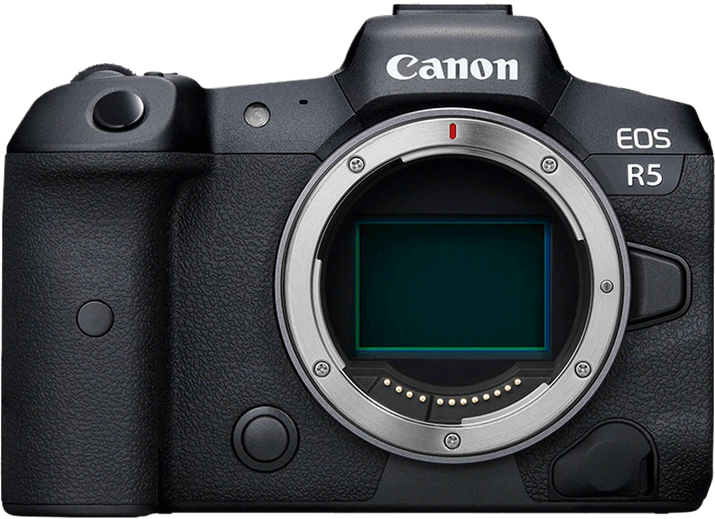
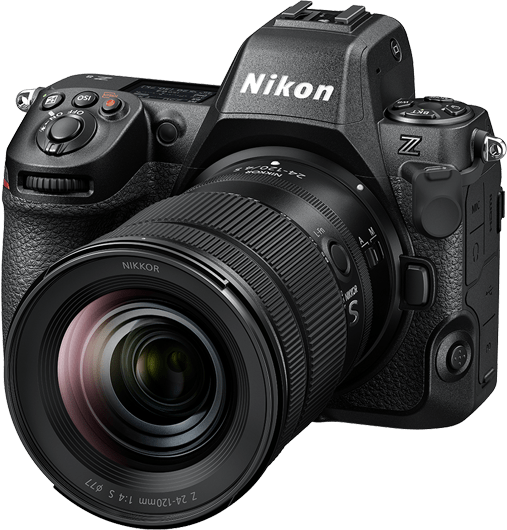
Read the General ComparisonGeneralThe Canon EOS R5 and Nikon Z8 are both mirrorless cameras, and the R5 arrived three years earlier, in 2020. It is the lighter and smaller body at 738 g and 138 x 98 x 88 mm, while the Z8 of 2023 measures 144 x 119 x 83 mm and weighs 910 g. The Z8 keeps its professional body compact because the vertical grip is an optional MB-N12 accessory rather than an integrated one. | ||
Released ⓘRefers to the year this camera was officially made available for sale. |
2020 | 2023 |
Announcement date ⓘRefers to the date the manufacturer publicly announced the upcoming release and general specs of this camera. |
July 30, 2020 | May 10, 2023 |
| Camera type |  Mirrorless | Mirrorless |
| Camera size | 138 x 98 x 88 mm | 144 x 119 x 83 mm |
| Camera weight | 738 g | 910 g |
| Optics | 86/100 | 85/100 |
Read the Optics ComparisonOpticsFor fast action the Z8 is the stronger pick, offering 30 fps against the R5's 20 fps and a 1/32000 second top shutter speed, four times shorter than the R5's 1/8000. The R5 answers with a more detailed eye-level view: its electronic viewfinder carries 5,760,000 dots to the Z8's 3,686,400. It also offers 1053 autofocus points to the Z8's 493. Resolution is nearly identical at 45 versus 45.7 megapixels, so both leave generous room to crop a distant bird or a stage performer. Each has in-body stabilisation and a full-frame CMOS sensor. The mounts differ, Canon RF versus Nikon Z, so the native lens system you prefer should anchor the choice. | ||
Megapixels ⓘThe higher the number of megapixels, the more detail the cameras sensor can capture. |
45 MP050 | 45.7 MP050 |
Image resolution ⓘImage resolution is measured in pixels and megapixels, width by height. The higher the number, the higher its resolution. |
8192 x 5464 | 8256 x 5504 |
Sensor type ⓘThe camera sensor captures light and records the image. Sensors vary in physical size, the number of pixels, and quality. |
CMOS | CMOS |
Sensor size ⓘThe sensor size contributes to the overall quality as well as the dynamic and tonal range a camera can capture. As a rule of thumb, the more surface there is to read the light, the more information it will capture. |
23.9 x 35.9 | 35.9 x 23.9 |
Sensor format ⓘRefers to the most commonly used sensor sizes. |
 Full Frame | Full Frame |
Continuous shooting ⓘThe number of sequential frames per second the camera can write to the memory card when shooting in burst or continuous mode. |
20 fps045 | 30 fps045 |
Lens mount ⓘThe lens mount will tell you what type of lens range you can fit onto the camera body. Often the same camera company will have different lens ranges for different cameras. |
Canon RF | Nikon Z |
Image processor ⓘThe image processor in the camera converts the information collected on the sensor for digital storage on the memory card. |
Digic X | Expeed 7 |
Aspect ratio ⓘThe aspect ratio refers to the proportional difference between width and height. The most popular aspect ratios are 3:2 and 4:3. |
 3:2 | 3:2 |
Min ISO ⓘRefers to the lowest native (or 'base') ISO setting. Lower ISO are less sensitive to light but make a cleaner image. |
10030200 | 6430200 |
Max ISO ⓘRefers to the highest native (or 'base') ISO setting. Higher ISO is necessary for low-light situations or night photography, but higher ISOs often introduce grain or noise. |
512003003280000 | 256003003280000 |
Min ISO (expanded) ⓘExpanded (or extended) ISO is a digitally enhanced feature available on some cameras. It allows you to push beyond the native ISO range if necessary. |
10030200 | 3230200 |
Max ISO (expanded) ⓘExpanded (or extended) ISO is a digitally enhanced feature available on some cameras. It allows you to push beyond the native ISO range if necessary. |
1024003003280000 | 1024003003280000 |
Minimum shutter speed ⓘThe minimum shutter speed will tell you the longest exposure your camera can take without using an external accessory. |
3044080 | 90044080 |
Max shutter speed ⓘThe maximum shutter speed tells you the length inside 1 second the camera will capture. These can sometimes be extended with accessories such as extra external batteries. |
800080032000 | 3200080032000 |
Autofocus points ⓘAutofocus points show where the camera is focusing graphically as squares or brackets in Live View or on an electronic viewfinder. These points are also used for light meter readings. |
10530300 | 4930300 |
In-body stabilisation ⓘIn-body Stabilization means the camera has a certain technology embedded that counteracts camera shake. |
 Yes | Yes |
Viewfinder type ⓘThe viewfinder type is either electronic or optical. Electronic viewfinders will have a small screen in the viewfinder. Optical viewfinders will use prisms and mirrors to look through the lens. |
Electronic | Electronic |
| Viewfinder dots | 576000009900000 | 368640009900000 |
| Video | 100/100 | 100/100 |
Read the Video ComparisonVideoSlow-motion work favours the Z8, whose verified modes include 4K at up to 120p alongside 8K recording. The R5 shares the same ceilings of 8K maximum resolution and 120 fps maximum frame rate, and it records MP4 files. Both offer built-in timelapse, so interval work needs no external controller on either body. | ||
Video ⓘIndicates if this camera is capable of recording video. |
 Yes | Yes |
Max video resolution ⓘThe best resolution this camera can capture video in. Modern cameras can capture up to 8K video. |
 8K | 8K |
Max video format ⓘVideo resolution measured by the greatest number of pixels possible in each frame, width by height. A higher resolution means more detail or clarity in your video. |
8192 x 4320 | 7680 x 4320 |
Max video frame rate ⓘHow many frames per second your video will capture. Most cameras have options for multiple frame rates, depending on the resolution you shoot in. For a general video, 24p or 30p is the standard, but more serious filmmakers may need a higher frame rate for creative effect. |
120 fps | 120 fps |
Timelapse built in ⓘA built in time-lapse mode will allow continuous shooting throughout a prolonged period of time to be compressed into a sped up video. |
 Yes | Yes |
Video file format ⓘDifferent cameras can record in various video file formats. The File format you record in can impact how you edit and use the files. |
MP4 | MOV, MP4, NEV |
| Features | 87/100 | 87/100 |
Read the Features ComparisonFeaturesThe R5's flip screen suits vlogging and self-framed video, while the Z8 offers a four-axis tilting touchscreen that moves horizontally and vertically for stills from high or low angles. Otherwise the two align closely on the named specifications. Each has a 3.2-inch touch LCD, weather sealing, Wi-Fi, Bluetooth, external flash support and live view, and neither carries a built-in flash or GPS. | ||
Builtin flash ⓘA built-in flash will often be positioned right above the lens. This will automatically pop up when you activate it. |
✗ | ✗ |
External flash ⓘExternal flashes are often connected through a hot shoe at the top of a camera, or a cable at the side of the camera. |
 Yes | Yes |
GPS ⓘGPS features in a camera will include location metadata to each of your photographs. |
✗ | ✗ |
Weather sealing ⓘWeather sealing capabilities will give you more confidence when shooting in unfavourable conditions. |
 Yes | Yes |
| Screen type | LCD | LCD |
Touch screen ⓘTouchscreen allows you to change camera settings and access menus with a swipe of your finger, instead of using buttons. |
 Yes | Yes |
| Screen size | 3.2" | 3.2" |
Screen dots ⓘScreen dots indicate the resolution of the LCD screen by including each sub pixel. |
21000001150001500000 | 20889601150001500000 |
Flip screen ⓘA flip screen (or articulating screen) is a second screen which can flip out from the side or top of the camera. This rotating screen allows you more freedom to take photos at different angles. |
 Yes | Yes |
Live view ⓘLive View feature allows you to see a continuous live video of what is being seen through your lens. |
 Yes | Yes |
Wi-Fi ⓘBuilt-in Wi-Fi allows you to connect your camera and share images wirelessly. |
 Yes | Yes |
Bluetooth ⓘBluetooth capabilities allow you wireless control of your camera with other external devices. |
 Yes | Yes |
| Storage & battery | 68/100 | 68/100 |
Read the Storage & battery ComparisonStorage and BatteryBoth cameras carry dual card slots and support USB charging plus SD UHS-II and CFexpress media. The Z8 additionally accepts XQD cards, useful if you already own that format. Its EN-EL15c battery is rated at 340 shots against 320 for the R5's LP-E6NH, a small rated edge for the Nikon. | ||
| Memory card | SD / SDHC / SDXC (UHS-II compatible), CFexpress | SD / SDHC / SDXC (UHS-II compatible), CFexpress, XQD |
| Dual memory card slots |  Yes | Yes |
| Battery type | LP-E6NH | EN-EL15c |
Battery life ⓘApproximately how long this cameras battery will last measured by how many photographs you will be able to take. |
320 shots1505000 | 340 shots1505000 |
| USB charging |  Yes | Yes |
Read: Verdict
Verdict
Choose the Nikon Z8 if your work centres on fast action: 30 fps bursts, a 1/32000 second shutter and verified 4K slow motion at 120p cover wildlife, sports and event shooting. Choose the Canon EOS R5 for a lighter kit on long days, 172 g less to carry, while gaining a 5.76-million-dot viewfinder, 1053 autofocus points and a higher native ISO ceiling of 51200. With resolution, the 8K ceiling and dual slots shared, your native lens system and shooting tempo should decide it.