
Nikon AF-S 200-500mm F/5.6E ED VR vs Sigma 150-500mm F/5-6.3 APO DG OS HSM — Which Is Better?
Units
Side by side41 specifications |
Nikon · f/5.6 · Nikon F mount
Nikon AF-S 200-500mm F/5.6E ED VR
57
WINNER
|
Sigma · f/5 · Nikon F mount
Sigma 150-500mm F/5-6.3 APO DG OS HSM
51
SCORE
|
|---|---|---|
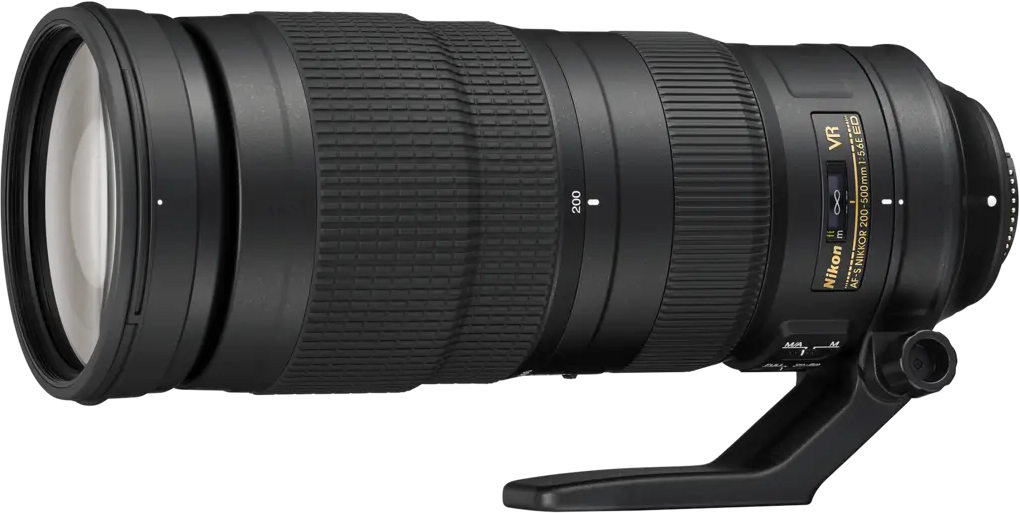 | 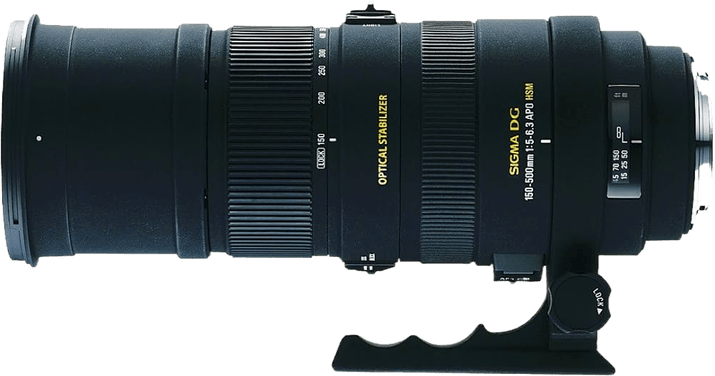 | |
| General | ||
| Release Year | 2015 | 2008 |
Production Status ⓘCurrent status of lens manufacturing (e.g., in production, discontinued). |
 In Production |  Discontinued |
Lens Mount ⓘThe lens mount will tell you what type of lens range you can fit onto the camera body. Often the same camera company will have different lens ranges for different cameras. |
Nikon F | Nikon F |
System ⓘIndicates which camera system the lens is designed to attach to. |
Nikon F | Nikon F |
Maximum Format ⓘLargest sensor size compatible with the lens. |
 Full Frame | Full Frame |
| Physical | 63/100 | 64/100 |
| Lens Weight | 2300 g | 1780 g |
Lens Diameter ⓘWidth of the lens at its widest point |
108 mm | 94.7 mm |
Lens Length ⓘHow long the lens is from front to back. |
267.5 mm | 252 mm |
Front Filter Compatible ⓘSome lenses are compatible with front filters, some are compatible with back filters and some are compatible with both. Front filters are usually more convenient to add and remove. |
 Yes | Yes |
Front Filter Size ⓘDiameter of attachable filters. |
95 mm | 86 mm |
| Optics | 64/100 | 52/100 |
Focal Range ⓘShortest to longest focal length of the lens (zoom range start - end ) |
200–500 mm | 150–500 mm |
Aperture Range ⓘLargest aperture at the lens's shortest focal length to longest focal length (aperture range start - end) |
5.6 | 5–6.3 |
| Focal Length Angle of View | 12.35°–4.96° | 16.414720660513435°–4.955285719518173° |
Flange Focal Distance ⓘDistance from lens mount to sensor. |
46.5 mm | 46.5 mm |
Diaphragm Type ⓘStructure and design of the aperture |
 Automatic | Automatic |
Blades ⓘNumber of diaphragm blades in aperture |
9020 | 9020 |
Zoom Lens ⓘZoom allows you to vary the focal length, change between long shots and close-ups |
 Yes | Yes |
Zoom Mechanism ⓘSystem enabling zoom function |
 Manual | Manual |
Zoom Ring ⓘIf zooming is adjusted using a zoom ring |
 Yes | Yes |
Zoom Type ⓘThe design or approach to zooming |
 Rotary | Rotary |
Closest Focusing Distance ⓘMinimum distance for a subject to be in focus. |
220 cm01500 | 220 cm01500 |
Maximum Magnification ⓘLargest size a subject can be reproduced |
0.22x | 0.19x |
| Autofocus Mode |  Yes | Yes |
| Manual Mode |  Yes | Yes |
| Manual Focusing Ring |  Yes | Yes |
| Features | 44/100 | 41/100 |
Weather Sealing ⓘWeather sealing capabilities will give you more confidence when shooting in unfavourable conditions. |
✗ | ✗ |
Fluorine Coating ⓘCoating to repel water and oil from lens elements. |
✗ | ✗ |
| Built In Lens Hood | ✗ | ✗ |
| Lens Hood Type |  Round | Round |
Zoom Lock ⓘZoom lock allows the zoom ring to be locked at the desired focal length |
 Yes | Yes |
Teleconverter ⓘA teleconverter (extender) is an extra piece of equipment that fits between the lens and the camera body to enhance magnification |
 Yes | Yes |
| Image Stabilization | ✓ | ✓ |
IS Efficiency ⓘIS efficiency refers to the effectiveness of the image stabilization system in compensating for the blurring effects of camera shake, quantified by the number of stops of stabilization it provides. |
4.5 stops | 4 stops |
| Construction | 38/100 | 38/100 |
Elements ⓘLens elements refer to individual pieces of glass within the lens. |
19 | 21 |
| Groups | 12 | 15 |
Aspherical Elements ⓘThe number of aspherical lens elements which can help correct aberrations such as spherical aberration. |
0 | 0 |
Bi Aspherical Elements ⓘElements with two non-spherical surfaces |
0 | 0 |
Low Dispersion ⓘElements that reduce chromatic aberration |
3 | 1 |
Super Low Dispersion ⓘAdvanced elements further reducing chromatic aberration |
0 | 0 |
CA Reduction ⓘBuilt-in features to reduce chromatic aberration |
0 | 0 |
Internal Focusing ⓘInternal Focusing means that the lens does not change in size during focusing, and the front element does not rotate. |
 Yes | Yes |