
OM System OM-5 vs Olympus Pen E-P7 — Which Is Better?
Side by side47 specifications |
Olympus · Mirrorless · 20 MP · Micro Four Thirds · 4K video
OM System OM-5
67
WINNER
|
Olympus · Mirrorless · 20 MP · Micro Four Thirds · 4K video
Olympus Pen E-P7
61
SCORE
|
|---|---|---|
 |  | |
| General | ||
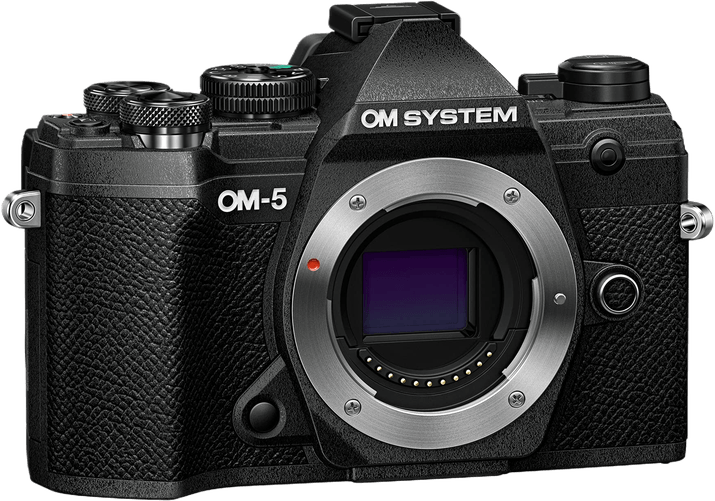
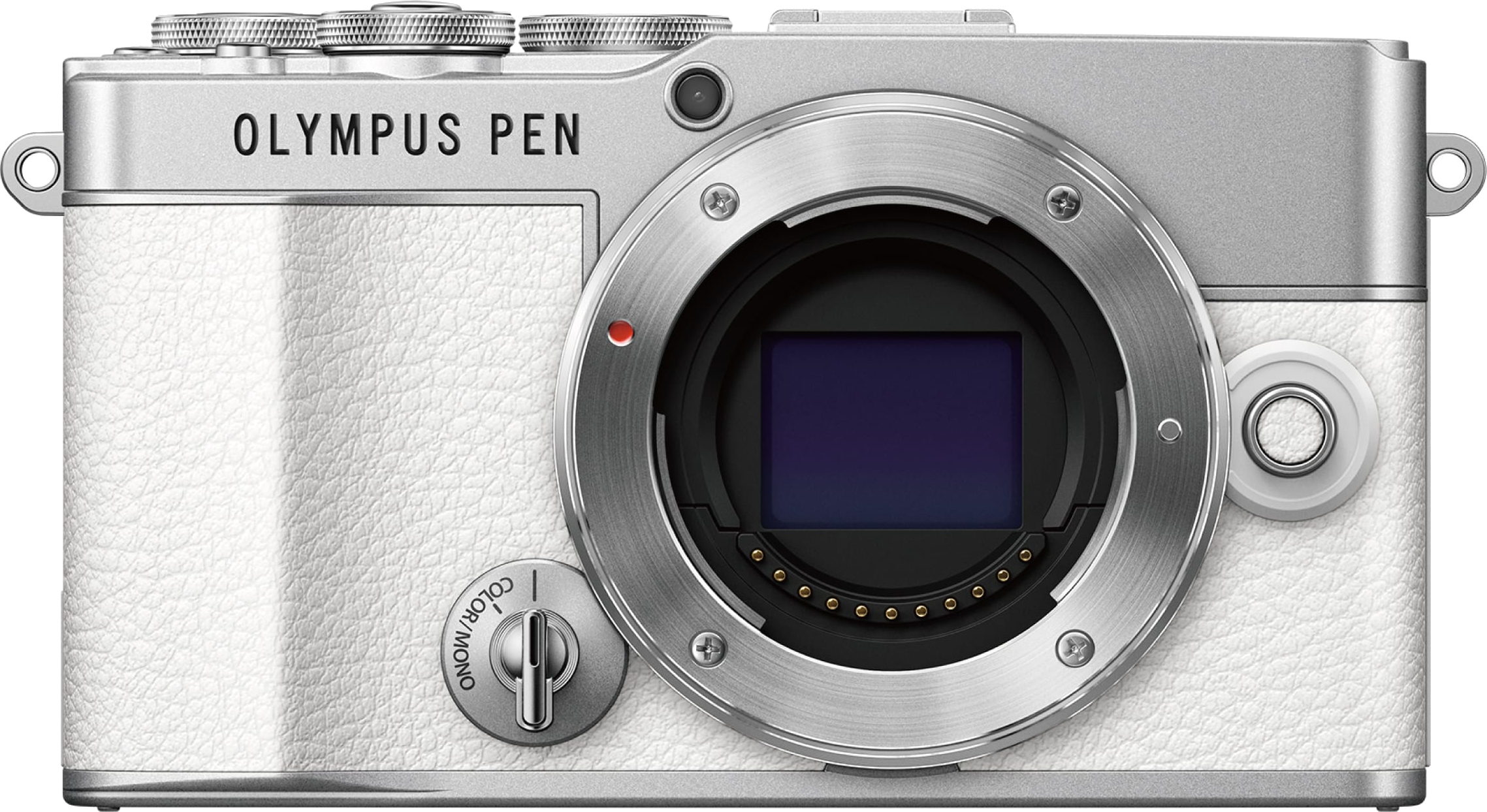
Read the General ComparisonGeneralThe OM System OM-5 and the Olympus Pen E-P7 are both Micro Four Thirds mirrorless cameras, so any lens you already own for one mount fits the other without adaptation. The OM-5, announced in October 2022, is the newer body and adds weather sealing and a built-in electronic viewfinder. The E-P7, from July 2021, is the smaller and lighter body and has no viewfinder at all. | ||
Released ⓘRefers to the year this camera was officially made available for sale. |
2022 | 2021 |
Announcement date ⓘRefers to the date the manufacturer publicly announced the upcoming release and general specs of this camera. |
October 26, 2022 | July 9, 2021 |
| Camera type |  Mirrorless | Mirrorless |
| Camera size | 125 x 85 x 50 mm | 118 x 69 x 38 mm |
| Camera weight | 414 g | 337 g |
| Optics | 64/100 | 60/100 |
Read the Optics ComparisonOpticsThe OM-5 is the stronger choice for photographing fast-moving subjects, offering 30 fps continuous shooting against 8.7 fps on the E-P7. It also reaches 1/8000 second on its fastest shutter, twice as short as the E-P7's 1/4000, which helps keep wide apertures usable in bright daylight. Its expanded low ISO of 64 gives more room for those bright scenes than the E-P7's expanded ISO 100. The core sensor numbers are a match: both cameras use 20 MP CMOS sensors in the Micro Four Thirds format, with 121 autofocus points and in-body stabilisation on each. Native ISO runs from 200 to 25600 on both bodies, so the same rated sensitivity range is available either way. | ||
Megapixels ⓘThe higher the number of megapixels, the more detail the cameras sensor can capture. |
20 MP050 | 20 MP050 |
Image resolution ⓘImage resolution is measured in pixels and megapixels, width by height. The higher the number, the higher its resolution. |
5184 x 3888 | 5184 x 3888 |
Sensor type ⓘThe camera sensor captures light and records the image. Sensors vary in physical size, the number of pixels, and quality. |
CMOS | CMOS |
Sensor size ⓘThe sensor size contributes to the overall quality as well as the dynamic and tonal range a camera can capture. As a rule of thumb, the more surface there is to read the light, the more information it will capture. |
13 x 17.4 | 13 x 17.4 |
Sensor format ⓘRefers to the most commonly used sensor sizes. |
 Micro Four Thirds | Micro Four Thirds |
Continuous shooting ⓘThe number of sequential frames per second the camera can write to the memory card when shooting in burst or continuous mode. |
30 fps045 | 8.7 fps045 |
Lens mount ⓘThe lens mount will tell you what type of lens range you can fit onto the camera body. Often the same camera company will have different lens ranges for different cameras. |
Micro 4/3 | Micro 4/3 |
Image processor ⓘThe image processor in the camera converts the information collected on the sensor for digital storage on the memory card. |
TruePic IX | TruePic VII |
Aspect ratio ⓘThe aspect ratio refers to the proportional difference between width and height. The most popular aspect ratios are 3:2 and 4:3. |
 4:3 | 4:3 |
Min ISO ⓘRefers to the lowest native (or 'base') ISO setting. Lower ISO are less sensitive to light but make a cleaner image. |
20030200 | 20030200 |
Max ISO ⓘRefers to the highest native (or 'base') ISO setting. Higher ISO is necessary for low-light situations or night photography, but higher ISOs often introduce grain or noise. |
256003003280000 | 256003003280000 |
Min ISO (expanded) ⓘExpanded (or extended) ISO is a digitally enhanced feature available on some cameras. It allows you to push beyond the native ISO range if necessary. |
6430200 | 10030200 |
Max ISO (expanded) ⓘExpanded (or extended) ISO is a digitally enhanced feature available on some cameras. It allows you to push beyond the native ISO range if necessary. |
256003003280000 | 256003003280000 |
Minimum shutter speed ⓘThe minimum shutter speed will tell you the longest exposure your camera can take without using an external accessory. |
6044080 | 6044080 |
Max shutter speed ⓘThe maximum shutter speed tells you the length inside 1 second the camera will capture. These can sometimes be extended with accessories such as extra external batteries. |
800080032000 | 400080032000 |
Autofocus points ⓘAutofocus points show where the camera is focusing graphically as squares or brackets in Live View or on an electronic viewfinder. These points are also used for light meter readings. |
1210300 | 1210300 |
In-body stabilisation ⓘIn-body Stabilization means the camera has a certain technology embedded that counteracts camera shake. |
 Yes | Yes |
Viewfinder type ⓘThe viewfinder type is either electronic or optical. Electronic viewfinders will have a small screen in the viewfinder. Optical viewfinders will use prisms and mirrors to look through the lens. |
Electronic | None |
| Viewfinder dots | 236000009900000 | N/A |
| Video | 91/100 | 91/100 |
Read the Video ComparisonVideoThe OM-5 gives you twice the slow-motion headroom, with a maximum video frame rate of 120 fps against 60 fps on the E-P7. That extra speed lets you slow a splash or a bird's wingbeat further in your edit. Both cameras record 4K as their maximum resolution, and each offers built-in timelapse for interval work. | ||
Video ⓘIndicates if this camera is capable of recording video. |
 Yes | Yes |
Max video resolution ⓘThe best resolution this camera can capture video in. Modern cameras can capture up to 8K video. |
 4K | 4K |
Max video format ⓘVideo resolution measured by the greatest number of pixels possible in each frame, width by height. A higher resolution means more detail or clarity in your video. |
4096 x 2160 | 3840 x 2160 |
Max video frame rate ⓘHow many frames per second your video will capture. Most cameras have options for multiple frame rates, depending on the resolution you shoot in. For a general video, 24p or 30p is the standard, but more serious filmmakers may need a higher frame rate for creative effect. |
120 fps | 120 fps |
Timelapse built in ⓘA built in time-lapse mode will allow continuous shooting throughout a prolonged period of time to be compressed into a sped up video. |
 Yes | Yes |
Video file format ⓘDifferent cameras can record in various video file formats. The File format you record in can impact how you edit and use the files. |
MPEG-4, MOV, H.264 | MPEG-4, MOV |
| Features | 83/100 | 70/100 |
Read the Features ComparisonFeaturesThe OM-5's weather sealing makes it the practical pick for shooting in rain, dust or sea spray, protection the E-P7 does not offer. Its 2,360,000-dot electronic viewfinder lets you shoot at eye level in harsh sun, while the E-P7 relies entirely on its rear screen. In the E-P7's favour, its built-in flash adds fill light without carrying an accessory, and both cameras accept external flash units when you need more power. For composing and sharing, the two cameras are closely matched. Each has a 3-inch touchscreen with 1,040,000 dots that flips out for low-angle or selfie work, plus Wi-Fi and Bluetooth for wireless transfer. Neither includes GPS, so geotagging travel photos requires an external solution on either body. | ||
Builtin flash ⓘA built-in flash will often be positioned right above the lens. This will automatically pop up when you activate it. |
No |  Yes |
External flash ⓘExternal flashes are often connected through a hot shoe at the top of a camera, or a cable at the side of the camera. |
 Yes | Yes |
GPS ⓘGPS features in a camera will include location metadata to each of your photographs. |
✗ | ✗ |
Weather sealing ⓘWeather sealing capabilities will give you more confidence when shooting in unfavourable conditions. |
 Yes | No |
| Screen type | TFT LCD | LCD |
Touch screen ⓘTouchscreen allows you to change camera settings and access menus with a swipe of your finger, instead of using buttons. |
 Yes | Yes |
| Screen size | 3" | 3" |
Screen dots ⓘScreen dots indicate the resolution of the LCD screen by including each sub pixel. |
10400001150001500000 | 10400001150001500000 |
Flip screen ⓘA flip screen (or articulating screen) is a second screen which can flip out from the side or top of the camera. This rotating screen allows you more freedom to take photos at different angles. |
 Yes | Yes |
Live view ⓘLive View feature allows you to see a continuous live video of what is being seen through your lens. |
 Yes | Yes |
Wi-Fi ⓘBuilt-in Wi-Fi allows you to connect your camera and share images wirelessly. |
 Yes | Yes |
Bluetooth ⓘBluetooth capabilities allow you wireless control of your camera with other external devices. |
 Yes | Yes |
| Storage & battery | 35/100 | 35/100 |
Read the Storage & battery ComparisonStorage and BatteryThe E-P7 carries the higher battery rating, 360 shots against 310 for the OM-5, a 50-shot edge. Both use the same BLS-50 pack and support USB charging, so topping up from a power bank works with either camera. Each has a single SD card slot, taking SD, SDHC and SDXC cards with UHS-II compatibility for fast writes. | ||
| Memory card | SD / SDHC / SDXC (UHS-II compatible) | SD / SDHC / SDXC (UHS-II compatible) |
| Dual memory card slots | ✗ | ✗ |
| Battery type | BLS-50 | BLS-50 |
Battery life ⓘApproximately how long this cameras battery will last measured by how many photographs you will be able to take. |
310 shots1505000 | 360 shots1505000 |
| USB charging |  Yes | Yes |
Read: Verdict
Verdict
Buy the OM-5 if you shoot outdoors or photograph movement: weather sealing for coastal and hill walks, an eye-level viewfinder, 30 fps for birds and sports, and 120 fps video for slow motion. It is the body to reach for when the weather turns or the subject will not hold still.
The E-P7 is the better carry-everywhere choice for travel, street and everyday stills. It is smaller and 77 g lighter, rates 50 shots higher on battery, and its built-in flash handles quick indoor fill without extra gear. Its 8.7 fps and 60 fps video are ample for casual use, and the shared Micro Four Thirds mount means your lenses move with you either way.