
Sigma 105mm F/1.4 DG HSM | A vs Sigma 85mm F/1.4 DG HSM | A — Which Is Better?
Side by side37 specifications |
Sigma · f/1.4 · Nikon F mount
Sigma 105mm F/1.4 DG HSM | A
73
SCORE
|
Sigma · f/1.4 · Nikon F mount
Sigma 85mm F/1.4 DG HSM | A
75
WINNER
|
|---|---|---|
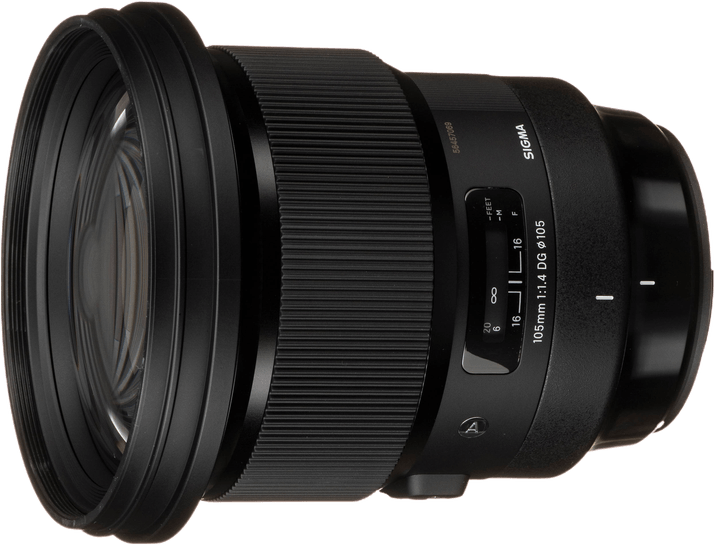 | 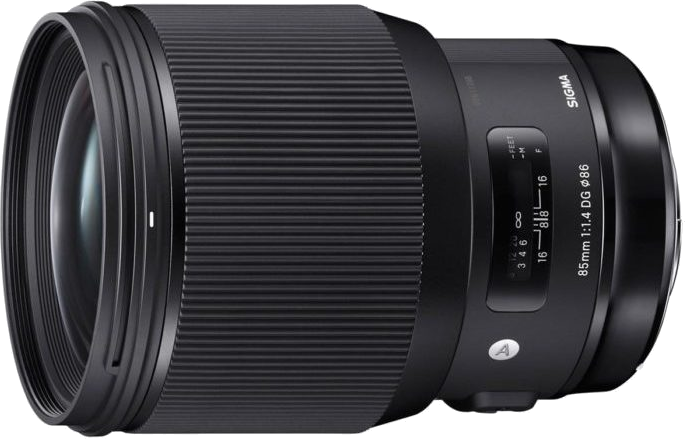 | |
| General | ||
Read the General ComparisonGeneralThe Sigma 105mm F/1.4 DG HSM Art and the Sigma 85mm F/1.4 DG HSM Art are both full-frame Nikon F primes in Sigma's Art line. Both cover the same maximum format, so neither restricts you to a smaller sensor, and both share the F/1.4 maximum aperture that gives portraits a bright viewfinder image and shallow depth of field. Their release dates differ: the 105mm Art arrived in 2018, two years after the 85mm Art from 2016. That history aside, the practical choice between them rests on focal length and the body size each focal length demands. | ||
| Release Year | 2018 | 2016 |
Production Status ⓘCurrent status of lens manufacturing (e.g., in production, discontinued). |
 In Production In Production | In Production |
Pro Branding ⓘSpecific branding codes used for professional-tier lenses. |
Art | Art |
Lens Mount ⓘThe lens mount will tell you what type of lens range you can fit onto the camera body. Often the same camera company will have different lens ranges for different cameras. |
Nikon F | Nikon F |
System ⓘIndicates which camera system the lens is designed to attach to. |
Nikon F | Nikon F |
Maximum Format ⓘLargest sensor size compatible with the lens. |
 Full Frame Full Frame | Full Frame |
| Physical | 92/100 | 92/100 |
Read the Physical ComparisonPhysicalThe 85mm Art is the meaningfully lighter and slimmer lens for a smaller kit. It weighs 1130 g against 1645 g for the 105mm Art, a 515 g difference, and measures 94.7 mm across versus 115.9 mm. If you carry one lens on a strap or work handheld for long sessions, the 85mm keeps the total package closer to a standard portrait setup. Filter sizes differ too: the 105mm Art takes 105mm front filters, while the 85mm Art takes 86mm. Each accepts filters directly in its own thread, so a set of 86mm filters fits only the 85mm without an adapter, and 105mm filters likewise belong to the longer lens. Lengths are close, at 131.5 mm against 126.2 mm, so the longer lens adds little depth in a bag. | ||
| Lens Weight | 1645 g | 1130 g |
Lens Diameter ⓘWidth of the lens at its widest point |
115.9 mm | 94.7 mm |
Lens Length ⓘHow long the lens is from front to back. |
131.5 mm | 126.2 mm |
Front Filter Compatible ⓘSome lenses are compatible with front filters, some are compatible with back filters and some are compatible with both. Front filters are usually more convenient to add and remove. |
 Yes Yes | Yes |
Front Filter Size ⓘDiameter of attachable filters. |
105 mm | 86 mm |
| Optics | 86/100 | 86/100 |
Read the Optics ComparisonOpticsThe 105mm Art gives you more working distance and tighter framing on distant subjects. Its 105mm focal length, against 85mm on the other lens, means a head-and-shoulders portrait requires standing further back with the 105mm, and distant subjects fill the frame more without moving. That extra reach is the single biggest reason to choose it. The 85mm Art focuses closer, at 85 cm versus 100 cm, letting you fill the frame with a face or small still-life subject at a shorter distance. The two lenses' maximum magnification figures both round to 0.12x. Both are primes with autofocus, a manual focusing ring and a nine-blade automatic diaphragm, sharing the same F/1.4 aperture wide open. | ||
Focal Range ⓘShortest to longest focal length of the lens (zoom range start - end ) |
105 mm | 85 mm |
Aperture Range ⓘLargest aperture at the lens's shortest focal length to longest focal length (aperture range start - end) |
1.4 | 1.4 |
| Focal Length Angle of View | 23.285435408459023° | 28.560464963937992° |
Flange Focal Distance ⓘDistance from lens mount to sensor. |
44 mm | 44 mm |
Diaphragm Type ⓘStructure and design of the aperture |
 Automatic Automatic | Automatic |
Blades ⓘNumber of diaphragm blades in aperture |
9020 | 9020 |
Zoom Lens ⓘZoom allows you to vary the focal length, change between long shots and close-ups |
✗ | ✗ |
Closest Focusing Distance ⓘMinimum distance for a subject to be in focus. |
100 cm01500 | 85 cm01500 |
Maximum Magnification ⓘLargest size a subject can be reproduced |
0.12x | 0.12x |
| Autofocus Mode |  Yes Yes | Yes |
| Manual Mode |  Yes Yes | Yes |
| Manual Focusing Ring |  Yes Yes | Yes |
| Features | 32/100 | 52/100 |
Read the Features ComparisonFeaturesWeather sealing and fluorine front coatings are shared here, so both lenses carry protection against the elements and a front element that sheds water and wipes clean of smudges easily. For outdoor portrait work in drizzle or dusty conditions, neither lens asks you to compromise on these practical points. Two limits are also shared: neither lens offers built-in image stabilisation, so slower handheld shutter speeds rest on your technique or a stabilised body, and neither supports teleconverters for extra reach. If you photograph moving subjects in low light, plan on shutter speeds fast enough for the subject either way. | ||
Weather Sealing ⓘWeather sealing capabilities will give you more confidence when shooting in unfavourable conditions. |
 Yes Yes | Yes |
Fluorine Coating ⓘCoating to repel water and oil from lens elements. |
 Yes Yes | Yes |
| Built In Lens Hood | ✗ | ✗ |
| Lens Hood Type |  Round Round |  Petal Petal |
Teleconverter ⓘA teleconverter (extender) is an extra piece of equipment that fits between the lens and the camera body to enhance magnification |
✗ | ✗ |
| Image Stabilization | ✗ | ✗ |
| Construction | 54/100 | 31/100 |
Read the Construction ComparisonConstructionThe 105mm Art carries the more elaborate optical formula for its focal length: 17 elements in 12 groups, including three elements that reduce colour fringing, one aspherical element and one low-dispersion element. Those specialised elements target chromatic fringing and distortion in a fast, long portrait design. The 85mm Art uses a simpler 14-element formula in the same 12 groups, with one aspherical and one low-dispersion element of its own. Both designs are conventional extending-focus types, so neither keeps a constant physical length while focusing. | ||
Elements ⓘLens elements refer to individual pieces of glass within the lens. |
17 | 14 |
| Groups | 12 | 12 |
Aspherical Elements ⓘThe number of aspherical lens elements which can help correct aberrations such as spherical aberration. |
1 | 1 |
Bi Aspherical Elements ⓘElements with two non-spherical surfaces |
0 | 0 |
Low Dispersion ⓘElements that reduce chromatic aberration |
1 | 1 |
Super Low Dispersion ⓘAdvanced elements further reducing chromatic aberration |
0 | 0 |
CA Reduction ⓘBuilt-in features to reduce chromatic aberration |
3 | 0 |
Internal Focusing ⓘInternal Focusing means that the lens does not change in size during focusing, and the front element does not rotate. |
✗ | ✗ |
Read: Verdict
Verdict
Choose the 105mm F/1.4 Art when your portraits need compression and subject separation from a distance, such as stage performances, sports sidelines or tightly cropped headshots where standing back is easy. Its longer focal length also suits isolating a subject across a busy background. Accept the larger 1645 g body and 105mm filters as part of that reach.
Choose the 85mm F/1.4 Art for classic portrait distances in smaller rooms, event work where you move among people, and any day when a 515 g lighter lens matters. Both give you the same F/1.4 brightness, weather sealing, fluorine front coating and autofocus, so the real decision is focal length first, then the size that comes with it.