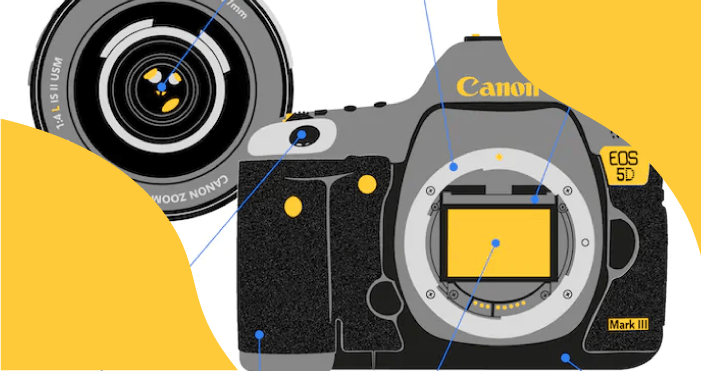
But what is a DSLR camera? And what does DSLR stand for? Read on to find out.
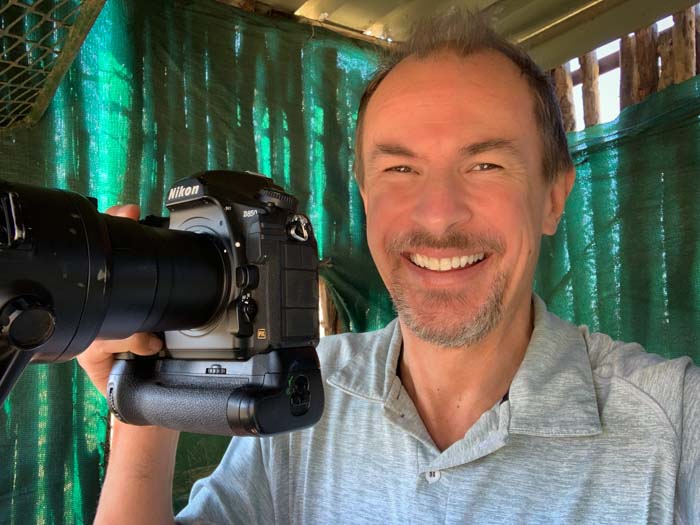
What Is a DSLR?
DSLR stands for digital single-lens reflex.
- Digital means the camera uses a digital sensor to capture the image.
- Single-Lens means the camera only has one lens.
- Reflex means the mirror reflects light towards the viewfinder.
How Does a Digital SLR Camera Work?
The problem with designing a camera is that light from the subject can’t reach the viewfinder and the sensor simultaneously. In other words, you can either see your subject or photograph it, but not both! The problem gets even worse if you want autofocus, which also needs light.
To solve this problem, camera manufacturers have come up with different types of cameras. But, twin-lens reflex (TLR), single-lens translucent (SLT), and mirrorless cameras all have drawbacks:
- Twin-lens reflex cameras need two lenses rather than one.
- Single-lens translucent cameras divert one-third to half a stop of light away from the sensor.
- Mirrorless cameras have to power the electronic viewfinder (EVF), leading to shorter battery life.
The digital single-lens reflex camera solves these problems by getting a mirror to reflect most of the light to a pentaprism (see diagram).

Some light passes through the semi-transparent reflex mirror to a secondary mirror. This then reflects it towards an autofocus sensor.
When you press the shutter button, both mirrors flip up, the shutter opens, and light passes through to the sensor. This causes the viewfinder to blackout.
After the exposure, the mirrors flip down again. The light is then bounced up to the pentaprism, and the subject reappears in the viewfinder.
What are the Different Kinds of DSLRs?
There are two main types of DSLR—full-frame and crop sensor.
Full Frame
Full-frame DSLR cameras have an image sensor the size of an old-fashioned 35mm film frame (36x24mm). They are the gold standard for photography. Plus, they have the highest performance in terms of resolution, autofocus, frame rate, etc. But all those features make them bulky and expensive. The top Nikon and Canon cameras sell for thousands.
Crop Sensor
Crop sensor DSLRs such as Canon’s APS-C range or Nikon’s DX series have smaller sensors. The crop factor defines these sensors. The diagonal distance of a full-frame sensor is divided by the diagonal distance of the crop sensor. You get the equivalent focal length on a full-frame camera by multiplying the lens’s focal lengths by the crop factor. For instance, a 100mm lens on a Nikon DX camera body is the same as a 150mm lens on an FX body (100 x 1.5).
The benefit of extra magnification comes from fewer pixels on a smaller sensor. As a result, the quality of crop sensor images will never be as good as that of full-frame images. You can see this if you try to pair a DX lens with a full-frame body. Because the image is being cropped, the camera automatically selects DX-format rather than FX.
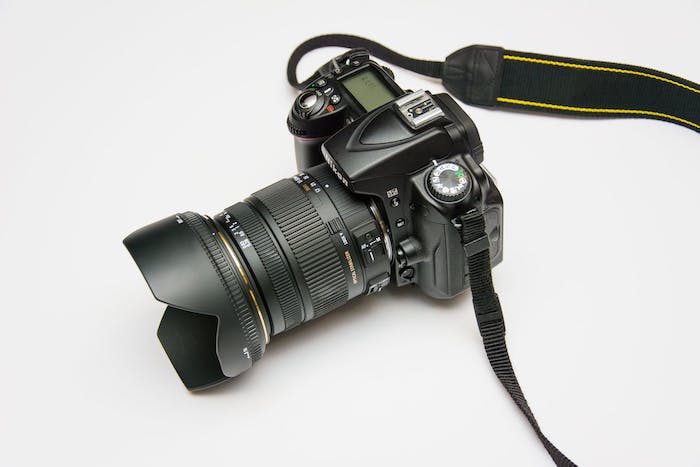
What Are the Other Digital Camera Options?
There are many other digital camera options out there to consider. But only one matches what a DSLR can do.
Smartphone Cameras
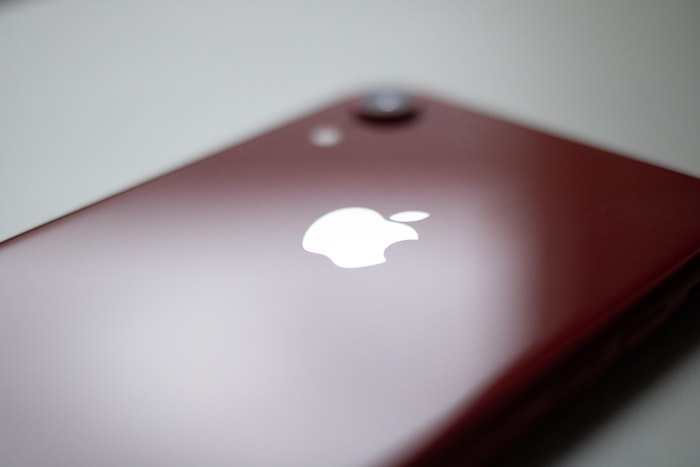
I often see guests taking pictures with their iPhones on a safari, and it’s a bit of a shame. Smartphone sensor resolution is better than ever. But the real drawback of using your phone as a camera is that you can’t zoom in very far.
My iPhone has a 12MP (megapixel) imaging sensor and a maximum (optical) magnification of 2.5x. If you assume the human eye is like a 50mm lens, that’s the equivalent of a 125mm focal length (2.5 x 50). That doesn’t help if you’re trying to photograph a rhino half a mile away!
Of course, you can always use the 7x digital zoom, but that just means using fewer and fewer pixels. Plus, you get poorer and poorer resolution.
Compact and Point-and-Shoot Cameras
A point-and-shoot camera only used to be good enough for parties and beach holidays. But their average specifications have improved enormously. You can now get compact cameras with the following:
- 20MP sensors
- 30fps (frames per second) shooting
- 8x zoom ranges
- Sophisticated autofocus systems
- Wi-Fi
- Bluetooth
- GPS
But overall, image quality and features are still a step down from a DSLR camera. Plus, they don’t have interchangeable lenses, so you’re stuck with one camera lens.
Bridge Cameras
These are compact cameras that offer a broader zoom range. For example, the Nikon Coolpix P1000 has a 125x optical superzoom. That’s like having a full-frame camera with a 24-3000mm lens! But all that magnification comes at a cost. The camera’s sensor isn’t big enough to let you crop in very far or make poster-size prints out of your images.
You can check out the full Nikon Coolpix p1000 specs here, or compare them with the P950 here.
Mirrorless Cameras
The only serious competition for the DSLR camera comes from mirrorless systems. The latest models can do everything a digital SLR can do. Plus, mirrorless cameras have 30fps continuous shooting and advanced eye detection and tracking.
Yes, they still have an electronic rather than an optical viewfinder. But blackouts and viewfinder lag are a thing of the past. EVFs are now so bright and display so much helpful information. They’ve become a feature, not a bug.
What Are the Disadvantages of a DSLR?
DSLR cameras still don’t offer a perfect solution. And there’s been more and more interest in mirrorless technology. Here are some disadvantages of DSLRs:
- Bigger size and weight. Mirrors and a pentaprism mean DSLRs are usually larger and heavier than mirrorless digital cameras.
- Siloed lenses. The major manufacturers all use different camera mounts. That means once you’ve bought a Nikon camera, for instance, you’re locked in. Yes, available converters can let you use mirrorless lenses or lenses from other manufacturers. But they add to the cost, often reduce the speed of the lens, and interfere with the data link between the lens and the camera body.
- Images need post-processing. DSLR images don’t look as good as film images right out of the box. They tend to be a little dull with insufficient contrast and saturation. That means at least some basic post-processing is essential.
- A static viewfinder. The DSLR’s optical viewfinder can’t show the effect of adjustments to settings such as exposure or white balance. With mirrorless cameras, on the other hand, what you see is what you get. That means you can see the effect of your changes in real-time.
- A limited shutter count. Most DSLR cameras have mechanical shutters. That means the amount of images you can take at once is limited. After that, they won’t work properly—if at all.
The reflex mirror itself also causes problems. First of all, it’s still true that you can’t look through the viewfinder and take a picture simultaneously.
Yes, you only see a brief flicker if you’re in single-shot mode at 1/1000 s. But if you’re shooting at 1/5 s at five frames per second, the viewfinder is almost permanently blacked out! That’s one of the main reasons I switched to mirrorless.
Second, the movement of the mirror itself causes vibration. That might cause motion blur if you’re using a slow shutter speed.
Third, the existence of the mirror makes using the viewfinder impossible when shooting video. This has to be done using the rear LCD screen on a DSLR camera.
What Are the Advantages of a DSLR?
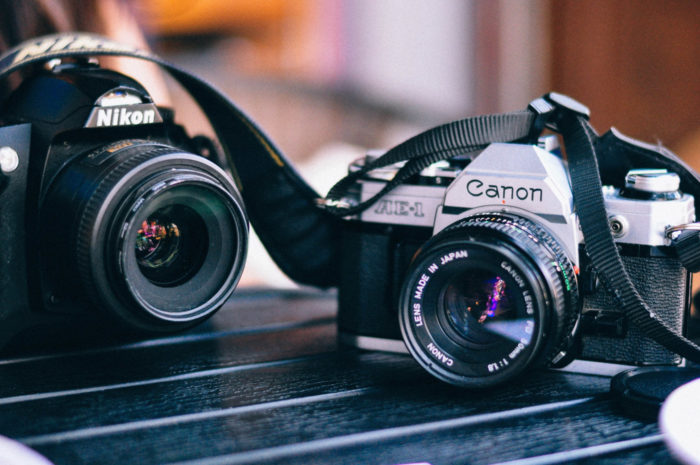
A key benefit of a DSLR camera is interchangeable lenses. That means we can change the focal length by simply swapping lenses. DSLRs have been around for so long that there’s a huge range of lenses on the market. These aren’t produced only by the major camera brands such as Canon, Nikon, and Sony. There are also third-party manufacturers like Tamron and Sigma.
Replacing film with an image sensor makes digital photography far cheaper and more convenient. I take up to 4,000 pictures a day on safari. Imagine how much that would cost if I had a film camera! Plus, DSLR camera sensors tend to be larger than ones in compact or bridge cameras. This makes them better in low light.
Other Key Advantages of DSLRs
- Convenient displays. In comparison to film cameras, I can review images immediately on the back of the camera rather than waiting for the film to be processed.
- Images are easy to edit. Programs like Lightroom and Photoshop make this possible and so easy to do. Most common problems, such as underexposure, can be fixed in seconds.
- Better battery life than mirrorless. The DSLR’s optical viewfinder needs very little power, unlike the EVF in a compact or mirrorless camera, so longer battery life.
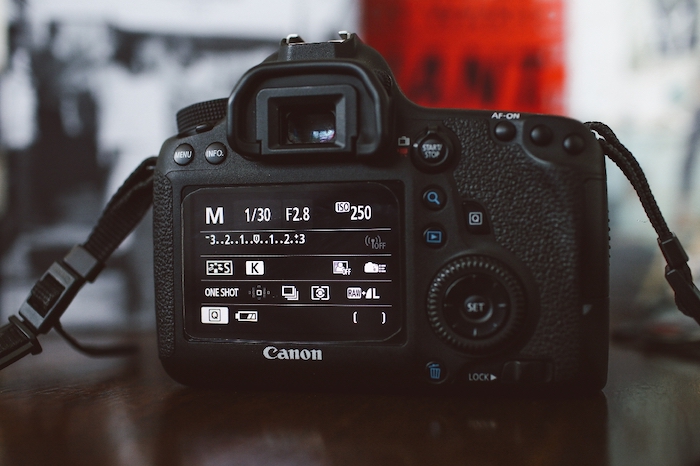
- Customized and accessible settings. DSLR cameras tend to have many more buttons and dials than other cameras, most of them customizable. That means you can change your settings quickly and easily while looking through the viewfinder. This is often crucial in sports or wildlife photography.
Manufacturers also assume serious photographers will have a DSLR and not another kind of digital camera. As a result, they add many other prime features:
- high frame rates
- fast shutter speeds
- extended ISO ranges
- self-timer options
- advanced continuous autofocus systems with eye detection and tracking
- bracketing
- RAW file processing
Conclusion
What is a DSLR? It’s a great digital camera option for the enthusiast and professional alike. It’s feature-rich and has better specifications than other digital cameras. Forget about smartphones, compacts, and bridge cameras. Its only challenger now is the mirrorless camera.
Before you go, why not check out these top DSLR camera specs:
Or, why not filter through all the cameras in our database to find the one that suits your needs!