
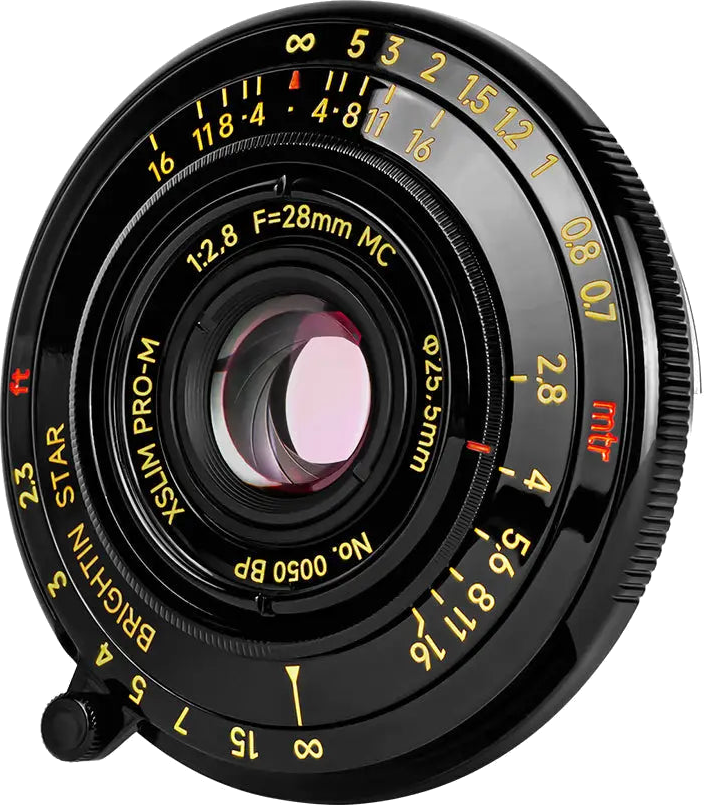
Brightin Star 28mm f/2.8 Pancake
Brightin Star · 28 mm · f/2.8
Score Breakdown
This product does not have an overall score yet.
General | |
|---|---|
About This LensThe Brightin Star 28mm f/2.8 Pancake is a manual-focus wide angle for Leica M full-frame cameras. It arrived in 2026 and remains in production. Its role is everyday shooting: streets, travel, architecture and interiors, where a light lens keeps the carried kit small. The main trade-offs are the fixed 28mm framing and manual-only focus. In exchange, the lens adds almost nothing to the camera's size or weight, which is the point of a pancake. It suits photographers who value a tiny kit and accept slower, more deliberate handling. | |
| Brand | Brightin Star |
| Release Year | 2026 |
Production Status ⓘCurrent status of lens manufacturing (e.g., in production, discontinued). |  In Production In Production |
Lens Mount ⓘThe lens mount will tell you what type of lens range you can fit onto the camera body. Often the same camera company will have different lens ranges for different cameras. | Leica M |
System ⓘIndicates which camera system the lens is designed to attach to. | Leica M |
Maximum Format ⓘLargest sensor size compatible with the lens. |  Full Frame Full Frame |
Physical | |
About the BuildThe lens weighs 4.4 oz (125 g) and measures only 0.39 in (9.9 mm) long, so it barely protrudes from the body. Its body is 2.02 in (51.4 mm) across. A screw-in filter attaches directly to the 25.5mm thread at the front, so any polariser or ND filter of that size fits without adapters. | |
| Lens Weight | 125 g |
Lens Diameter ⓘWidth of the lens at its widest point | 51.4 mm |
Lens Length ⓘHow long the lens is from front to back. | 9.9 mm |
Front Filter Compatible ⓘSome lenses are compatible with front filters, some are compatible with back filters and some are compatible with both. Front filters are usually more convenient to add and remove. |  Yes Yes |
Front Filter Size ⓘDiameter of attachable filters. | 25.5 mm |
Optics | |
About the OpticsAt 28mm on full frame, this lens frames street scenes, buildings and modest rooms without the strong stretch of a wider focal length. It suits reportage-style pictures where the setting matters as much as the subject. The fixed focal length means you adjust composition by moving closer or stepping back, which keeps the kit simple. The f/2.8 maximum aperture is moderate rather than fast. Daylight and bright interiors are comfortable, while dim evening streets may need a raised ISO. At 28mm, depth of field runs deep, so foreground and background often both stay sharp. That helps documentary scenes, though it limits the background blur that separates a subject. Focus is set by hand on the manual ring; there is no autofocus. The close focus of 2.3 ft (70 cm) keeps small objects small in the frame. This makes it a lens for scenes and spaces rather than detail studies. Rooms, groups and street corners sit comfortably at that distance. Ten aperture blades help the opening stay round when stopped down, which keeps out-of-focus highlights smooth in scenes with evening lamps or distant windows. | |
Focal Range ⓘShortest to longest focal length of the lens (zoom range start - end ) | 28 mm |
Aperture Range ⓘLargest aperture at the lens's shortest focal length to longest focal length (aperture range start - end) | 2.8 |
| Focal Length Angle of View | 75.3° |
Flange Focal Distance ⓘDistance from lens mount to sensor. | 27.8 mm |
Diaphragm Type ⓘStructure and design of the aperture |  Manual Manual |
Blades ⓘNumber of diaphragm blades in aperture | 10020 |
Zoom Lens ⓘZoom allows you to vary the focal length, change between long shots and close-ups | No |
Closest Focusing Distance ⓘMinimum distance for a subject to be in focus. | 70 cm01500 |
| Autofocus Mode | No |
| Manual Mode |  Yes Yes |
| Manual Focusing Ring |  Yes Yes |
Features | |
About the FeaturesThe lens has no image stabilization, so handheld work in low light rests on shutter speed, ISO and a steady hold. The short 28mm focal length makes small camera movements less visible than on a long lens, but the lens gives no help. A small tripod or a resting surface covers night scenes when light falls further. There is no weather sealing, so cover the lens in rain or heavy dust. The front also lacks a fluorine coating, so this lens offers no help from that type of finish. | |
Weather Sealing ⓘWeather sealing capabilities will give you more confidence when shooting in unfavourable conditions. | No |
Fluorine Coating ⓘCoating to repel water and oil from lens elements. | No |
| Built In Lens Hood | No |
Teleconverter ⓘA teleconverter (extender) is an extra piece of equipment that fits between the lens and the camera body to enhance magnification | No |
| Image Stabilization | No |
Construction | |
About the ConstructionThe design uses six elements in five groups, a simple layout that suits a pancake of this size. One element is made of low-dispersion glass. This glass helps reduce chromatic aberration, where different colours focus at different points. Coloured fringes can then appear along high-contrast edges, such as branches against a bright sky. | |
Elements ⓘLens elements refer to individual pieces of glass within the lens. | 6 |
| Groups | 5 |
Aspherical Elements ⓘThe number of aspherical lens elements which can help correct aberrations such as spherical aberration. | 0 |
Bi Aspherical Elements ⓘElements with two non-spherical surfaces | 0 |
Low Dispersion ⓘElements that reduce chromatic aberration | 1 |
Super Low Dispersion ⓘAdvanced elements further reducing chromatic aberration | 0 |
CA Reduction ⓘBuilt-in features to reduce chromatic aberration | 0 |
Internal Focusing ⓘInternal Focusing means that the lens does not change in size during focusing, and the front element does not rotate. | No |