
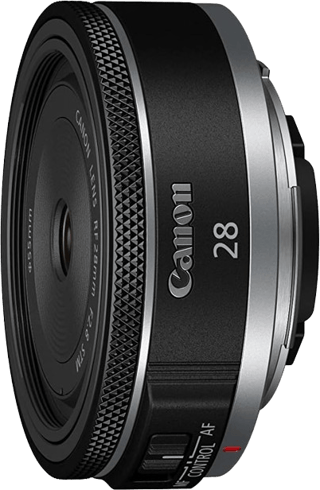
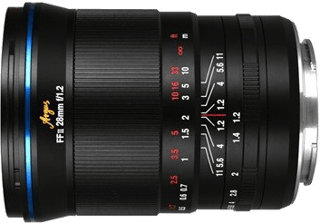
Canon RF 28mm F/2.8 STM versus Laowa Argus 28mm f/1.2 FF
f/1.2 vs f/2.8 · 0.073× vs 0.17× close-up reach · Manual focus instead of autofocus
Canon · 28 mm · f/2.8
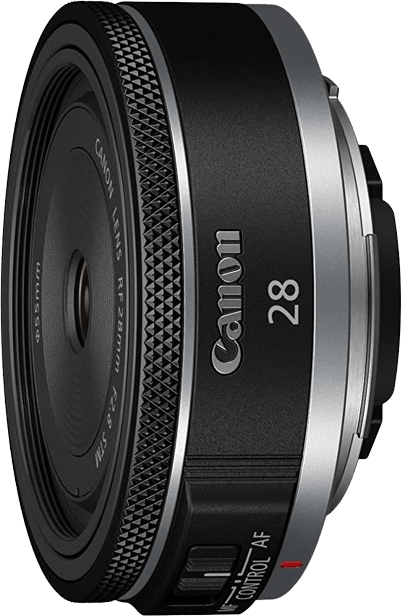
This lens score is calculated from published specifications.
General | |
|---|---|
About This LensCanon's RF 28mm F/2.8 STM is a full-frame prime for the RF mount. It works as a slim, light companion for a camera you carry all day, adding little weight or depth to the outfit. The 28mm focal length covers street scenes, interiors and travel views with room for context. F/2.8 keeps the lens usable indoors without flash. The trade-off is simple: the focal length is fixed, so you compose by moving closer or stepping back. Canon launched this lens in 2023, and it is still in production, so buyers get a current design. | |
| Brand | Canon |
| Release Year | 2023 |
Production Status ⓘCurrent status of lens manufacturing (e.g., in production, discontinued). |  In Production |
Lens Mount ⓘThe lens mount will tell you what type of lens range you can fit onto the camera body. Often the same camera company will have different lens ranges for different cameras. | Canon RF |
System ⓘIndicates which camera system the lens is designed to attach to. | Canon EOS R |
Maximum Format ⓘLargest sensor size compatible with the lens. |  Full Frame |
Physical64/100 | |
About the BuildAt 4.2 oz (120 g), this is a lens you forget is attached. It measures 0.97 in (24.7 mm) long and 2.72 in (69.2 mm) wide, so it adds hardly any depth to the camera. A screw-in filter attaches directly and must match the 55mm front thread, a widely used size. | |
| Lens Weight | 120 g |
Lens Diameter ⓘWidth of the lens at its widest point | 69.2 mm |
Lens Length ⓘHow long the lens is from front to back. | 24.7 mm |
Front Filter Compatible ⓘSome lenses are compatible with front filters, some are compatible with back filters and some are compatible with both. Front filters are usually more convenient to add and remove. |  Yes |
Front Filter Size ⓘDiameter of attachable filters. | 55 mm |
Optics77/100 | |
About the OpticsThe fixed 28mm gives a wide view that still feels natural. Streets, cafés, markets and old-town squares fit without stepping far back. In small rooms it frames groups and furniture where a longer lens would not. It also suits people photographed in their setting, where surroundings help tell the story. The F/2.8 maximum aperture gathers light for evening streets and dim interiors, so you can hold lower ISO. The same light lets you set faster shutter speeds for people walking past at dusk. At ordinary distances, depth of field stays generous, so backgrounds remain in context. Expect gentle separation of a near subject rather than heavy background blur. Close focus reaches 0.8 ft (23 cm). You can lean in over a plate of food or a shop counter for a quick detail shot. Maximum magnification is 0.17x, so subjects stay modest in size. For most street and travel work, you focus at ordinary distances anyway. The optics score here is 77 out of 100. | |
Focal Range ⓘShortest to longest focal length of the lens (zoom range start - end ) | 28 mm |
Aperture Range ⓘLargest aperture at the lens's shortest focal length to longest focal length (aperture range start - end) | 2.8 |
| Focal Length Angle of View | 75.38° |
Flange Focal Distance ⓘDistance from lens mount to sensor. | 20 mm |
Diaphragm Type ⓘStructure and design of the aperture |  Automatic |
Blades ⓘNumber of diaphragm blades in aperture | 7020 |
Zoom Lens ⓘZoom allows you to vary the focal length, change between long shots and close-ups | No |
Closest Focusing Distance ⓘMinimum distance for a subject to be in focus. | 23 cm01500 |
Maximum Magnification ⓘLargest size a subject can be reproduced | 0.17x |
| Autofocus Mode |  Yes |
| Manual Mode |  Yes |
| Manual Focusing Ring |  Yes |
Features0/100 | |
About the FeaturesThis lens takes a plain approach to features. There is no in-lens image stabilisation. In low light, handheld stills and video rely on a fast enough shutter speed, a higher ISO, or on any stabilisation the camera body provides. There is no weather sealing either. For days out in changeable weather, carry a cover or wait out the rain. The front element also lacks a fluorine coating, so there is no extra layer to help shed water and oil. Keep a cloth handy for smudges. None of this rules out everyday street work. It points to fair-weather shooting with steady handheld technique, rather than rough conditions or long exposures in failing light. | |
Weather Sealing ⓘWeather sealing capabilities will give you more confidence when shooting in unfavourable conditions. | No |
Fluorine Coating ⓘCoating to repel water and oil from lens elements. | No |
| Built In Lens Hood | No |
| Lens Hood Type |  Round |
Teleconverter ⓘA teleconverter (extender) is an extra piece of equipment that fits between the lens and the camera body to enhance magnification | No |
| Image Stabilization | No |
Construction15/100 | |
About the ConstructionThe optical design is simple: eight elements in six groups, with aspherical surfaces included. Aspherical surfaces are specially shaped to help correct optical faults, including distortion, which can make straight edges look curved. Wide frames of streets and interiors often include straight edges, so that correction is relevant. The construction score sits at 15 out of 100. | |
Elements ⓘLens elements refer to individual pieces of glass within the lens. | 8 |
| Groups | 6 |
Aspherical Elements ⓘThe number of aspherical lens elements which can help correct aberrations such as spherical aberration. | 1 |
Bi Aspherical Elements ⓘElements with two non-spherical surfaces | 0 |
Low Dispersion ⓘElements that reduce chromatic aberration | 0 |
Super Low Dispersion ⓘAdvanced elements further reducing chromatic aberration | 0 |
CA Reduction ⓘBuilt-in features to reduce chromatic aberration | 0 |
Internal Focusing ⓘInternal Focusing means that the lens does not change in size during focusing, and the front element does not rotate. | No |
f/1.2 vs f/2.8 · 0.073× vs 0.17× close-up reach · Manual focus instead of autofocus