
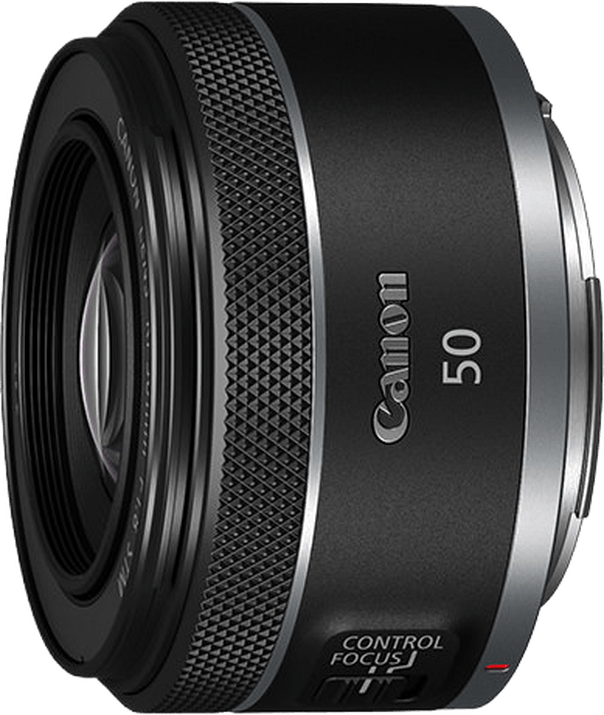
Canon RF 50mm F/1.8 STM
Canon · 50 mm · f/1.8
Score Breakdown
Scores combine our editorial testing with published lab data.
General | |
|---|---|
About This LensIntroduced in 2020 and still in production, this Canon prime is a fixed 50mm lens for RF-mount full-frame cameras. A 50mm view renders people and scenes at a natural scale. That makes it a good single lens for portraits, indoor family pictures, and everyday shots around town. The trade-off is the single focal length. You frame by stepping closer or further back instead of zooming, which takes a moment more thought per picture. In return, the lens stays small and light, so you can carry it every day and keep it on the camera between shots. | |
| Brand | Canon |
| Release Year | 2020 |
Production Status ⓘCurrent status of lens manufacturing (e.g., in production, discontinued). |  In Production In Production |
Version ⓘThe iteration or release number of a particular lens model. | I |
Lens Mount ⓘThe lens mount will tell you what type of lens range you can fit onto the camera body. Often the same camera company will have different lens ranges for different cameras. | Canon RF |
System ⓘIndicates which camera system the lens is designed to attach to. | Canon EOS R |
Maximum Format ⓘLargest sensor size compatible with the lens. |  Full Frame Full Frame |
Physical64/100 | |
About the BuildThis lens weighs 5.6 oz (160 g) and measures 1.59 in (40.5 mm) long and 2.72 in (69.2 mm) across. It is a compact full-frame lens, and the weight is barely noticeable on a camera. A screw-in filter attaches directly to the front. It must match the lens's 43mm thread, though a step-up ring can adapt larger filters you already own. | |
| Lens Weight | 160 g |
Lens Diameter ⓘWidth of the lens at its widest point | 69.2 mm |
Lens Length ⓘHow long the lens is from front to back. | 40.5 mm |
Front Filter Compatible ⓘSome lenses are compatible with front filters, some are compatible with back filters and some are compatible with both. Front filters are usually more convenient to add and remove. |  Yes Yes |
Front Filter Size ⓘDiameter of attachable filters. | 43 mm |
Optics82/100 | |
About the OpticsOn a full-frame body, 50mm frames a seated portrait from a comfortable working distance. It can include a small group when you have room to step back. Outdoors, it frames a street subject with some surroundings. In a tight room, a wider lens may fit more of the scene. The F/1.8 maximum aperture is the main photographic strength. It opens wide to gather more light than a smaller aperture, reducing the need to raise ISO or use flash indoors. It can also help you keep shutter speeds high enough for handheld work as the room dims. Wide open at F/1.8, depth of field can be thin at portrait distance. With careful focus, the eyes can stay sharp while a distant background softens. Stopping down brings more of the subject into focus when you want both eyes and facial details to stay clear. Closest focusing distance is 1 ft (30 cm). Maximum magnification is 0.25x, which is enough to fill the frame with a plate of food or a small object on a table. | |
Focal Range ⓘShortest to longest focal length of the lens (zoom range start - end ) | 50 mm |
Aperture Range ⓘLargest aperture at the lens's shortest focal length to longest focal length (aperture range start - end) | 1.8 |
| Focal Length Angle of View | 46.8° |
Flange Focal Distance ⓘDistance from lens mount to sensor. | 20 mm |
Diaphragm Type ⓘStructure and design of the aperture |  Automatic Automatic |
Blades ⓘNumber of diaphragm blades in aperture | 7020 |
Zoom Lens ⓘZoom allows you to vary the focal length, change between long shots and close-ups | No |
Closest Focusing Distance ⓘMinimum distance for a subject to be in focus. | 30 cm01500 |
Maximum Magnification ⓘLargest size a subject can be reproduced | 0.25x |
| Autofocus Mode |  Yes Yes |
| Manual Mode |  Yes Yes |
| Manual Focusing Ring |  Yes Yes |
Features | |
About the FeaturesThere is no image stabilization in the lens. At 50mm, handheld shutter speeds stay practical for most daylight work, and the F/1.8 aperture helps in dim rooms. The omission matters less here than it would on a long telephoto. For long exposures of still subjects indoors, firm support such as a tripod helps. For handheld shots, raising ISO lets you choose a faster shutter speed. A body with in-body stabilization can also help, while handheld video may need additional support for steady footage. The lens has no weather sealing, so keep it covered in rain, spray, or dust. There is no fluorine coating either, so wipe the front element with care after messy conditions. Neither omission matters much for mostly indoor use. | |
Weather Sealing ⓘWeather sealing capabilities will give you more confidence when shooting in unfavourable conditions. | No |
Fluorine Coating ⓘCoating to repel water and oil from lens elements. | No |
| Built In Lens Hood | No |
| Lens Hood Type |  Round Round |
Teleconverter ⓘA teleconverter (extender) is an extra piece of equipment that fits between the lens and the camera body to enhance magnification | No |
| Image Stabilization | No |
Construction15/100 | |
About the ConstructionThe design uses six elements in five groups, including aspherical glass. Aspherical surfaces are specially shaped to help correct distortion and spherical aberration, faults that can bend straight lines and soften detail. For a 50mm lens used on interiors, portraits, and street frames, that correction targets the common faults most likely to appear in those everyday shots. | |
Elements ⓘLens elements refer to individual pieces of glass within the lens. | 6 |
| Groups | 5 |
Aspherical Elements ⓘThe number of aspherical lens elements which can help correct aberrations such as spherical aberration. | 1 |
Bi Aspherical Elements ⓘElements with two non-spherical surfaces | 0 |
Low Dispersion ⓘElements that reduce chromatic aberration | 0 |
Super Low Dispersion ⓘAdvanced elements further reducing chromatic aberration | 0 |
CA Reduction ⓘBuilt-in features to reduce chromatic aberration | 0 |
Internal Focusing ⓘInternal Focusing means that the lens does not change in size during focusing, and the front element does not rotate. | No |