
Fujifilm FUJINON XF 150-600mm F/5.6-8 R LM OIS WR
Fujifilm · 150–600 mm · f/5.6–8 · XF · Image Stabilization
Score Breakdown
Scores combine our editorial testing with published lab data.
General | |
|---|---|
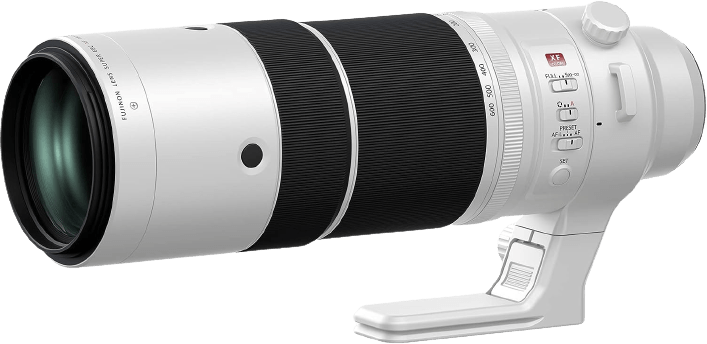
About This LensFujifilm built this 150–600mm zoom for its X-mount APS-C cameras, and it aims squarely at wildlife. At the 600mm end, distant birds and game keep a usable size in the frame. Fujifilm launched it in 2022 and still lists it in production. The range also suits outdoor sport and airshows, where action stays far off. The main trade-off is the slow f/5.6–8 maximum aperture, which needs decent light. Weight matters too, and a monopod eases a long morning in the field. Birders form the clearest audience. One lens covers everything from a distant speck to a bird filling the frame, without swapping between primes. The short end helps you pick up a bird in flight before zooming in. | |
| Brand | Fujifilm |
| Release Year | 2022 |
Production Status ⓘCurrent status of lens manufacturing (e.g., in production, discontinued). |  In Production |
Pro Branding ⓘSpecific branding codes used for professional-tier lenses. | XF |
Lens Mount ⓘThe lens mount will tell you what type of lens range you can fit onto the camera body. Often the same camera company will have different lens ranges for different cameras. | Fujifilm X |
System ⓘIndicates which camera system the lens is designed to attach to. | Fujifilm X |
Maximum Format ⓘLargest sensor size compatible with the lens. |  APS-C |
Physical92/100 | |
About the BuildThis lens weighs 3 lb 8.6 oz (1605 g) and measures 12.38 in (314.5 mm) long. You carry it deliberately rather than grab it casually. The front takes screw-in 82mm filters directly. A polariser that size trims glare off water when you photograph waders, and it can serve other 82mm lenses you own. | |
| Lens Weight | 1605 g |
Lens Diameter ⓘWidth of the lens at its widest point | 99 mm |
Lens Length ⓘHow long the lens is from front to back. | 314.5 mm |
Front Filter Compatible ⓘSome lenses are compatible with front filters, some are compatible with back filters and some are compatible with both. Front filters are usually more convenient to add and remove. |  Yes |
Front Filter Size ⓘDiameter of attachable filters. | 82 mm |
Optics51/100 | |
About the OpticsThe long end makes distant subjects large. A curlew feeding across an estuary or a raptor perched high in a tree fills a good part of the frame at 600mm. You tighten or widen framing from one spot, which helps when movement would scare the subject. The maximum aperture drops from f/5.6 to f/8 as you zoom. Dull light then forces slower shutter speeds or higher ISO. On sunny days, expect comfortable shutter speeds for perched birds. A bird taking off at 600mm may need the 150mm end and brighter conditions to keep the shutter fast. It focuses as close as 7.9 ft (240 cm). That helps with approachable subjects such as herons at a reserve or deer used to people. Working from a hide or car at 600mm also avoids disturbing shy subjects. Even at f/8, the long focal length keeps backgrounds soft, so a bird stands clear of busy reeds. Nine aperture blades help keep out-of-focus highlights round behind the subject. At a feeding station, clutter drops away quickly. | |
Focal Range ⓘShortest to longest focal length of the lens (zoom range start - end ) | 150–600 mm |
Aperture Range ⓘLargest aperture at the lens's shortest focal length to longest focal length (aperture range start - end) | 5.6–8 |
| Focal Length Angle of View | 10.77°–2.7° |
Flange Focal Distance ⓘDistance from lens mount to sensor. | 17.7 mm |
Diaphragm Type ⓘStructure and design of the aperture |  Automatic |
Blades ⓘNumber of diaphragm blades in aperture | 9020 |
Zoom Lens ⓘZoom allows you to vary the focal length, change between long shots and close-ups |  Yes |
Zoom Mechanism ⓘSystem enabling zoom function |  Manual |
Zoom Ring ⓘIf zooming is adjusted using a zoom ring |  Yes |
Zoom Type ⓘThe design or approach to zooming |  Rotary |
Closest Focusing Distance ⓘMinimum distance for a subject to be in focus. | 240 cm01500 |
Maximum Magnification ⓘLargest size a subject can be reproduced | 0.24x |
| Autofocus Mode |  Yes |
| Manual Mode |  Yes |
| Manual Focusing Ring |  Yes |
Features97/100 | |
About the FeaturesImage stabilisation is built in. It steadies the viewfinder image and helps you hold the lens steady at 600mm. No stop figure is listed, so treat it as an aid to handholding. It does not replace a fast shutter speed when your subject moves. Weather sealing protects the joins against dust and moisture, and a fluorine coating helps water and oil slide off the front glass. Cleaning up after a wet hide is quicker. On our features scale it scores 97. There is no zoom lock. When the lens hangs pointing down, the barrel can creep out, so check it before raising the camera. | |
Weather Sealing ⓘWeather sealing capabilities will give you more confidence when shooting in unfavourable conditions. |  Yes |
Fluorine Coating ⓘCoating to repel water and oil from lens elements. |  Yes |
| Built In Lens Hood | No |
| Lens Hood Type |  Round |
Zoom Lock ⓘZoom lock allows the zoom ring to be locked at the desired focal length | No |
Teleconverter ⓘA teleconverter (extender) is an extra piece of equipment that fits between the lens and the camera body to enhance magnification |  Yes |
| Image Stabilization | Yes |
IS Efficiency ⓘIS efficiency refers to the effectiveness of the image stabilization system in compensating for the blurring effects of camera shake, quantified by the number of stops of stabilization it provides. | 5 stops |
Construction17/100 | |
About the ConstructionThe design uses low-dispersion and super-low-dispersion glass. Such glass helps reduce chromatic aberration, where colours focus at different points and leave coloured fringes along high-contrast edges. That matters for birds and aircraft photographed against a bright sky, where fringes show most. | |
Elements ⓘLens elements refer to individual pieces of glass within the lens. | 24 |
| Groups | 17 |
Aspherical Elements ⓘThe number of aspherical lens elements which can help correct aberrations such as spherical aberration. | 0 |
Bi Aspherical Elements ⓘElements with two non-spherical surfaces | 0 |
Low Dispersion ⓘElements that reduce chromatic aberration | 1 |
Super Low Dispersion ⓘAdvanced elements further reducing chromatic aberration | 1 |
CA Reduction ⓘBuilt-in features to reduce chromatic aberration | 0 |
Internal Focusing ⓘInternal Focusing means that the lens does not change in size during focusing, and the front element does not rotate. | No |