
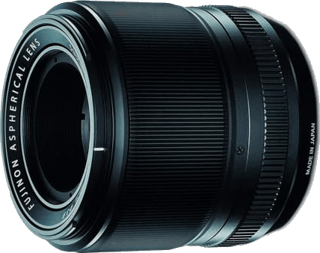
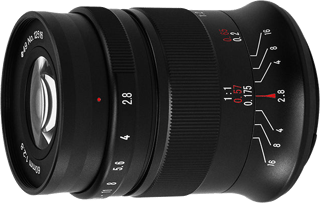
Fujifilm FUJINON XF 60mm F/2.4 R Macro versus 7Artisans MF 60mm f/2.8 II
f/2.8 vs f/2.4 · 1× vs 0.5× close-up reach · Manual focus instead of autofocus
Fujifilm · 60 mm · f/2.4 · XF
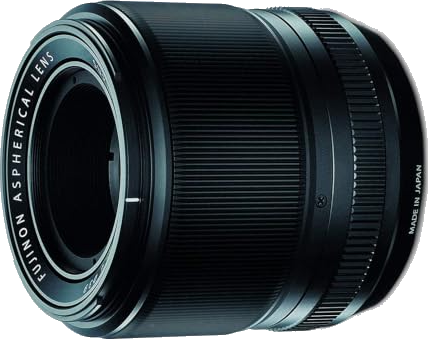
This lens score is calculated from published specifications.
General | |
|---|---|
About This LensThis prime lens gives Fujifilm X cameras a short telephoto view on the APS-C format. A single 60mm focal length keeps the design simple and light. It suits portraits, close-up details and everyday telephoto work. Fujifilm launched it in 2012, and it remains in production. It stays small and light, so it suits walks and travel. Anyone wanting one easy lens for people and nearby small subjects will find it fits well. Close focusing adds small-object work to its portrait range. The trade-off for that portability is a sparse feature set: there is no stabilisation and no weather sealing, which favours fair-weather use. | |
| Brand | Fujifilm |
| Release Year | 2012 |
Production Status ⓘCurrent status of lens manufacturing (e.g., in production, discontinued). |  In Production |
Pro Branding ⓘSpecific branding codes used for professional-tier lenses. | XF |
Lens Mount ⓘThe lens mount will tell you what type of lens range you can fit onto the camera body. Often the same camera company will have different lens ranges for different cameras. | Fujifilm X |
System ⓘIndicates which camera system the lens is designed to attach to. | Fujifilm X |
Maximum Format ⓘLargest sensor size compatible with the lens. |  APS-C |
Physical93/100 | |
About the BuildThe lens measures 2.8 in (71 mm) long and 2.52 in (64 mm) wide. It weighs just 7.6 oz (215 g), which suits all-day carry. Our physical score is 93 out of 100. A screw-in filter must match the 39mm thread on the front. | |
| Lens Weight | 215 g |
Lens Diameter ⓘWidth of the lens at its widest point | 64 mm |
Lens Length ⓘHow long the lens is from front to back. | 71 mm |
Front Filter Compatible ⓘSome lenses are compatible with front filters, some are compatible with back filters and some are compatible with both. Front filters are usually more convenient to add and remove. |  Yes |
Front Filter Size ⓘDiameter of attachable filters. | 39 mm |
Optics83/100 | |
About the OpticsAt 60mm, this lens frames a head-and-shoulders portrait from a comfortable working distance. The same view suits flowers, food and still-life details. The extra distance keeps the camera and its shadow away from small subjects, and it gives room for lighting. Faces also avoid the perspective stretch that closer, wider framing can produce. The f/2.4 maximum aperture helps in dim rooms, where a wider opening permits faster shutter speeds. It also softens the background behind a portrait, though a longer lens would blur it further. Nine aperture blades help keep the opening round when stopped down, which smooths the out-of-focus rendering. The closest focusing distance is 2 ft (60 cm). Maximum magnification is 0.5x, or half life-size. That falls short of true macro, which means 1:1 reproduction. Half life-size still renders a blossom or a coin large in the frame. Depth of field becomes very thin near maximum magnification, so stopping down helps keep a whole subject sharp. Our optics score is 83 out of 100. | |
Focal Range ⓘShortest to longest focal length of the lens (zoom range start - end ) | 60 mm |
Aperture Range ⓘLargest aperture at the lens's shortest focal length to longest focal length (aperture range start - end) | 2.4 |
| Focal Length Angle of View | 26.53053459308° |
Flange Focal Distance ⓘDistance from lens mount to sensor. | 17.7 mm |
Diaphragm Type ⓘStructure and design of the aperture |  Automatic |
Blades ⓘNumber of diaphragm blades in aperture | 9020 |
Zoom Lens ⓘZoom allows you to vary the focal length, change between long shots and close-ups | No |
Closest Focusing Distance ⓘMinimum distance for a subject to be in focus. | 60 cm01500 |
Maximum Magnification ⓘLargest size a subject can be reproduced | 0.5x |
| Autofocus Mode |  Yes |
| Manual Mode |  Yes |
| Manual Focusing Ring |  Yes |
Features0/100 | |
About the FeaturesThis lens has no image stabilisation. Handheld shooting in dim light therefore needs a fast enough shutter speed, a raised ISO or a stabilised camera body. For indoor portraits and evening detail work, planning the shutter speed is part of the routine. A tripod or a monopod offers another steady platform for the same scenes. Weather sealing is absent too. The lens handles ordinary dry outings well, but it needs protection from rain, spray and heavy dust. That suits studio and fair-weather use more than damp outdoor work. Fluorine coating is also missing, so the front element relies on careful cleaning rather than a smudge-resistant layer. | |
Weather Sealing ⓘWeather sealing capabilities will give you more confidence when shooting in unfavourable conditions. | No |
Fluorine Coating ⓘCoating to repel water and oil from lens elements. | No |
| Built In Lens Hood | No |
| Lens Hood Type |  Round |
Teleconverter ⓘA teleconverter (extender) is an extra piece of equipment that fits between the lens and the camera body to enhance magnification | No |
| Image Stabilization | No |
Construction31/100 | |
About the ConstructionThe optical formula uses 10 elements in 8 groups. The design includes aspherical elements. Their shaped surfaces help correct distortion and spherical aberration, faults that curve straight edges or soften focus. Fujifilm also uses low-dispersion glass here, which helps reduce chromatic aberration, the coloured fringes that can appear along high-contrast edges in close detail work. Our construction score is 31 out of 100. | |
Elements ⓘLens elements refer to individual pieces of glass within the lens. | 10 |
| Groups | 8 |
Aspherical Elements ⓘThe number of aspherical lens elements which can help correct aberrations such as spherical aberration. | 1 |
Bi Aspherical Elements ⓘElements with two non-spherical surfaces | 0 |
Low Dispersion ⓘElements that reduce chromatic aberration | 1 |
Super Low Dispersion ⓘAdvanced elements further reducing chromatic aberration | 0 |
CA Reduction ⓘBuilt-in features to reduce chromatic aberration | 0 |
Internal Focusing ⓘInternal Focusing means that the lens does not change in size during focusing, and the front element does not rotate. | No |
f/2.8 vs f/2.4 · 1× vs 0.5× close-up reach · Manual focus instead of autofocus
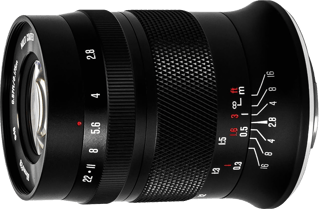
f/2.8 vs f/2.4 · 1× vs 0.5× close-up reach · Manual focus instead of autofocus
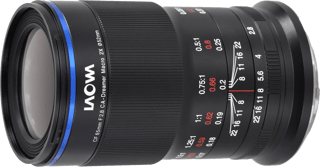
65 mm vs 60 mm · f/2.8 vs f/2.4 · 2× vs 0.5× close-up reach