
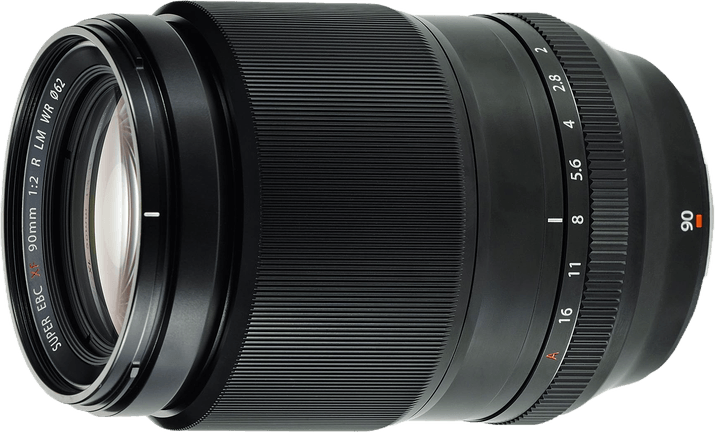
Fujifilm FUJINON XF 90mm F/2 R LM WR
Fujifilm · 90 mm · f/2 · XF
Score Breakdown
Scores combine our editorial testing with published lab data.
General | |
|---|---|
About This LensThis Fujifilm X-mount prime pairs a 90mm focal length with an f/2 aperture on APS-C cameras. That combination fits portrait photographers who want tight framing and soft backgrounds. It also suits candid street portraits, indoor events and detail work at moderate distance. The fixed focal length means you frame with your feet rather than a zoom ring. Fujifilm introduced the lens in 2015, and it remains in production. Buyers today get an older design that is still available new. The main trade-off is the missing stabilization, which we cover in Features. | |
| Brand | Fujifilm |
| Release Year | 2015 |
Production Status ⓘCurrent status of lens manufacturing (e.g., in production, discontinued). |  In Production |
Pro Branding ⓘSpecific branding codes used for professional-tier lenses. | XF |
Lens Mount ⓘThe lens mount will tell you what type of lens range you can fit onto the camera body. Often the same camera company will have different lens ranges for different cameras. | Fujifilm X |
System ⓘIndicates which camera system the lens is designed to attach to. | Fujifilm X |
Maximum Format ⓘLargest sensor size compatible with the lens. |  APS-C |
Physical93/100 | |
About the BuildThe lens weighs 1 lb 3 oz (540 g). It is 4.13 in (105 mm) long and 2.95 in (75 mm) wide. That is a moderate load for a fast telephoto prime, easy to hold through a long session. The physical score is 93/100. A screw-in filter attaches directly and must match the 62mm thread on the front. | |
| Lens Weight | 540 g |
Lens Diameter ⓘWidth of the lens at its widest point | 75 mm |
Lens Length ⓘHow long the lens is from front to back. | 105 mm |
Front Filter Compatible ⓘSome lenses are compatible with front filters, some are compatible with back filters and some are compatible with both. Front filters are usually more convenient to add and remove. |  Yes |
Front Filter Size ⓘDiameter of attachable filters. | 62 mm |
Optics78/100 | |
About the OpticsOn an APS-C sensor, 90mm behaves like a short telephoto, so faces dominate the frame from a comfortable distance. You can photograph a head and shoulders from a few steps back. That gap keeps perspective natural and gives a sitter breathing room. At an event, it picks out one guest across a crowded room. The f/2 aperture passes plenty of light for evening events and dim interiors. Wide open, it also separates a subject with shallow depth of field, letting a busy backdrop dissolve into blur. At close portrait range the sharp zone is thin, so placing focus on the near eye matters. Closest focus is 2 ft (60 cm), which keeps a comfortable working distance for portraits. Stopping down a little deepens the sharp zone when both eyes must stay crisp. For distant action such as wildlife, 90mm falls short, and a longer lens serves better. Seven aperture blades shape the out-of-focus highlights when you stop down. The optics score is 78/100. | |
Focal Range ⓘShortest to longest focal length of the lens (zoom range start - end ) | 90 mm |
Aperture Range ⓘLargest aperture at the lens's shortest focal length to longest focal length (aperture range start - end) | 2 |
| Focal Length Angle of View | 17.863842811155216° |
Flange Focal Distance ⓘDistance from lens mount to sensor. | 17.7 mm |
Diaphragm Type ⓘStructure and design of the aperture |  Automatic |
Blades ⓘNumber of diaphragm blades in aperture | 7020 |
Zoom Lens ⓘZoom allows you to vary the focal length, change between long shots and close-ups | No |
Closest Focusing Distance ⓘMinimum distance for a subject to be in focus. | 60 cm01500 |
Maximum Magnification ⓘLargest size a subject can be reproduced | 0.2x |
| Autofocus Mode |  Yes |
| Manual Mode |  Yes |
| Manual Focusing Ring |  Yes |
Features32/100 | |
About the FeaturesSealing against dust and moisture lets you keep shooting when a portrait session meets drizzle or a dusty track. The build tolerates outdoor conditions that would send an unsealed lens back into the bag. The sealing also helps keep grit out of the control rings. There is no image stabilization, so handheld sharpness rests on your shutter speed or a monopod. The bright aperture helps here, because f/2 keeps that shutter speed fast in poor light. A brace against a wall also helps between setups. The front element has no fluorine coating, so fingerprints and rain spots need a proper clean rather than a quick wipe. The feature set scores 32/100. | |
Weather Sealing ⓘWeather sealing capabilities will give you more confidence when shooting in unfavourable conditions. |  Yes |
Fluorine Coating ⓘCoating to repel water and oil from lens elements. | No |
| Built In Lens Hood | No |
| Lens Hood Type |  Round |
Teleconverter ⓘA teleconverter (extender) is an extra piece of equipment that fits between the lens and the camera body to enhance magnification | No |
| Image Stabilization | No |
Construction38/100 | |
About the ConstructionFocusing works internally, so the lens keeps its length while you rack from near to far. Fujifilm includes low-dispersion glass, which helps reduce chromatic aberration, where colours focus differently and leave coloured fringes. On backlit portraits, those fringes tend to trace bright edges such as hair against the sky. The construction score is 38/100. | |
Elements ⓘLens elements refer to individual pieces of glass within the lens. | 11 |
| Groups | 8 |
Aspherical Elements ⓘThe number of aspherical lens elements which can help correct aberrations such as spherical aberration. | 0 |
Bi Aspherical Elements ⓘElements with two non-spherical surfaces | 0 |
Low Dispersion ⓘElements that reduce chromatic aberration | 1 |
Super Low Dispersion ⓘAdvanced elements further reducing chromatic aberration | 0 |
CA Reduction ⓘBuilt-in features to reduce chromatic aberration | 0 |
Internal Focusing ⓘInternal Focusing means that the lens does not change in size during focusing, and the front element does not rotate. |  Yes |