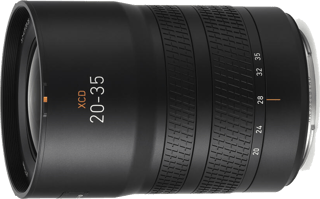
Same Brand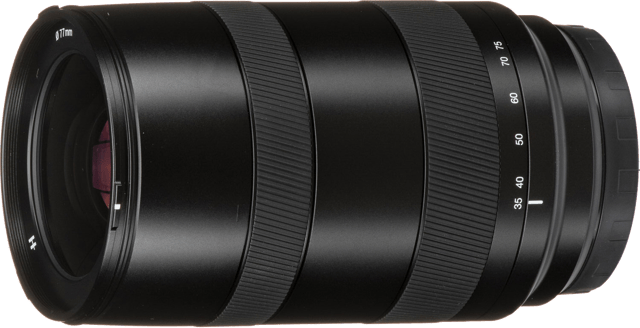
Hasselblad · 20–35 mm · f/3.2–4.5 · XCD
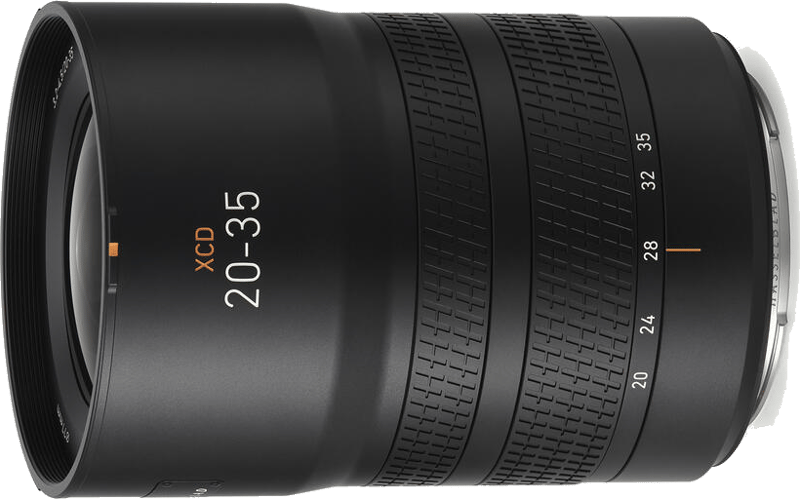
This lens score is calculated from published specifications.
General | |
|---|---|
About This LensThis zoom spans 20–35mm on Hasselblad X medium-format bodies and stays wide at every setting. That coverage suits landscape, architecture and interior photographers, who can move between sweeping views and tighter framing without changing lenses. Hasselblad introduced it in 2024, and it remains in production. The trade-off is speed. The maximum aperture opens to f/3.2 at 20mm and falls to f/4.5 by 35mm, and there is no built-in stabilisation. Tripod-based landscape and architecture work barely notices those limits. Handheld work in a dim interior asks more of the camera's ISO range. | |
| Brand | Hasselblad |
| Release Year | 2024 |
Production Status ⓘCurrent status of lens manufacturing (e.g., in production, discontinued). |  In Production |
Pro Branding ⓘSpecific branding codes used for professional-tier lenses. | XCD |
Lens Mount ⓘThe lens mount will tell you what type of lens range you can fit onto the camera body. Often the same camera company will have different lens ranges for different cameras. | Hasselblad X |
System ⓘIndicates which camera system the lens is designed to attach to. | Hasselblad X |
Maximum Format ⓘLargest sensor size compatible with the lens. |  Medium Format |
Physical100/100 | |
About the BuildThis medium-format ultra-wide zoom weighs 1 lb 12.4 oz (805 g) and runs 4.61 in (117 mm) long. The 77mm front thread takes screw-in filters directly, so the polarisers and ND filters useful for landscape work are easy to find. | |
| Lens Weight | 805 g |
Lens Diameter ⓘWidth of the lens at its widest point | 81 mm |
Lens Length ⓘHow long the lens is from front to back. | 117 mm |
Front Filter Compatible ⓘSome lenses are compatible with front filters, some are compatible with back filters and some are compatible with both. Front filters are usually more convenient to add and remove. |  Yes |
Front Filter Size ⓘDiameter of attachable filters. | 77 mm |
Optics64/100 | |
About the OpticsAt 20mm the lens gives an extremely wide view, enough to hold foreground and horizon in one landscape frame. It can also take in an entire room when your back is against the wall. The 35mm end still reads wide but tightens the composition, trimming empty sky when a scene spreads too far. The maximum aperture is modest for the system. It opens to f/3.2 at 20mm and falls to f/4.5 at 35mm. Wide views carry generous depth of field even at full aperture, so landscapes stay sharp from front to back without much stopping down. The cost is subject separation. At these focal lengths, backgrounds stay largely recognisable behind any nearby subject. Closest focus sits at 1 ft (32 cm). That is close enough to emphasise a foreground detail such as rock texture or a doorframe. The wide view keeps the surrounding space in the frame. Nine diaphragm blades help keep out-of-focus highlights evenly shaped when you do stop down. | |
Focal Range ⓘShortest to longest focal length of the lens (zoom range start - end ) | 20–35 mm |
Aperture Range ⓘLargest aperture at the lens's shortest focal length to longest focal length (aperture range start - end) | 3.2–4.5 |
| Focal Length Angle of View | 108°–76° |
Flange Focal Distance ⓘDistance from lens mount to sensor. | 18.14 mm |
Diaphragm Type ⓘStructure and design of the aperture |  Automatic |
Blades ⓘNumber of diaphragm blades in aperture | 9020 |
Zoom Lens ⓘZoom allows you to vary the focal length, change between long shots and close-ups |  Yes |
Zoom Mechanism ⓘSystem enabling zoom function |  Manual |
Zoom Ring ⓘIf zooming is adjusted using a zoom ring |  Yes |
Zoom Type ⓘThe design or approach to zooming |  Rotary |
Closest Focusing Distance ⓘMinimum distance for a subject to be in focus. | 32 cm01500 |
Maximum Magnification ⓘLargest size a subject can be reproduced | 0.16x |
| Autofocus Mode |  Yes |
| Manual Mode |  Yes |
| Manual Focusing Ring |  Yes |
Features32/100 | |
About the FeaturesWeather sealing guards the barrel against dust and moisture, useful for coastal and mountain landscape work where wind and spray are routine. There is no fluorine coating to help the front element shed water and oil, so expect to wipe the glass by hand in drizzle. There is no built-in stabilisation. A wide view allows slower handheld shutter speeds than a telephoto would, so the gap hurts less here than on a long lens. In fading interior light, though, nothing steadies the camera for you, and a tripod or a higher ISO fills in. A zoom lock is also absent, though a short wide zoom faces less pull from gravity than a long heavy one. The lens carries a Features score of 32/100. | |
Weather Sealing ⓘWeather sealing capabilities will give you more confidence when shooting in unfavourable conditions. |  Yes |
Fluorine Coating ⓘCoating to repel water and oil from lens elements. | No |
| Built In Lens Hood | No |
| Lens Hood Type |  Petal |
Zoom Lock ⓘZoom lock allows the zoom ring to be locked at the desired focal length | No |
Teleconverter ⓘA teleconverter (extender) is an extra piece of equipment that fits between the lens and the camera body to enhance magnification | No |
| Image Stabilization | No |
Construction54/100 | |
About the ConstructionInside the barrel, 16 elements sit in 12 groups. Three aspherical surfaces help correct distortion and spherical aberration, which matters for architecture, where distortion can bend straight walls and rooflines. Four low-dispersion elements help reduce chromatic aberration, the coloured fringing that can appear along high-contrast edges such as a bright sky against dark stone. Focusing moves elements within the barrel, so the lens keeps its length while focusing. | |
Elements ⓘLens elements refer to individual pieces of glass within the lens. | 16 |
| Groups | 12 |
Aspherical Elements ⓘThe number of aspherical lens elements which can help correct aberrations such as spherical aberration. | 3 |
Bi Aspherical Elements ⓘElements with two non-spherical surfaces | 0 |
Low Dispersion ⓘElements that reduce chromatic aberration | 4 |
Super Low Dispersion ⓘAdvanced elements further reducing chromatic aberration | 0 |
CA Reduction ⓘBuilt-in features to reduce chromatic aberration | 0 |
Internal Focusing ⓘInternal Focusing means that the lens does not change in size during focusing, and the front element does not rotate. |  Yes |
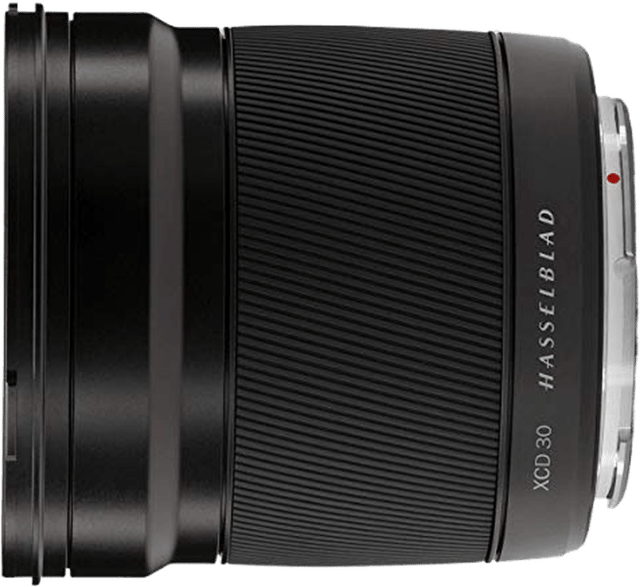
30 mm prime instead of 20–35 mm zoom
30 mm · f/2.4 instead of f/3.2–4.5 · Manual focus instead of autofocus