
Other Brand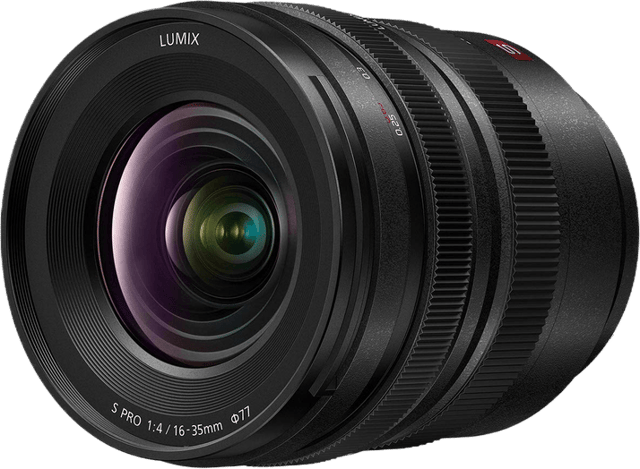
Panasonic LUMIX S Pro 16-35mm F/4
f/4 instead of f/3.5–4.5
Leica · 16–35 mm · f/3.5–4.5
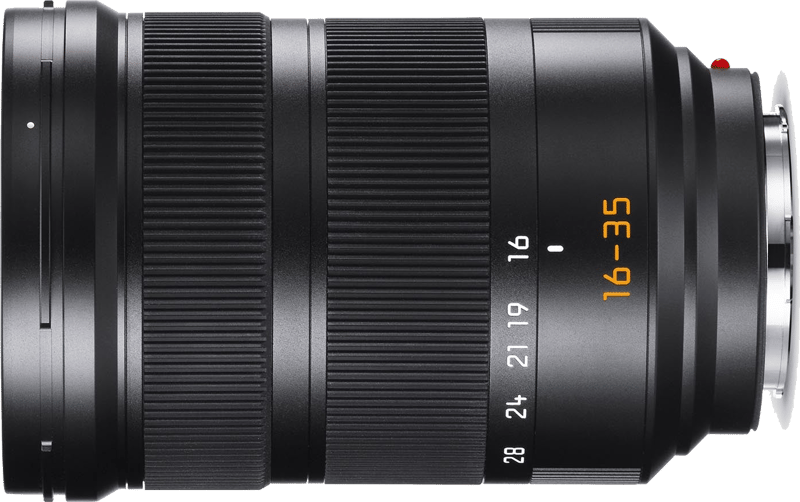
This lens score is calculated from published specifications.
General | |
|---|---|
About This LensLeica released this wide zoom in 2018 for full-frame L-mount cameras, and it remains in production today. The 16–35mm span suits landscape, architecture and interior photography, where you often cannot step back far enough to fit the scene. Travel and real-estate shooters find the same fit. The main trade-off is light gathering. The aperture opens to f/3.5 at 16mm and slows to f/4.5 at 35mm, and there is no built-in stabilisation. Most wide-angle work stops the lens down anyway, so the trade costs little in daylight. Dim handheld scenes will ask more of your ISO. | |
| Brand | Leica |
| Release Year | 2018 |
Production Status ⓘCurrent status of lens manufacturing (e.g., in production, discontinued). |  In Production |
Lens Mount ⓘThe lens mount will tell you what type of lens range you can fit onto the camera body. Often the same camera company will have different lens ranges for different cameras. | Leica L |
System ⓘIndicates which camera system the lens is designed to attach to. | Leica L |
Maximum Format ⓘLargest sensor size compatible with the lens. |  Full Frame |
Physical64/100 | |
About the BuildThis lens weighs 2 lb 2.9 oz (990 g). The barrel measures 3.46 in (88 mm) across and 4.84 in (123 mm) long. Screw-in filters thread straight onto the 82mm front. A polariser for skies and reflections is a common choice here, and the standard thread keeps filter buying simple. | |
| Lens Weight | 990 g |
Lens Diameter ⓘWidth of the lens at its widest point | 88 mm |
Lens Length ⓘHow long the lens is from front to back. | 123 mm |
Front Filter Compatible ⓘSome lenses are compatible with front filters, some are compatible with back filters and some are compatible with both. Front filters are usually more convenient to add and remove. |  Yes |
Front Filter Size ⓘDiameter of attachable filters. | 82 mm |
Optics63/100 | |
About the OpticsAt 16mm the lens fits whole rooms, tall buildings and broad skies into one frame. That makes it a natural choice for architecture and interiors, where walls limit your movement. The 35mm end gives a gentler wide view, useful for environmental portraits or a tighter landscape. The variable f/3.5–4.5 aperture favours depth of field over speed. Stopped down to f/8, the lens can hold foreground and horizon sharp together, which suits landscape framing. Wide open, f/3.5 at 16mm is modest for night-sky work, so expect longer exposures or a higher ISO. Close focus at 0.8 ft (25 cm) lets you place a rock or flower near the camera. The wide view still keeps the background in the frame behind it. Maximum magnification reaches 0.27x, so a small subject can fill a noticeable part of the frame. Nine aperture blades help keep out-of-focus highlights round when you stop down, which smooths water and foliage behind a foreground subject. | |
Focal Range ⓘShortest to longest focal length of the lens (zoom range start - end ) | 16–35 mm |
Aperture Range ⓘLargest aperture at the lens's shortest focal length to longest focal length (aperture range start - end) | 3.5–4.5 |
| Focal Length Angle of View | 107.03100741996673°–63.443975666842476° |
Flange Focal Distance ⓘDistance from lens mount to sensor. | 20 mm |
Diaphragm Type ⓘStructure and design of the aperture |  Automatic |
Blades ⓘNumber of diaphragm blades in aperture | 9020 |
Zoom Lens ⓘZoom allows you to vary the focal length, change between long shots and close-ups |  Yes |
Zoom Mechanism ⓘSystem enabling zoom function |  Manual |
Zoom Ring ⓘIf zooming is adjusted using a zoom ring |  Yes |
Zoom Type ⓘThe design or approach to zooming |  Rotary |
Closest Focusing Distance ⓘMinimum distance for a subject to be in focus. | 25 cm01500 |
Maximum Magnification ⓘLargest size a subject can be reproduced | 0.27x |
| Autofocus Mode |  Yes |
| Manual Mode |  Yes |
| Manual Focusing Ring |  Yes |
Features52/100 | |
About the FeaturesWeather sealing protects the joins against dust and moisture. That protection matters for landscape and outdoor architecture work, where drizzle and dust are common. You can keep shooting through sea spray with less worry. There is no built-in image stabilisation. At 16mm, the wide view tolerates slower handheld shutter speeds, so the loss is small for stills. Video and low-light shooters should plan on a tripod or a higher ISO. There is also no fluorine coating, so the front element needs more careful cleaning when it picks up spray or smears. The barrel offers no zoom lock either. This feature set scores 52/100 on our specification scale. | |
Weather Sealing ⓘWeather sealing capabilities will give you more confidence when shooting in unfavourable conditions. |  Yes |
Fluorine Coating ⓘCoating to repel water and oil from lens elements. | No |
| Built In Lens Hood | No |
| Lens Hood Type |  Rectangular |
Zoom Lock ⓘZoom lock allows the zoom ring to be locked at the desired focal length | No |
Teleconverter ⓘA teleconverter (extender) is an extra piece of equipment that fits between the lens and the camera body to enhance magnification |  Yes |
| Image Stabilization | No |
Construction54/100 | |
About the ConstructionThe design uses aspherical elements, whose shaped surfaces help correct distortion and spherical aberration. For architecture, that matters: distortion can bend straight wall and horizon lines. Internal focusing moves elements inside the barrel, so overall length stays constant while you focus. The layout also carries three listed measures against colour fringing. Those coloured edges often show on high-contrast scenes, such as branches against a bright sky. | |
Elements ⓘLens elements refer to individual pieces of glass within the lens. | 18 |
| Groups | 12 |
Aspherical Elements ⓘThe number of aspherical lens elements which can help correct aberrations such as spherical aberration. | 1 |
Bi Aspherical Elements ⓘElements with two non-spherical surfaces | 0 |
Low Dispersion ⓘElements that reduce chromatic aberration | 0 |
Super Low Dispersion ⓘAdvanced elements further reducing chromatic aberration | 0 |
CA Reduction ⓘBuilt-in features to reduce chromatic aberration | 3 |
Internal Focusing ⓘInternal Focusing means that the lens does not change in size during focusing, and the front element does not rotate. |  Yes |
f/4 instead of f/3.5–4.5
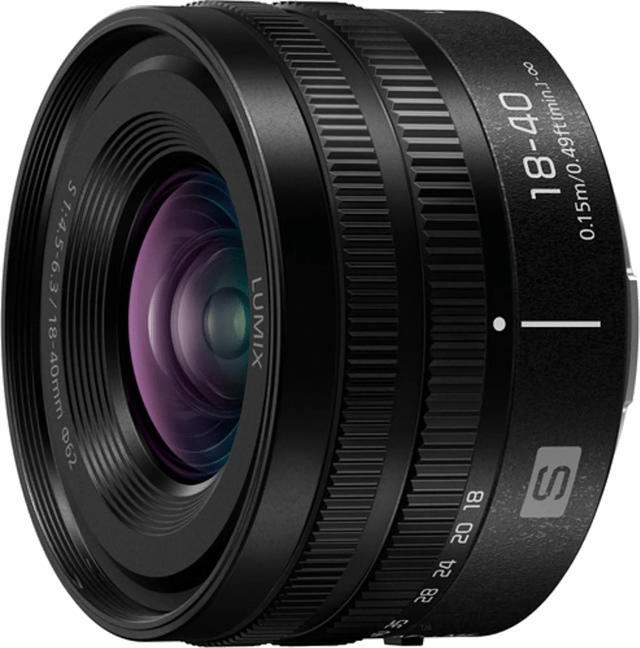
18–40 mm instead of 16–35 mm · f/4.5–6.3 instead of f/3.5–4.5
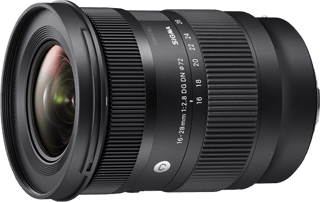
16–28 mm vs 16–35 mm · f/2.8 vs f/3.5 · 0.18× vs 0.27× close-up reach