
Lensbaby Velvet 56
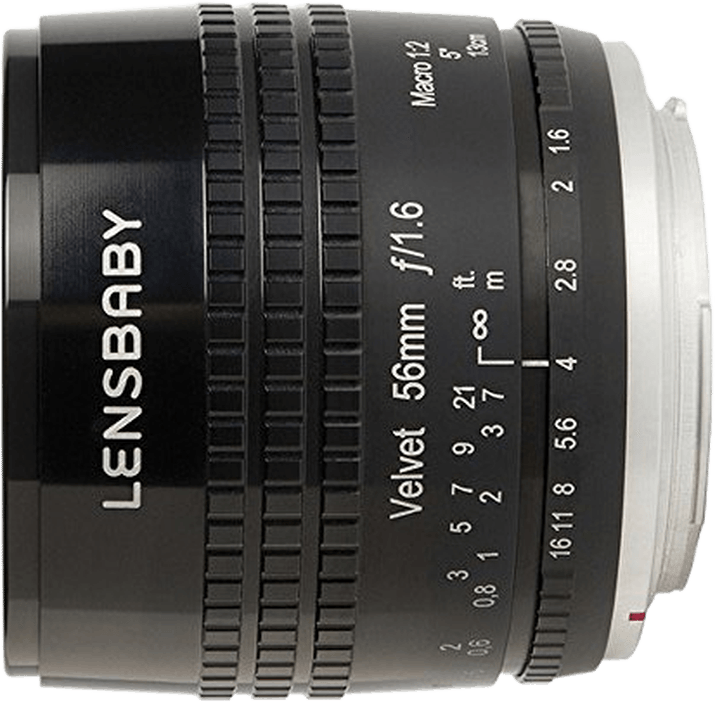
Lensbaby · 56 mm · f/1.6 · Velvet
Score Breakdown
This lens score is calculated from published specifications.
General | |
|---|---|
About This LensThe Lensbaby Velvet 56 is a manual-focus prime for Nikon F-mount cameras. It covers the full-frame format. The 56mm focal length frames people and nearby detail with a natural perspective. The bright f/1.6 aperture and very close focusing make it a strong fit for moody portraits and small subjects. This is an older design, first released in 2015. The main trade-off is control. Focusing is manual only, and there is no stabilization. The lens rewards slow, deliberate shooting rather than fast candid work. Buyers used to autofocus will need patience at first. | |
| Brand | Lensbaby |
| Release Year | 2015 |
Pro Branding ⓘSpecific branding codes used for professional-tier lenses. | Velvet |
Lens Mount ⓘThe lens mount will tell you what type of lens range you can fit onto the camera body. Often the same camera company will have different lens ranges for different cameras. | Nikon F |
System ⓘIndicates which camera system the lens is designed to attach to. | Nikon F |
Maximum Format ⓘLargest sensor size compatible with the lens. |  Full Frame |
Physical64/100 | |
About the BuildAt 14.1 oz (400 g), the Velvet 56 is light for a fast full-frame prime. The barrel measures 3.39 in (86 mm) across, so it sits compactly on the camera. Our physical specification score for this lens is 64/100. The light weight suits long handheld sessions, especially for a manual-focus lens you handle constantly, adjusting focus for each frame. | |
| Lens Weight | 400 g |
Lens Diameter ⓘWidth of the lens at its widest point | 86 mm |
Front Filter Compatible ⓘSome lenses are compatible with front filters, some are compatible with back filters and some are compatible with both. Front filters are usually more convenient to add and remove. |  Yes |
Front Filter Size ⓘDiameter of attachable filters. | 62 mm |
Optics74/100 | |
About the OpticsThe 56mm focal length gives a slightly tighter view than a standard prime. That view suits half-length portraits, table-top still-life and street detail. Framing is fixed, so you change composition by moving your feet. Food, flowers and small products also suit this focal length, because the lens can work close and wide open. The f/1.6 maximum aperture is the main optical strength. It gathers ample light for dim rooms and evening streets. It also narrows depth of field, so a portrait subject separates cleanly from a soft background. Nine aperture blades help out-of-focus highlights stay smoothly rounded. Stopping down a little brings more of the scene into focus. Close focusing sets the lens apart for detail work. It focuses as close as 0.4 ft (12.7 cm). Magnification reaches 0.5x, so a small subject fills more of the frame. The sharp zone is thin up close at wide apertures, so the precise manual ring earns its place. Our specification scoring gives the optics 74/100. | |
Focal Range ⓘShortest to longest focal length of the lens (zoom range start - end ) | 56 mm |
Aperture Range ⓘLargest aperture at the lens's shortest focal length to longest focal length (aperture range start - end) | 1.6 |
| Focal Length Angle of View | 42.25° |
Flange Focal Distance ⓘDistance from lens mount to sensor. | 46.5 mm |
Diaphragm Type ⓘStructure and design of the aperture |  Manual |
Blades ⓘNumber of diaphragm blades in aperture | 9020 |
Zoom Lens ⓘZoom allows you to vary the focal length, change between long shots and close-ups | No |
Closest Focusing Distance ⓘMinimum distance for a subject to be in focus. | 12.7 cm01500 |
Maximum Magnification ⓘLargest size a subject can be reproduced | 0.5x |
| Autofocus Mode | No |
| Manual Mode |  Yes |
| Manual Focusing Ring |  Yes |
Features0/100 | |
About the FeaturesThe Velvet 56 carries few modern aids. There is no image stabilization. At 56mm that matters most for handheld work in dim rooms, where you need a faster shutter speed, a steady grip or support. The wide f/1.6 aperture lets in enough light to offset some of the problem. In brighter light, or on a tripod, the gap barely shows. There is no weather sealing, so the lens suits dry conditions rather than rain or spray. No fluorine coating is listed on the front glass, so ordinary cleaning care applies. The front thread takes 62mm screw-in filters. Match any filter you screw directly onto the lens to that thread size. A 62mm polariser can help when you shoot flowers or products near a window. | |
Weather Sealing ⓘWeather sealing capabilities will give you more confidence when shooting in unfavourable conditions. | No |
Fluorine Coating ⓘCoating to repel water and oil from lens elements. | No |
| Built In Lens Hood | No |
Teleconverter ⓘA teleconverter (extender) is an extra piece of equipment that fits between the lens and the camera body to enhance magnification | No |
| Image Stabilization | No |
Construction0/100 | |
About the ConstructionInside are four elements arranged in three groups. The design lists no aspherical or low-dispersion glass. It is a simple, traditional layout. The lens does not use internal focusing. The simple, direct build suits the hands-on, manual-focus way this lens is meant to be used. | |
Elements ⓘLens elements refer to individual pieces of glass within the lens. | 4 |
| Groups | 3 |
Aspherical Elements ⓘThe number of aspherical lens elements which can help correct aberrations such as spherical aberration. | 0 |
Bi Aspherical Elements ⓘElements with two non-spherical surfaces | 0 |
Low Dispersion ⓘElements that reduce chromatic aberration | 0 |
Super Low Dispersion ⓘAdvanced elements further reducing chromatic aberration | 0 |
CA Reduction ⓘBuilt-in features to reduce chromatic aberration | 0 |
Internal Focusing ⓘInternal Focusing means that the lens does not change in size during focusing, and the front element does not rotate. | No |