
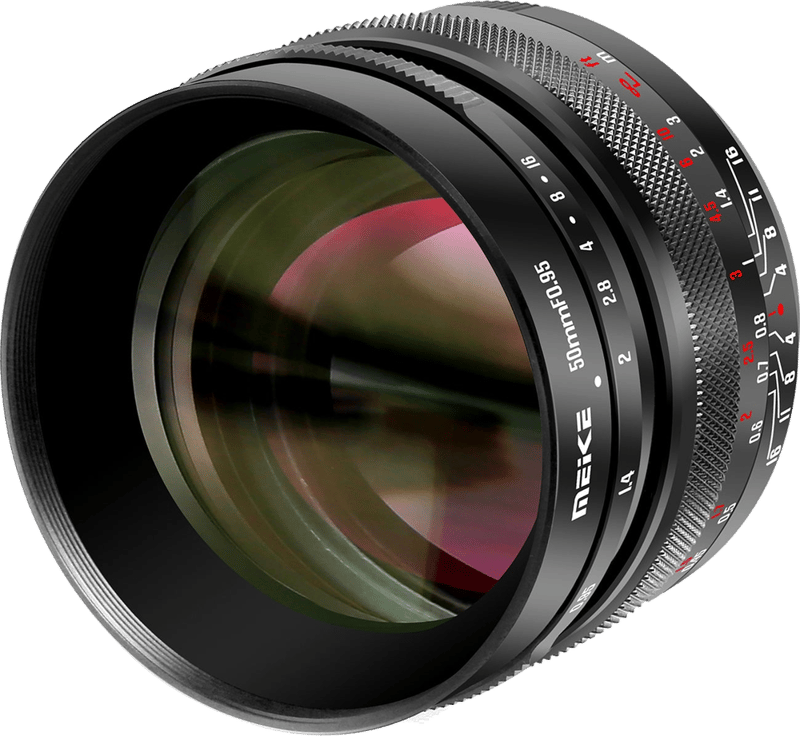
Meike 50mm f/0.95 MF
Meike · 50 mm · f/0.95
Score Breakdown
This lens score is calculated from published specifications.
General | |
|---|---|
About This LensThe Meike 50mm f/0.95 MF is a manual-focus prime for mirrorless cameras. Versions fit Canon EF-M, Fujifilm X, Micro Four Thirds, Nikon Z and Sony E, so choose the one made for your system. All five share a single optical design, and the family arrived in 2022. On the APS-C Canon EF-M version, the 50mm length frames like a short telephoto. That view suits portraits, low-light street work and quiet interiors. The f/0.95 maximum aperture is the main draw. Focusing entirely by hand is the main trade-off, and it rewards slow, deliberate framing over quick candid work. | |
| Brand | Meike |
| Release Year | 2022 |
Production Status ⓘCurrent status of lens manufacturing (e.g., in production, discontinued). |  In Production |
Lens Mount ⓘThe lens mount will tell you what type of lens range you can fit onto the camera body. Often the same camera company will have different lens ranges for different cameras. | Fujifilm X |
System ⓘIndicates which camera system the lens is designed to attach to. | Fujifilm X |
Physical57/100 | |
About the BuildAt 14.8 oz (420 g), the lens is moderate for a fast 50mm prime. The front accepts 62mm screw-in filters, so match any filter you buy to that thread. The physical specification scores 57. | |
| Lens Weight | 420 g |
Front Filter Compatible ⓘSome lenses are compatible with front filters, some are compatible with back filters and some are compatible with both. Front filters are usually more convenient to add and remove. |  Yes |
Front Filter Size ⓘDiameter of attachable filters. | 62 mm |
Optics77/100 | |
About the OpticsThe f/0.95 maximum aperture does the main work here. It gathers far more light than a typical f/1.8 prime, so candlelit interiors, late evening streets and dim venues stay workable. You can keep shooting handheld where slower lenses force higher sensitivity settings. That aperture also delivers very shallow depth of field. At portrait distances the eyes stay sharp while the background melts into soft color. The band of sharp focus is thin wide open, so careful work with the manual ring matters. Most mirrorless cameras offer peaking or an enlarged view to help. Thirteen aperture blades help the opening stay round when you stop down. Round blades help point lights behind the subject render as smooth circles rather than hard-edged shapes. That suits evening portraits with lamps or windows in the background. Stopping down slightly also deepens the zone of sharpness when you need it. Close focus sits at 1.5 ft (45 cm), which covers head-and-shoulders portraits and tabletop arrangements. Stepping back gives looser environmental framings, so the distance limit rarely blocks a portrait. The optics specification scores 77. | |
Focal Range ⓘShortest to longest focal length of the lens (zoom range start - end ) | 50 mm |
Aperture Range ⓘLargest aperture at the lens's shortest focal length to longest focal length (aperture range start - end) | 0.95 |
| Focal Length Angle of View | 32° |
Flange Focal Distance ⓘDistance from lens mount to sensor. | 17.7 mm |
Diaphragm Type ⓘStructure and design of the aperture |  Manual |
Blades ⓘNumber of diaphragm blades in aperture | 13020 |
Zoom Lens ⓘZoom allows you to vary the focal length, change between long shots and close-ups | No |
Closest Focusing Distance ⓘMinimum distance for a subject to be in focus. | 45 cm01500 |
Maximum Magnification ⓘLargest size a subject can be reproduced | 0.15x |
| Autofocus Mode | No |
| Manual Mode |  Yes |
| Manual Focusing Ring |  Yes |
Features0/100 | |
About the FeaturesThere is no image stabilization. The wide aperture allows shorter exposures in dim light, which reduces the need for it there. At 50mm, shots are also easier to hold steady than at longer focal lengths. For long static night exposures, brace the camera or use a support. The lens has no weather sealing, so keep it out of rain, spray and heavy dust. There is no fluorine coating on the front element either. Without that water-repelling layer, wipe the glass carefully after damp outdoor sessions. On a dusty street or breezy shoreline, cap the lens between shots. A 62mm clear filter can add a little front protection, since the thread accepts screw-in filters. It also keeps spray and dust off the front element between shots. | |
Weather Sealing ⓘWeather sealing capabilities will give you more confidence when shooting in unfavourable conditions. | No |
Fluorine Coating ⓘCoating to repel water and oil from lens elements. | No |
| Built In Lens Hood | No |
Teleconverter ⓘA teleconverter (extender) is an extra piece of equipment that fits between the lens and the camera body to enhance magnification | No |
| Image Stabilization | No |
Construction0/100 | |
About the ConstructionInside are seven elements in five groups, a straightforward layout for a fast manual prime. No aspherical or low-dispersion glass appears in the design, and focusing is not internal. All five mount versions share this same construction, so the shooting experience stays consistent whichever one you choose. | |
Elements ⓘLens elements refer to individual pieces of glass within the lens. | 7 |
| Groups | 5 |
Aspherical Elements ⓘThe number of aspherical lens elements which can help correct aberrations such as spherical aberration. | 0 |
Bi Aspherical Elements ⓘElements with two non-spherical surfaces | 0 |
Low Dispersion ⓘElements that reduce chromatic aberration | 0 |
Super Low Dispersion ⓘAdvanced elements further reducing chromatic aberration | 0 |
CA Reduction ⓘBuilt-in features to reduce chromatic aberration | 0 |
Internal Focusing ⓘInternal Focusing means that the lens does not change in size during focusing, and the front element does not rotate. | No |