
Zoom Flexibility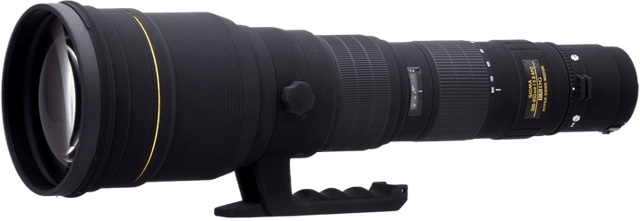
Sigma 300-800mm F/5.6 APO EX DG HSM
300–800 mm zoom instead of 800 mm prime
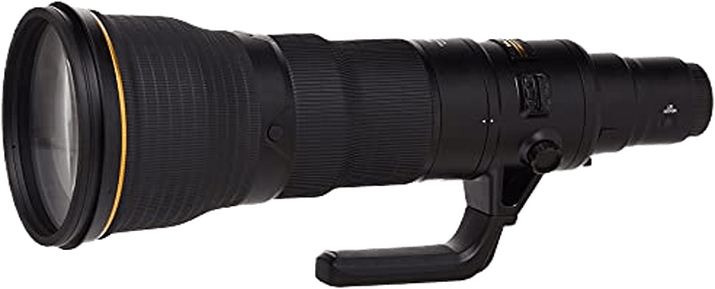
Nikon · 800 mm · f/5.6 · Image Stabilization
This lens score is calculated from published specifications.
General | |
|---|---|
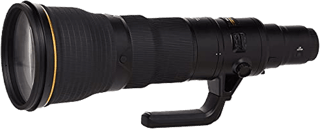
About This LensThis Nikon prime does one job: it makes distant subjects large. At 800mm, a bird across a marsh, a deer at the field edge or a player on the far touchline can fill the frame. It is made for Nikon F mount bodies and covers the full-frame format. That reach costs size and weight. The lens suits photographers who work mainly with distant wildlife and outdoor sport, not those who want one lens for varied days. Nikon introduced it in 2013, so it is an older design, though it is still in production. | |
| Brand | Nikon |
| Release Year | 2013 |
Production Status ⓘCurrent status of lens manufacturing (e.g., in production, discontinued). |  In Production |
Lens Mount ⓘThe lens mount will tell you what type of lens range you can fit onto the camera body. Often the same camera company will have different lens ranges for different cameras. | Nikon F |
System ⓘIndicates which camera system the lens is designed to attach to. | Nikon F |
Maximum Format ⓘLargest sensor size compatible with the lens. |  Full Frame |
Physical55/100 | |
About the BuildThe lens weighs 10 lb 1.9 oz (4590 g) and runs 18.15 in (461 mm) long with a 6.3 in (160 mm) body. It needs a sturdy support for steady framing. There is no front filter thread, so screw-in filters will not fit. | |
| Lens Weight | 4590 g |
Lens Diameter ⓘWidth of the lens at its widest point | 160 mm |
Lens Length ⓘHow long the lens is from front to back. | 461 mm |
Front Filter Compatible ⓘSome lenses are compatible with front filters, some are compatible with back filters and some are compatible with both. Front filters are usually more convenient to add and remove. | No |
Optics62/100 | |
About the OpticsThe 800mm focal length frames distant subjects tightly. A heron far across a lagoon, a raptor circling a cliff or a striker at the far goal can fill the frame. Small movements of the subject or the camera change the framing quickly, so composition needs attention. The maximum aperture is f/5.6. It helps keep shutter speeds usable in early morning and late evening light, when many birds and mammals are active. In heavy shade or dull weather, you will need higher ISO settings. The closest focus sits at 19.4 ft (590 cm), which suits the lens to distant work. The maximum magnification is 0.15x, so a small subject will not fill the frame. A frame-filling shot needs a subject of fair size, such as a deer or a swan. Nine aperture blades help keep the opening round when you stop down. Out-of-focus highlights then tend toward smooth circles rather than obvious polygons, which matters when shooting a subject against water or bright foliage. | |
Focal Range ⓘShortest to longest focal length of the lens (zoom range start - end ) | 800 mm |
Aperture Range ⓘLargest aperture at the lens's shortest focal length to longest focal length (aperture range start - end) | 5.6 |
| Focal Length Angle of View | 3.1° |
Flange Focal Distance ⓘDistance from lens mount to sensor. | 46.5 mm |
Diaphragm Type ⓘStructure and design of the aperture |  Automatic |
Blades ⓘNumber of diaphragm blades in aperture | 9020 |
Zoom Lens ⓘZoom allows you to vary the focal length, change between long shots and close-ups | No |
Closest Focusing Distance ⓘMinimum distance for a subject to be in focus. | 590 cm01500 |
Maximum Magnification ⓘLargest size a subject can be reproduced | 0.15x |
| Autofocus Mode |  Yes |
| Manual Mode |  Yes |
| Manual Focusing Ring |  Yes |
Features76/100 | |
About the FeaturesVibration Reduction is built in, and at 800mm it matters. Every small vibration shows in the viewfinder at this focal length, and VR works against that shake. It helps when you shoot from a support that is not perfectly rigid. It cannot freeze a moving subject, so a bird in flight still needs a fast shutter speed. Weather sealing protects the lens against dust and moisture in the field. Long-lens wildlife work often means hours beside water or in open country, so sealed construction fits that use. Its features score is 76. The front element has no fluorine coating, so water marks and fingerprints need more careful cleaning. Given the size of the front glass, plan for that after a wet session. | |
Weather Sealing ⓘWeather sealing capabilities will give you more confidence when shooting in unfavourable conditions. |  Yes |
Fluorine Coating ⓘCoating to repel water and oil from lens elements. | No |
| Built In Lens Hood | No |
| Lens Hood Type |  Round |
Teleconverter ⓘA teleconverter (extender) is an extra piece of equipment that fits between the lens and the camera body to enhance magnification |  Yes |
| Image Stabilization | Yes |
IS Efficiency ⓘIS efficiency refers to the effectiveness of the image stabilization system in compensating for the blurring effects of camera shake, quantified by the number of stops of stabilization it provides. | 4.5 stops |
Construction31/100 | |
About the ConstructionThe optical path holds 20 elements in 13 groups, and it includes low-dispersion glass. That glass helps reduce chromatic aberration, where colours focus at slightly different points and leave coloured fringes along high-contrast edges. A pale bird against a bright sky often creates those edges. | |
Elements ⓘLens elements refer to individual pieces of glass within the lens. | 20 |
| Groups | 13 |
Aspherical Elements ⓘThe number of aspherical lens elements which can help correct aberrations such as spherical aberration. | 0 |
Bi Aspherical Elements ⓘElements with two non-spherical surfaces | 0 |
Low Dispersion ⓘElements that reduce chromatic aberration | 1 |
Super Low Dispersion ⓘAdvanced elements further reducing chromatic aberration | 0 |
CA Reduction ⓘBuilt-in features to reduce chromatic aberration | 2 |
Internal Focusing ⓘInternal Focusing means that the lens does not change in size during focusing, and the front element does not rotate. | No |
300–800 mm zoom instead of 800 mm prime
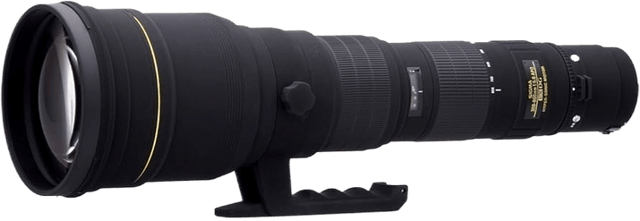
300–800 mm instead of 800 mm
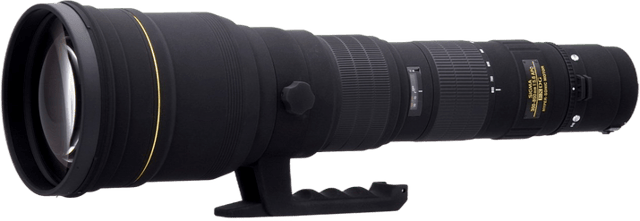
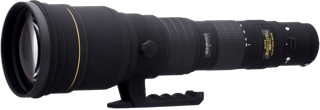
0.11× vs 0.15× close-up reach · No lens stabilization
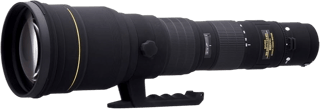
0.12× vs 0.15× close-up reach · No lens stabilization · 5950 g vs 4590 g