
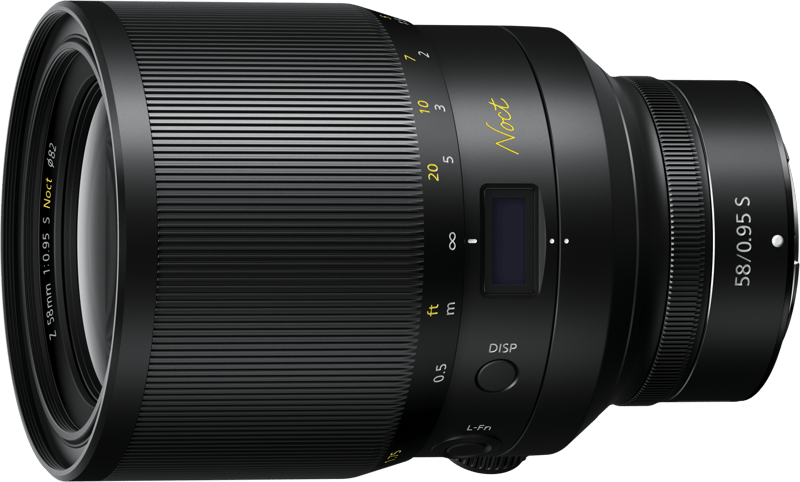
Nikon NIKKOR Z 58mm F/0.95 S Noct
Nikon · 58 mm · f/1 · S-Line
Score Breakdown
This lens score is calculated from published specifications.
General | |
|---|---|
About This LensNikon made this 58mm prime for Nikon Z full-frame cameras. It targets photographers who work in very dim light. Candlelit portraits, quiet interiors and night street scenes suit its purpose. The f/0.95 maximum aperture defines the lens. That aperture demands a large, heavy body, and focusing is manual only. These traits suit slow, deliberate work rather than fast candids. Nikon has built the Noct since 2019, and it remains in production. Because it is a prime, you frame by moving yourself. That suits photographers who like to work a scene on foot. | |
| Brand | Nikon |
| Release Year | 2019 |
Production Status ⓘCurrent status of lens manufacturing (e.g., in production, discontinued). |  In Production |
Pro Branding ⓘSpecific branding codes used for professional-tier lenses. | S-Line |
Lens Mount ⓘThe lens mount will tell you what type of lens range you can fit onto the camera body. Often the same camera company will have different lens ranges for different cameras. | Nikon Z |
System ⓘIndicates which camera system the lens is designed to attach to. | Nikon Z |
Maximum Format ⓘLargest sensor size compatible with the lens. |  Full Frame |
Physical99/100 | |
About the BuildAt 4 lb 6.5 oz (2000 g) this is a heavy lens. The body runs 4.02 in (102 mm) wide and 6.02 in (153 mm) long. If you use filters, a screw-in type must match the 82mm front thread. You will notice the weight during a long handheld session. | |
| Lens Weight | 2000 g |
Lens Diameter ⓘWidth of the lens at its widest point | 102 mm |
Lens Length ⓘHow long the lens is from front to back. | 153 mm |
Front Filter Compatible ⓘSome lenses are compatible with front filters, some are compatible with back filters and some are compatible with both. Front filters are usually more convenient to add and remove. |  Yes |
Front Filter Size ⓘDiameter of attachable filters. | 82 mm |
Optics81/100 | |
About the OpticsThe 58mm focal length gives a natural, familiar viewpoint. It frames portraits, street scenes and quiet interiors at comfortable distances. Faces keep their proportions at typical portrait range. The f/0.95 maximum aperture is the reason this lens exists. It gathers a very large amount of light. You can shoot by street lamps, candlelight or one window and still keep ISO settings low. You also gain freedom from flash in places where it would spoil the mood. When you want separation, that wide aperture also blurs a busy background into a smooth wash behind the subject. Open wide, the plane of sharpness is extremely thin. One eye can sit sharp while an ear a few inches back melts away. There is no autofocus, so you place that plane with the manual focusing ring. Closest focus is 1.6 ft (50 cm), enough to work close without crowding a sitter. The maximum magnification is 0.19x, which suits tight portrait framing. Eleven aperture blades keep the diaphragm close to round as it stops down, so point lights render as smooth circles rather than hard-edged shapes. | |
Focal Range ⓘShortest to longest focal length of the lens (zoom range start - end ) | 58 mm |
Aperture Range ⓘLargest aperture at the lens's shortest focal length to longest focal length (aperture range start - end) | 1 |
| Focal Length Angle of View | 40.91276517663726° |
Flange Focal Distance ⓘDistance from lens mount to sensor. | 16 mm |
Diaphragm Type ⓘStructure and design of the aperture |  Automatic |
Blades ⓘNumber of diaphragm blades in aperture | 11020 |
Zoom Lens ⓘZoom allows you to vary the focal length, change between long shots and close-ups | No |
Closest Focusing Distance ⓘMinimum distance for a subject to be in focus. | 50 cm01500 |
Maximum Magnification ⓘLargest size a subject can be reproduced | 0.19x |
| Autofocus Mode | No |
| Manual Mode |  Yes |
| Manual Focusing Ring |  Yes |
Features52/100 | |
About the FeaturesWeather sealing guards the lens against dust and moisture. Night air often turns damp, and this lens will spend long evenings out in it. The sealing helps you keep working through those conditions. A fluorine coating helps water, oil and dust slide off. That makes the glass easy to wipe clean after a damp evening, when moisture and grime collect. There is no image stabilization in the lens. At night, when exposures run long, a tripod or another firm support keeps the camera steady. The features score sits at 52. | |
Weather Sealing ⓘWeather sealing capabilities will give you more confidence when shooting in unfavourable conditions. |  Yes |
Fluorine Coating ⓘCoating to repel water and oil from lens elements. |  Yes |
| Built In Lens Hood | No |
| Lens Hood Type |  Round |
Teleconverter ⓘA teleconverter (extender) is an extra piece of equipment that fits between the lens and the camera body to enhance magnification | No |
| Image Stabilization | No |
Construction31/100 | |
About the ConstructionThe design includes aspherical elements. These specially shaped surfaces help correct distortion and spherical aberration, faults that curve straight edges and soften fine detail. Low-dispersion glass is also present. It helps reduce chromatic aberration, where colors focus differently and leave colored fringes along high-contrast edges. Night scenes put bright points of light against dark backgrounds, exactly the contrast where fringes show. | |
Elements ⓘLens elements refer to individual pieces of glass within the lens. | 17 |
| Groups | 10 |
Aspherical Elements ⓘThe number of aspherical lens elements which can help correct aberrations such as spherical aberration. | 1 |
Bi Aspherical Elements ⓘElements with two non-spherical surfaces | 0 |
Low Dispersion ⓘElements that reduce chromatic aberration | 1 |
Super Low Dispersion ⓘAdvanced elements further reducing chromatic aberration | 0 |
CA Reduction ⓘBuilt-in features to reduce chromatic aberration | 0 |
Internal Focusing ⓘInternal Focusing means that the lens does not change in size during focusing, and the front element does not rotate. | No |