
Nikon S-Line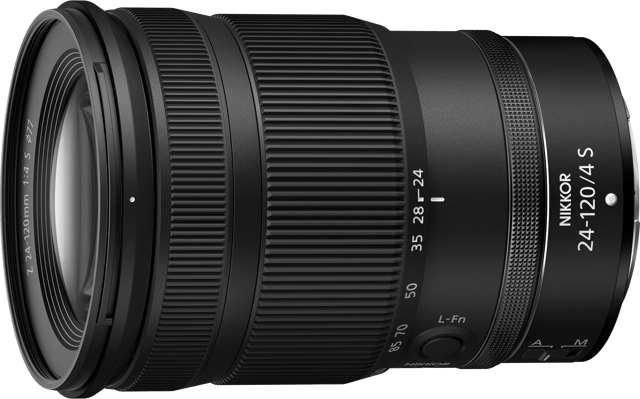
Nikon NIKKOR Z 24-120mm F/4 S
24–120 mm instead of 28–135 mm
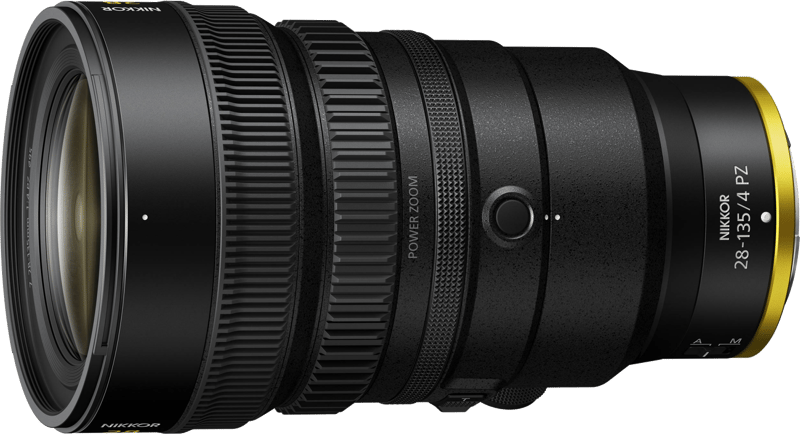
Nikon · 28–135 mm · f/4
This lens score is calculated from published specifications.
General | |
|---|---|
About This LensNikon released the Z 28-135mm f/4 PZ in 2025, and it remains in production. This full-frame zoom fits Nikon Z cameras and covers a broad span, from 28mm wide views to 135mm portraits. That range makes it a natural fit for video work, events and travel, where one lens has to follow changing scenes. The PZ in the name stands for power zoom, a video-friendly feature covered later. The main trade-off is light gathering and steadiness. The f/4 maximum aperture is modest for dim interiors, and there is no stabilisation in the lens. | |
| Brand | Nikon |
| Release Year | 2025 |
Production Status ⓘCurrent status of lens manufacturing (e.g., in production, discontinued). |  In Production |
Lens Mount ⓘThe lens mount will tell you what type of lens range you can fit onto the camera body. Often the same camera company will have different lens ranges for different cameras. | Nikon Z |
System ⓘIndicates which camera system the lens is designed to attach to. | Nikon Z |
Maximum Format ⓘLargest sensor size compatible with the lens. |  Full Frame |
Physical64/100 | |
About the BuildThis is a heavy lens at 2 lb 10.7 oz (1210 g), and it measures 6.99 in (177.5 mm) long. It accepts screw-in filters, and any polariser or ND attached directly to the thread must be 95mm. For long handheld sessions, that weight points toward a rig or monopod. | |
| Lens Weight | 1210 g |
Lens Diameter ⓘWidth of the lens at its widest point | 105 mm |
Lens Length ⓘHow long the lens is from front to back. | 177.5 mm |
Front Filter Compatible ⓘSome lenses are compatible with front filters, some are compatible with back filters and some are compatible with both. Front filters are usually more convenient to add and remove. |  Yes |
Front Filter Size ⓘDiameter of attachable filters. | 95 mm |
Optics71/100 | |
About the OpticsThe 28–135mm span covers most of a working day. At 28mm it frames interiors, groups and establishing views. At 135mm it makes the subject larger, tightens a portrait or isolates a speaker across a room. The middle of the range suits straightforward views of people. That breadth means fewer lens swaps during an event. The maximum aperture stays at f/4 across the whole range. Exposure therefore holds steady as you zoom, which helps when filming a continuous take. In dim rooms, f/4 admits less light than a faster zoom would, so expect higher ISO or added light. At 135mm, f/4 still softens a portrait background, just not as strongly as f/2.8 glass. Minimum focus sits at 1.1 ft (34 cm), close enough for food, documents and small props on a table. Maximum magnification reaches 0.25x, enough for modest close framing of flowers or gear. Both figures suit the detail shots that fill out a video sequence. Our specification scoring rates the optics at 71. | |
Focal Range ⓘShortest to longest focal length of the lens (zoom range start - end ) | 28–135 mm |
Aperture Range ⓘLargest aperture at the lens's shortest focal length to longest focal length (aperture range start - end) | 4 |
| Focal Length Angle of View | 75°–18.17° |
Flange Focal Distance ⓘDistance from lens mount to sensor. | 16 mm |
Diaphragm Type ⓘStructure and design of the aperture |  Automatic |
Blades ⓘNumber of diaphragm blades in aperture | 9020 |
Zoom Lens ⓘZoom allows you to vary the focal length, change between long shots and close-ups |  Yes |
Zoom Mechanism ⓘSystem enabling zoom function |  Electric |
Zoom Ring ⓘIf zooming is adjusted using a zoom ring |  Yes |
Zoom Type ⓘThe design or approach to zooming |  Rotary |
Closest Focusing Distance ⓘMinimum distance for a subject to be in focus. | 34 cm01500 |
Maximum Magnification ⓘLargest size a subject can be reproduced | 0.25x |
| Autofocus Mode |  Yes |
| Manual Mode |  Yes |
| Manual Focusing Ring |  Yes |
Features52/100 | |
About the FeaturesPZ stands for power zoom. An electric motor drives the zoom, and a rotating ring sets the speed. That helps zooming stay smooth on camera, which suits run-and-gun filming and live events. Powered zoom is this lens's headline feature. There is no stabilisation built into the lens. For handheld video, plan on a camera with in-body stabilisation or a gimbal. The lens also lacks a zoom lock. Weather sealing guards the interior against dust and moisture, which supports outdoor shoots in changeable conditions. A fluorine coating on the front element repels water and oil, so rain spots and fingerprints wipe away more easily. Our features score for this lens is 52. | |
Weather Sealing ⓘWeather sealing capabilities will give you more confidence when shooting in unfavourable conditions. |  Yes |
Fluorine Coating ⓘCoating to repel water and oil from lens elements. |  Yes |
| Built In Lens Hood | No |
| Lens Hood Type |  Rectangular |
Zoom Lock ⓘZoom lock allows the zoom ring to be locked at the desired focal length | No |
Teleconverter ⓘA teleconverter (extender) is an extra piece of equipment that fits between the lens and the camera body to enhance magnification | No |
| Image Stabilization | No |
Construction54/100 | |
About the ConstructionFive aspherical elements use specially shaped surfaces to help correct distortion and spherical aberration. Interior walls and doorframes at 28mm are the sort of straight-edged subject that benefits from that correction. Four low-dispersion elements help reduce chromatic aberration, the coloured fringes that can appear along high-contrast edges such as a window behind a portrait subject. | |
Elements ⓘLens elements refer to individual pieces of glass within the lens. | 18 |
| Groups | 13 |
Aspherical Elements ⓘThe number of aspherical lens elements which can help correct aberrations such as spherical aberration. | 5 |
Bi Aspherical Elements ⓘElements with two non-spherical surfaces | 0 |
Low Dispersion ⓘElements that reduce chromatic aberration | 4 |
Super Low Dispersion ⓘAdvanced elements further reducing chromatic aberration | 0 |
CA Reduction ⓘBuilt-in features to reduce chromatic aberration | 0 |
Internal Focusing ⓘInternal Focusing means that the lens does not change in size during focusing, and the front element does not rotate. |  Yes |
24–120 mm instead of 28–135 mm
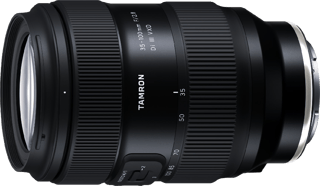
35–150 mm vs 28–135 mm · f/2 vs f/4 · 0.17× vs 0.25× close-up reach
35–100 mm vs 28–135 mm · f/2.8 vs f/4 · 0.3× vs 0.25× close-up reach