
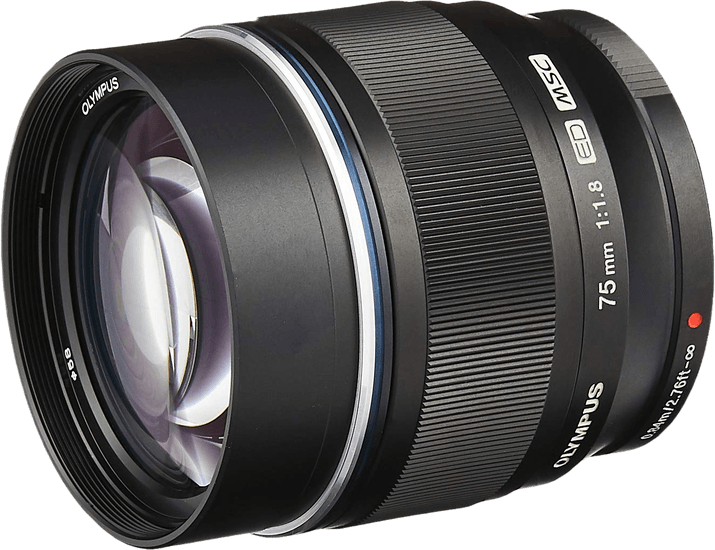
OM System M.Zuiko Digital ED 75mm f/1.8
OM System · 75 mm · f/1.8
Score Breakdown
This lens score is calculated from published specifications.
General | |
|---|---|
About This LensThis Micro Four Thirds prime is a bright telephoto for portraits, stage work and indoor events. Its 75mm focal length narrows the view to one person. That reach lets you work from a comfortable distance across a stage or room. Head-and-shoulders portraits are its natural home. Introduced in 2012, it is an older, straightforward design. It swaps zoom flexibility and weather protection for low weight and a wide f/1.8 aperture. Portrait, theatre and event photographers are the clearest fit. They get a light lens built around working distance and dim rooms. | |
| Brand | OM System |
| Release Year | 2012 |
Lens Mount ⓘThe lens mount will tell you what type of lens range you can fit onto the camera body. Often the same camera company will have different lens ranges for different cameras. | Micro Four Thirds |
System ⓘIndicates which camera system the lens is designed to attach to. | Micro Four Thirds |
Maximum Format ⓘLargest sensor size compatible with the lens. | Micro Four Thirds |
Physical64/100 | |
About the BuildAt 10.8 oz (305 g), this is a light telephoto. The barrel measures 2.52 in (64 mm) across and 2.72 in (69 mm) long. That size suits the small Micro Four Thirds cameras it mounts on. A screw-in filter must match the 58mm thread, a common size many photographers already own. | |
| Lens Weight | 305 g |
Lens Diameter ⓘWidth of the lens at its widest point | 64 mm |
Lens Length ⓘHow long the lens is from front to back. | 69 mm |
Front Filter Compatible ⓘSome lenses are compatible with front filters, some are compatible with back filters and some are compatible with both. Front filters are usually more convenient to add and remove. |  Yes |
Front Filter Size ⓘDiameter of attachable filters. | 58 mm |
Optics84/100 | |
About the OpticsYou can fill the frame with a face from several steps away, which keeps features natural and subjects relaxed. The same reach works from the back rows of a theatre or the sideline of an indoor game. It also suits candid portraits on the street. The f/1.8 maximum aperture lets in plenty of light. In a dim venue, it can help keep shutter speeds high as a performer moves. Wide open, depth of field is shallow, so a face separates clearly from a cluttered background. A portrait taken this way keeps attention on the eyes and expression. Closest focus sits at 2.8 ft (84 cm), enough for a tight head shot with a little air between you and the sitter. The maximum magnification of 0.1x is a separate figure, not a joined operating point. Nine aperture blades help keep out-of-focus highlights round at smaller apertures, which suits backgrounds of evening lights. Our optics specification score for this lens is 84 out of 100. | |
Focal Range ⓘShortest to longest focal length of the lens (zoom range start - end ) | 75 mm |
Aperture Range ⓘLargest aperture at the lens's shortest focal length to longest focal length (aperture range start - end) | 1.8 |
| Focal Length Angle of View | 16° |
Flange Focal Distance ⓘDistance from lens mount to sensor. | 19.25 mm |
Diaphragm Type ⓘStructure and design of the aperture |  Automatic |
Blades ⓘNumber of diaphragm blades in aperture | 9020 |
Zoom Lens ⓘZoom allows you to vary the focal length, change between long shots and close-ups | No |
Closest Focusing Distance ⓘMinimum distance for a subject to be in focus. | 84 cm01500 |
Maximum Magnification ⓘLargest size a subject can be reproduced | 0.1x |
| Autofocus Mode |  Yes |
| Manual Mode |  Yes |
| Manual Focusing Ring |  Yes |
Features0/100 | |
About the FeaturesThe lens has no image stabilisation. At this focal length on Micro Four Thirds, handheld work in dim light leans on shutter speed and steady hands. A monopod helps through long events such as recitals. Raise the ISO when the light falls and a subject moves. In good light, the gap rarely matters. Weather sealing is absent too, so keep drizzle and spray off the barrel during outdoor sessions. The front element also has no fluorine coating on this 2012 design. This simple feature set fits controlled settings more than rough outdoor assignments. | |
Weather Sealing ⓘWeather sealing capabilities will give you more confidence when shooting in unfavourable conditions. | No |
Fluorine Coating ⓘCoating to repel water and oil from lens elements. | No |
| Built In Lens Hood | No |
Teleconverter ⓘA teleconverter (extender) is an extra piece of equipment that fits between the lens and the camera body to enhance magnification | No |
| Image Stabilization | No |
Construction38/100 | |
About the ConstructionTen elements in nine groups include three low-dispersion elements. Low-dispersion glass helps reduce chromatic aberration. That is the coloured fringing that can appear along high-contrast edges, such as stage lights or bright window frames behind a portrait. No aspherical elements appear in the construction. The design also uses internal focusing. Our construction specification score is 38 out of 100. | |
Elements ⓘLens elements refer to individual pieces of glass within the lens. | 10 |
| Groups | 9 |
Aspherical Elements ⓘThe number of aspherical lens elements which can help correct aberrations such as spherical aberration. | 0 |
Bi Aspherical Elements ⓘElements with two non-spherical surfaces | 0 |
Low Dispersion ⓘElements that reduce chromatic aberration | 3 |
Super Low Dispersion ⓘAdvanced elements further reducing chromatic aberration | 0 |
CA Reduction ⓘBuilt-in features to reduce chromatic aberration | 0 |
Internal Focusing ⓘInternal Focusing means that the lens does not change in size during focusing, and the front element does not rotate. |  Yes |