
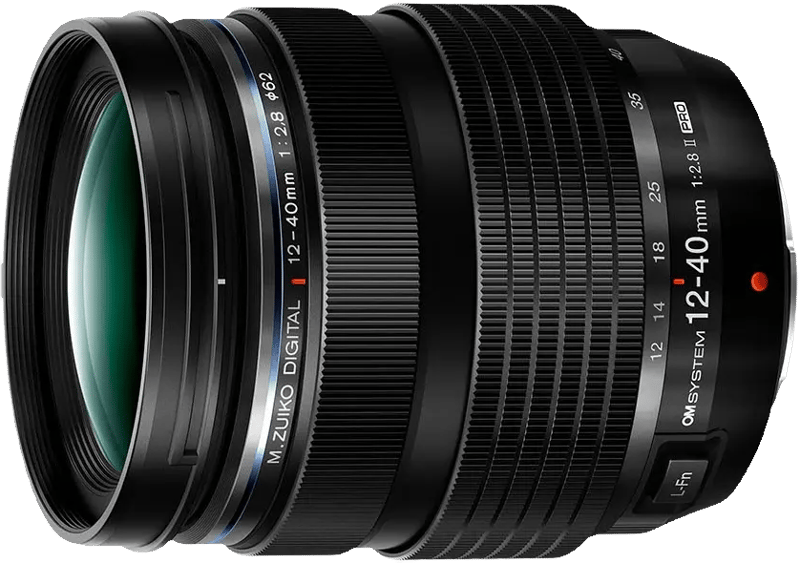
OM System ED 12-40mm f/2.8 PRO II
OM System · 12–40 mm · f/2.8 · PRO
Score Breakdown
This lens score is calculated from published specifications.
General | |
|---|---|
About This LensOM System released the ED 12-40mm f/2.8 PRO II in 2022, and it remains in production. It is a standard zoom for Micro Four Thirds cameras, covering wide scenes at 12mm and tighter portraits at 40mm. That span suits travel, street and everyday assignments where one lens must do varied work. The maximum aperture is a constant f/2.8. The main trade-off is control. Focusing is manual only, and the lens offers no stabilization or weather sealing. It suits a photographer who works slowly and deliberately, not one chasing fast action. | |
| Brand | OM System |
| Release Year | 2022 |
Production Status ⓘCurrent status of lens manufacturing (e.g., in production, discontinued). |  In Production |
Version ⓘThe iteration or release number of a particular lens model. | II |
Pro Branding ⓘSpecific branding codes used for professional-tier lenses. | PRO |
Lens Mount ⓘThe lens mount will tell you what type of lens range you can fit onto the camera body. Often the same camera company will have different lens ranges for different cameras. | Micro Four Thirds |
System ⓘIndicates which camera system the lens is designed to attach to. | Micro Four Thirds |
Maximum Format ⓘLargest sensor size compatible with the lens. |  Full Frame |
Physical93/100 | |
About the BuildAt 13.5 oz (382 g), the lens stays light for a long day of shooting. Its 2.75 in (69.9 mm) width and 3.31 in (84 mm) length keep it compact on the camera. The front takes no screw-in filter. It scores 93/100 for physical design in our ratings. | |
| Lens Weight | 382 g |
Lens Diameter ⓘWidth of the lens at its widest point | 69.9 mm |
Lens Length ⓘHow long the lens is from front to back. | 84 mm |
Front Filter Compatible ⓘSome lenses are compatible with front filters, some are compatible with back filters and some are compatible with both. Front filters are usually more convenient to add and remove. | No |
Optics57/100 | |
About the OpticsThe 12–40mm range runs from wide angle to short telephoto. At 12mm you can frame architecture, interiors and sweeping landscapes. The 40mm end suits portraits, street scenes and tighter detail, so one zoom handles a full day of varied subjects. Between them, the middle lengths handle walkabout framing without lens changes. The maximum aperture stays at f/2.8 through the whole zoom. That keeps exposure even as you change framing, and it holds shutter speed up in dim rooms or evening streets. At 40mm, f/2.8 also blurs the background behind a portrait. At 12mm depth of field runs deep, so the wide end mainly buys light. The lens focuses as close as 0.7 ft (20 cm). Maximum magnification reaches 0.3x, so flowers, food and small products can fill a useful part of the frame. That close, the lens front sits near the subject, and your shadow can fall across it. Focusing is manual only, so this lens rewards slow, careful work. Close subjects and tripod-composed landscapes give you time to focus precisely. In our ratings it scores 57/100 for optics. | |
Focal Range ⓘShortest to longest focal length of the lens (zoom range start - end ) | 12–40 mm |
Aperture Range ⓘLargest aperture at the lens's shortest focal length to longest focal length (aperture range start - end) | 2.8 |
| Focal Length Angle of View | 84°–30° |
Flange Focal Distance ⓘDistance from lens mount to sensor. | 19.25 mm |
Diaphragm Type ⓘStructure and design of the aperture |  Automatic |
Blades ⓘNumber of diaphragm blades in aperture | 7020 |
Zoom Lens ⓘZoom allows you to vary the focal length, change between long shots and close-ups |  Yes |
Zoom Mechanism ⓘSystem enabling zoom function |  Electric |
Zoom Ring ⓘIf zooming is adjusted using a zoom ring | No |
Zoom Type ⓘThe design or approach to zooming |  Push and Pull |
Closest Focusing Distance ⓘMinimum distance for a subject to be in focus. | 20 cm01500 |
Maximum Magnification ⓘLargest size a subject can be reproduced | 0.3x |
| Autofocus Mode | No |
| Manual Mode | No |
| Manual Focusing Ring | No |
Features0/100 | |
About the FeaturesImage stabilization is not built in. For handheld work, use a faster shutter speed or a camera body that stabilises. That matters most in dim rooms and evening streets, where light runs short. Careful handholding, or a tripod, covers the rest. The lens also lacks weather sealing, so keep it out of rain and heavy dust. No fluorine coating protects the front glass either, so cleaning takes ordinary care. The zoom is driven electrically through a push-pull control rather than a twist ring. There is no zoom lock, so nothing holds a chosen position for you. | |
Weather Sealing ⓘWeather sealing capabilities will give you more confidence when shooting in unfavourable conditions. | No |
Fluorine Coating ⓘCoating to repel water and oil from lens elements. | No |
| Built In Lens Hood | No |
| Lens Hood Type |  Dome |
Zoom Lock ⓘZoom lock allows the zoom ring to be locked at the desired focal length | No |
Teleconverter ⓘA teleconverter (extender) is an extra piece of equipment that fits between the lens and the camera body to enhance magnification | No |
| Image Stabilization | No |
Construction31/100 | |
About the ConstructionThe optical formula uses 14 elements in 9 groups. Four aspherical elements carry specially shaped surfaces that help correct distortion and spherical aberration. That help matters for the architecture and interiors you frame at 12mm, where distortion can bend straight edges. Two low-dispersion elements help reduce chromatic aberration. That is the colour fringing you can see along high-contrast edges, such as a rooftop against a bright sky. It scores 31/100 for construction in our ratings. | |
Elements ⓘLens elements refer to individual pieces of glass within the lens. | 14 |
| Groups | 9 |
Aspherical Elements ⓘThe number of aspherical lens elements which can help correct aberrations such as spherical aberration. | 4 |
Bi Aspherical Elements ⓘElements with two non-spherical surfaces | 0 |
Low Dispersion ⓘElements that reduce chromatic aberration | 2 |
Super Low Dispersion ⓘAdvanced elements further reducing chromatic aberration | 0 |
CA Reduction ⓘBuilt-in features to reduce chromatic aberration | 0 |
Internal Focusing ⓘInternal Focusing means that the lens does not change in size during focusing, and the front element does not rotate. | No |