Other Brand
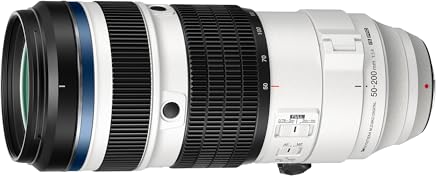
OM System · 50–200 mm · f/2.8 · PRO · Image Stabilization
Scores combine our editorial testing with published lab data.
General | |
|---|---|
About This LensThe M.Zuiko ED 50-200mm f/2.8 IS PRO is a telephoto zoom for Micro Four Thirds bodies, introduced in 2025 and still in production. Its 50–200mm reach makes it a natural fit for wildlife, outdoor sport and stage work, where distance separates you from the subject. The constant f/2.8 aperture is the headline specification, and stabilisation and sealing back it up for outdoor work. The trade-off is size. This is a large lens for the format, and it starts at 50mm. It works best alongside a standard zoom for wider scenes. | |
| Brand | OM System |
| Release Year | 2025 |
Production Status ⓘCurrent status of lens manufacturing (e.g., in production, discontinued). |  In Production In Production |
Pro Branding ⓘSpecific branding codes used for professional-tier lenses. | PRO |
Lens Mount ⓘThe lens mount will tell you what type of lens range you can fit onto the camera body. Often the same camera company will have different lens ranges for different cameras. | Micro Four Thirds |
System ⓘIndicates which camera system the lens is designed to attach to. | Micro Four Thirds |
Maximum Format ⓘLargest sensor size compatible with the lens. | Micro Four Thirds |
Physical100/100 | |
About the BuildThe lens weighs 2 lb 5.9 oz (1075 g) and runs 8.89 in (225.8 mm) long, with a 3.6 in (91.4 mm) body width. For the format, that is a full telephoto-zoom package. The front takes 77mm screw-in filters. Any filter threaded directly onto the lens must match that 77mm size. | |
| Lens Weight | 1075 g |
Lens Diameter ⓘWidth of the lens at its widest point | 91.4 mm |
Lens Length ⓘHow long the lens is from front to back. | 225.8 mm |
Front Filter Compatible ⓘSome lenses are compatible with front filters, some are compatible with back filters and some are compatible with both. Front filters are usually more convenient to add and remove. |  Yes Yes |
Front Filter Size ⓘDiameter of attachable filters. | 77 mm |
Optics81/100 | |
About the OpticsThe 50–200mm range frames distant subjects tightly on Micro Four Thirds. At 200mm, a bird on a far branch, a surfer outside the break or a striker at the far goal all fill the frame. Zoom back toward 50mm for looser action, candid portraits or a performer with some stage context. The f/2.8 maximum stays constant from one end to the other, so the widest setting at 200mm matches the one at 50mm. Shutter speeds hold up in fading evening light, at indoor events or under floodlights. Exposure also stays put as you zoom at the widest setting, which helps when following action across the range. Wide open, the nine-bladed iris helps backgrounds fall away smoothly behind an isolated player or animal. Closest focusing sits at 2.6 ft (78 cm). That lets the long end fill the frame with nearer subjects, such as a resting bird or a rider waiting at the line. | |
Focal Range ⓘShortest to longest focal length of the lens (zoom range start - end ) | 50–200 mm |
Aperture Range ⓘLargest aperture at the lens's shortest focal length to longest focal length (aperture range start - end) | 2.8 |
| Focal Length Angle of View | 24°–6.2° |
Flange Focal Distance ⓘDistance from lens mount to sensor. | 19.25 mm |
Diaphragm Type ⓘStructure and design of the aperture |  Automatic Automatic |
Blades ⓘNumber of diaphragm blades in aperture | 9020 |
Zoom Lens ⓘZoom allows you to vary the focal length, change between long shots and close-ups |  Yes Yes |
Zoom Mechanism ⓘSystem enabling zoom function |  Manual Manual |
Zoom Ring ⓘIf zooming is adjusted using a zoom ring |  Yes Yes |
Zoom Type ⓘThe design or approach to zooming |  Rotary Rotary |
Closest Focusing Distance ⓘMinimum distance for a subject to be in focus. | 78 cm01500 |
Maximum Magnification ⓘLargest size a subject can be reproduced | 0.25x |
| Autofocus Mode |  Yes Yes |
| Manual Mode |  Yes Yes |
| Manual Focusing Ring |  Yes Yes |
Features100/100 | |
About the FeaturesIn-lens image stabilisation helps steady the image for handheld shooting. It matters most at the 200mm end, where small movements show most in the viewfinder. A steadier view also makes composition easier to judge while you shoot. Weather sealing guards the interior against dust and moisture. Drizzle at a shoreline meet or dust on a dry track need not end the shoot. A fluorine coating on the front helps water and oil wipe away, so spray and fingerprints clean off quickly between frames. There is no zoom lock. Carried with the barrel angled down, the zoom can extend on its own, so keep the zoom ring in hand between shots. | |
Weather Sealing ⓘWeather sealing capabilities will give you more confidence when shooting in unfavourable conditions. |  Yes Yes |
Fluorine Coating ⓘCoating to repel water and oil from lens elements. |  Yes Yes |
| Built In Lens Hood | No |
| Lens Hood Type |  Petal Petal |
Zoom Lock ⓘZoom lock allows the zoom ring to be locked at the desired focal length | No |
Teleconverter ⓘA teleconverter (extender) is an extra piece of equipment that fits between the lens and the camera body to enhance magnification |  Yes Yes |
| Image Stabilization | Yes |
IS Efficiency ⓘIS efficiency refers to the effectiveness of the image stabilization system in compensating for the blurring effects of camera shake, quantified by the number of stops of stabilization it provides. | 7 stops |
Construction56/100 | |
About the ConstructionThe optical package runs to 21 elements in 13 groups, including two low-dispersion and two Super ED elements. Low-dispersion glass helps reduce chromatic aberration, the coloured fringing that can appear along high-contrast edges such as a bird against a bright sky. A single aspherical element helps correct optical faults, including distortion. Focusing is internal, so the moving elements stay inside the barrel as focus changes. | |
Elements ⓘLens elements refer to individual pieces of glass within the lens. | 21 |
| Groups | 13 |
Aspherical Elements ⓘThe number of aspherical lens elements which can help correct aberrations such as spherical aberration. | 1 |
Bi Aspherical Elements ⓘElements with two non-spherical surfaces | 0 |
Low Dispersion ⓘElements that reduce chromatic aberration | 2 |
Super Low Dispersion ⓘAdvanced elements further reducing chromatic aberration | 2 |
CA Reduction ⓘBuilt-in features to reduce chromatic aberration | 0 |
Internal Focusing ⓘInternal Focusing means that the lens does not change in size during focusing, and the front element does not rotate. |  Yes Yes |