
Wider View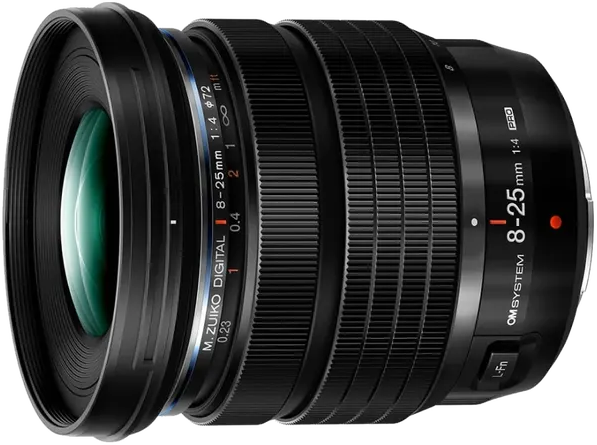
OM System M.Zuiko Digital ED 8-25mm f/4.0 PRO
8–25 mm instead of 10–25 mm
Panasonic · 10–25 mm · f/1.7
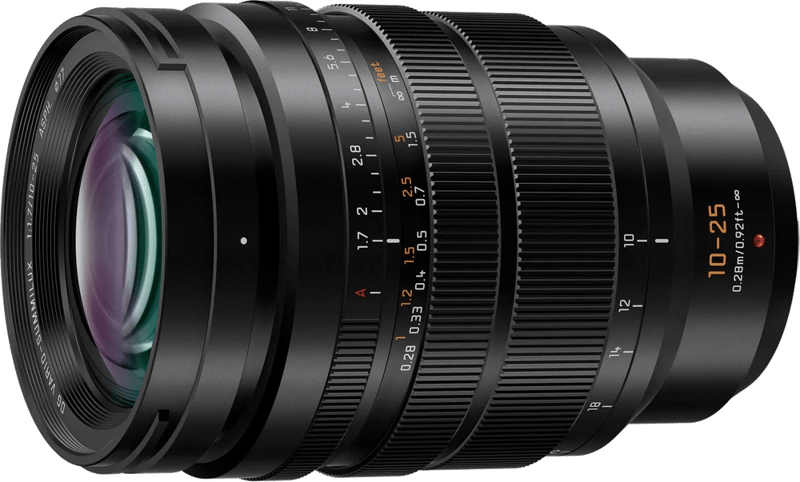
This lens score is calculated from published specifications.
General | |
|---|---|
About This LensThis Panasonic LEICA zoom spans 10–25mm on Micro Four Thirds. It moves from an ultra-wide 10mm view to a standard 25mm one in a single twist. Landscapes, tight interiors, architecture and street work all sit inside that span. The range also suits video, where swapping lenses mid-scene is disruptive. The constant f/1.7 maximum aperture is the main draw, since it gathers the same light at 10mm and 25mm alike. The trade-off is bulk: the lens is heavy for a Micro Four Thirds zoom and carries no built-in stabilisation. Panasonic introduced it in 2019. | |
| Brand | Panasonic |
| Release Year | 2019 |
Lens Mount ⓘThe lens mount will tell you what type of lens range you can fit onto the camera body. Often the same camera company will have different lens ranges for different cameras. | Micro Four Thirds |
System ⓘIndicates which camera system the lens is designed to attach to. | Micro Four Thirds |
Maximum Format ⓘLargest sensor size compatible with the lens. | Micro Four Thirds |
Physical64/100 | |
About the BuildThe lens weighs 1 lb 8.3 oz (690 g) and runs 5.04 in (128 mm) long with a 3.46 in (88 mm) body. That is a solid presence on a compact Micro Four Thirds camera. A screw-in filter must match the 77mm thread on the front. | |
| Lens Weight | 690 g |
Lens Diameter ⓘWidth of the lens at its widest point | 88 mm |
Lens Length ⓘHow long the lens is from front to back. | 128 mm |
Front Filter Compatible ⓘSome lenses are compatible with front filters, some are compatible with back filters and some are compatible with both. Front filters are usually more convenient to add and remove. |  Yes |
Front Filter Size ⓘDiameter of attachable filters. | 77 mm |
Optics87/100 | |
About the OpticsAt 10mm, this zoom frames tight interiors and wide landscapes without stepping back. At 25mm, the same lens handles street scenes and rooms at a natural walking distance. The rotary ring moves you between those views with one twist. The f/1.7 maximum aperture stays open across the whole range. Inside a dim church or out at dusk, that light keeps shutter speeds usable for handheld stills. It also lets the 25mm end lift a subject away from a busy background. Nine aperture blades help the opening stay round when stopped down, which smooths how out-of-focus areas render. Close focusing reaches 0.9 ft (28 cm). That lets you place a foreground rock, doorway or railing near the frame edge and keep it sharp at a wide setting. The specification scores 87 for optics on our 100-point scale. Stopped down, focal lengths this wide render scenes with deep depth of field, so front-to-back sharpness in a landscape needs only a modest aperture. You reach for smaller settings by choice rather than need. | |
Focal Range ⓘShortest to longest focal length of the lens (zoom range start - end ) | 10–25 mm |
Aperture Range ⓘLargest aperture at the lens's shortest focal length to longest focal length (aperture range start - end) | 1.7 |
| Focal Length Angle of View | 94°–47° |
Flange Focal Distance ⓘDistance from lens mount to sensor. | 19.25 mm |
Diaphragm Type ⓘStructure and design of the aperture |  Automatic |
Blades ⓘNumber of diaphragm blades in aperture | 9020 |
Zoom Lens ⓘZoom allows you to vary the focal length, change between long shots and close-ups |  Yes |
Zoom Mechanism ⓘSystem enabling zoom function |  Manual |
Zoom Ring ⓘIf zooming is adjusted using a zoom ring |  Yes |
Zoom Type ⓘThe design or approach to zooming |  Rotary |
Closest Focusing Distance ⓘMinimum distance for a subject to be in focus. | 28 cm01500 |
Maximum Magnification ⓘLargest size a subject can be reproduced | 0.14x |
| Autofocus Mode |  Yes |
| Manual Mode |  Yes |
| Manual Focusing Ring |  Yes |
Features32/100 | |
About the FeaturesThe lens is weather sealed against dust and moisture. That suits its landscape and architecture use, where wind-blown grit and drizzle are part of the day. You can keep shooting when the weather turns rather than packing the camera away. Without built-in image stabilisation, handheld video can show camera movement, so a tripod or a steady hold matters at both ends of the zoom. Two more items are absent. The front glass has no fluorine coating, so spray and fingerprints need ordinary cleaning. There is no zoom lock, so nothing holds the ring at your chosen focal length in transit. The features specification scores 32 on our 100-point scale. | |
Weather Sealing ⓘWeather sealing capabilities will give you more confidence when shooting in unfavourable conditions. |  Yes |
Fluorine Coating ⓘCoating to repel water and oil from lens elements. | No |
| Built In Lens Hood | No |
| Lens Hood Type |  Petal |
Zoom Lock ⓘZoom lock allows the zoom ring to be locked at the desired focal length | No |
Teleconverter ⓘA teleconverter (extender) is an extra piece of equipment that fits between the lens and the camera body to enhance magnification | No |
| Image Stabilization | No |
Construction54/100 | |
About the ConstructionThree aspherical elements use specially shaped surfaces to help correct optical faults such as distortion and spherical aberration. Distortion curves straight edges, a live concern when 10mm meets a building line. Four low-dispersion elements help reduce chromatic aberration, which draws coloured fringes along high-contrast edges. Focusing happens inside the barrel, so the lens does not grow longer as you focus. | |
Elements ⓘLens elements refer to individual pieces of glass within the lens. | 17 |
| Groups | 12 |
Aspherical Elements ⓘThe number of aspherical lens elements which can help correct aberrations such as spherical aberration. | 3 |
Bi Aspherical Elements ⓘElements with two non-spherical surfaces | 0 |
Low Dispersion ⓘElements that reduce chromatic aberration | 4 |
Super Low Dispersion ⓘAdvanced elements further reducing chromatic aberration | 0 |
CA Reduction ⓘBuilt-in features to reduce chromatic aberration | 0 |
Internal Focusing ⓘInternal Focusing means that the lens does not change in size during focusing, and the front element does not rotate. |  Yes |
8–25 mm instead of 10–25 mm
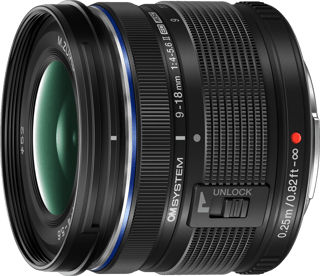
9–18 mm vs 10–25 mm · f/4 vs f/1.7 · 0.1× vs 0.14× close-up reach
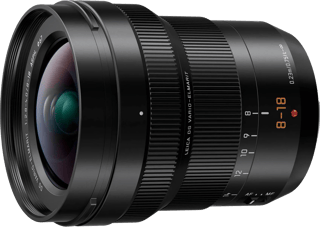
8–18 mm vs 10–25 mm · f/2.8 vs f/1.7 · 315 g vs 690 g