
Samyang 18mm f/2.8 AF Super
Samyang · 18 mm · f/2.8
Score Breakdown
Scores combine our editorial testing with published lab data.
General | |
|---|---|
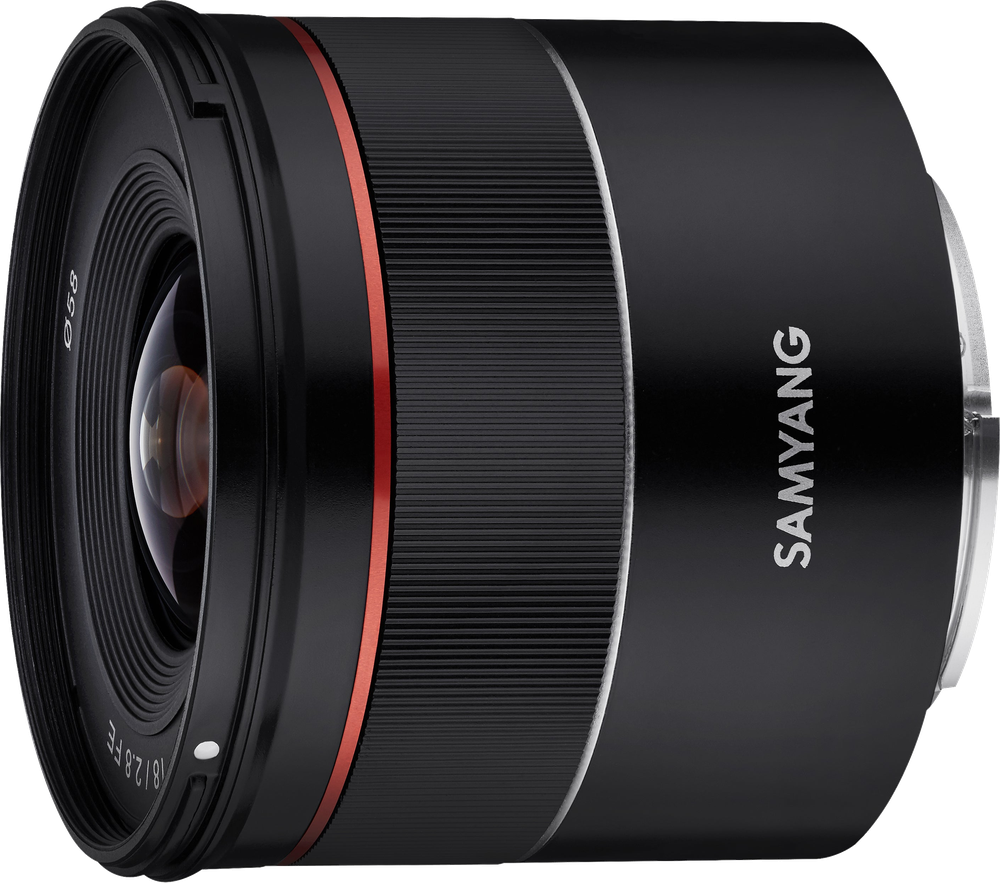
About This LensThis Samyang prime is a fixed 18mm ultra-wide lens for Sony E full-frame cameras. It suits anyone who shoots interiors, architecture, landscapes or cramped city streets. One frame can take in a whole room or a broad stretch of coastline. Samyang introduced it in 2019. The appeal is a wide view in a very small package. The trade-off is a short features list: no stabilization, no sealing and no zoom. Photographers who rely on those may want a bigger lens. Those who value low weight and simple handling get a lens that is easy to keep mounted. | |
| Brand | Samyang |
| Release Year | 2019 |
Lens Mount ⓘThe lens mount will tell you what type of lens range you can fit onto the camera body. Often the same camera company will have different lens ranges for different cameras. | Sony E |
System ⓘIndicates which camera system the lens is designed to attach to. | Sony E |
Maximum Format ⓘLargest sensor size compatible with the lens. |  Full Frame |
Physical64/100 | |
About the BuildAt 5.1 oz (145 g), this lens is very light. It is 2.5 in (63.5 mm) across and 2.38 in (60.5 mm) long. A screw-in filter must match the 58mm thread. A 58mm polarizer or ND filter is a small, light addition to a kit. | |
| Lens Weight | 145 g |
Lens Diameter ⓘWidth of the lens at its widest point | 63.5 mm |
Lens Length ⓘHow long the lens is from front to back. | 60.5 mm |
Front Filter Compatible ⓘSome lenses are compatible with front filters, some are compatible with back filters and some are compatible with both. Front filters are usually more convenient to add and remove. |  Yes |
Front Filter Size ⓘDiameter of attachable filters. | 58 mm |
Optics76/100 | |
About the OpticsAn 18mm focal length on a full-frame sensor gives a very wide view. Indoors, you can stand in a corner and still include most of a room. Outdoors, a building and its forecourt fit in one frame. The lens also works in narrow streets where stepping back is impossible. As a prime, you set framing by moving yourself, not by zooming. The maximum aperture is f/2.8. At 18mm, depth of field stays deep even wide open. A landscape frame can keep nearby rocks and distant hills sharp together. The aperture's real value is light. It lets you work in dim churches or at dusk without pushing ISO far. Close focus sits at 0.8 ft (25 cm). You can move right up to a foreground detail, a gatepost or a tiled floor, and still hold the wider scene behind it. That near-far layering gives wide shots a sense of depth. Our optics score for these specifications is 76 out of 100. | |
Focal Range ⓘShortest to longest focal length of the lens (zoom range start - end ) | 18 mm |
Aperture Range ⓘLargest aperture at the lens's shortest focal length to longest focal length (aperture range start - end) | 2.8 |
| Focal Length Angle of View | 100.1° |
Flange Focal Distance ⓘDistance from lens mount to sensor. | 18 mm |
Diaphragm Type ⓘStructure and design of the aperture |  Automatic |
Blades ⓘNumber of diaphragm blades in aperture | 7020 |
Zoom Lens ⓘZoom allows you to vary the focal length, change between long shots and close-ups | No |
Closest Focusing Distance ⓘMinimum distance for a subject to be in focus. | 25 cm01500 |
Maximum Magnification ⓘLargest size a subject can be reproduced | 0.09x |
| Autofocus Mode |  Yes |
| Manual Mode |  Yes |
| Manual Focusing Ring |  Yes |
Features | |
About the FeaturesThis lens has no built-in image stabilization. At 18mm, small hand movements record less than they would at longer focal lengths, so plenty of handheld shots still work. In truly dim light, a tripod or a higher ISO helps. There is no weather sealing against dust and moisture. The lens is better matched to dry days, covered markets and indoor work than to rain-soaked landscapes. The front element also lacks a fluorine coating. On lenses that have one, that layer helps water and oil slide off the glass, which eases cleaning in the field. Without it, a soft cloth and a little more care will do the job. | |
Weather Sealing ⓘWeather sealing capabilities will give you more confidence when shooting in unfavourable conditions. | No |
Fluorine Coating ⓘCoating to repel water and oil from lens elements. | No |
| Built In Lens Hood | No |
| Lens Hood Type |  Petal |
Teleconverter ⓘA teleconverter (extender) is an extra piece of equipment that fits between the lens and the camera body to enhance magnification | No |
| Image Stabilization | No |
Construction54/100 | |
About the ConstructionThe optical design uses three aspherical elements. Their specially shaped surfaces help correct distortion, which can make straight edges bow. That is useful for interiors and architecture, where straight edges are common. Three low-dispersion elements help reduce chromatic aberration, where colors focus differently and leave fringes along high-contrast edges such as branches against a bright sky. Focusing is internal, so the barrel does not extend while you shoot. | |
Elements ⓘLens elements refer to individual pieces of glass within the lens. | 9 |
| Groups | 8 |
Aspherical Elements ⓘThe number of aspherical lens elements which can help correct aberrations such as spherical aberration. | 3 |
Bi Aspherical Elements ⓘElements with two non-spherical surfaces | 0 |
Low Dispersion ⓘElements that reduce chromatic aberration | 3 |
Super Low Dispersion ⓘAdvanced elements further reducing chromatic aberration | 0 |
CA Reduction ⓘBuilt-in features to reduce chromatic aberration | 0 |
Internal Focusing ⓘInternal Focusing means that the lens does not change in size during focusing, and the front element does not rotate. |  Yes |