
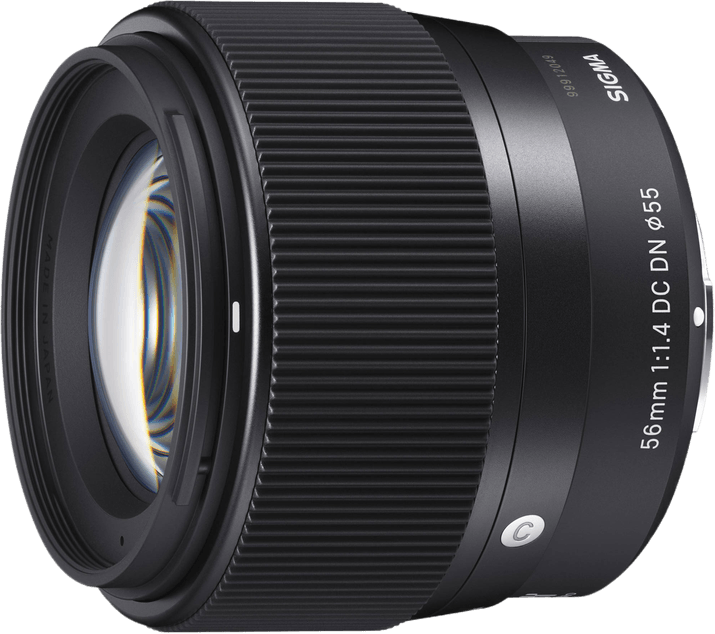
Sigma 56mm F/1.4 DC DN | C
Sigma · 56 mm · f/1.4 · Contemporary
Score Breakdown
Scores combine our editorial testing with published lab data.
General | |
|---|---|
About This LensSigma introduced this 56mm f/1.4 prime in 2018. Separate versions fit Fujifilm X, Sony E, Nikon Z, L-Mount, Canon EF-M, Canon RF and Micro Four Thirds cameras. Choose the version that matches your camera mount. On APS-C, the short-telephoto view suits portraits, candid people pictures and details picked out from a distance. Micro Four Thirds gives a narrower view from the same position. The fixed focal length is the main framing trade-off: you move to change the composition when space allows. A wider lens includes more from the same position. | |
| Brand | Sigma |
| Release Year | 2018 |
Production Status ⓘCurrent status of lens manufacturing (e.g., in production, discontinued). |  In Production In Production |
Pro Branding ⓘSpecific branding codes used for professional-tier lenses. | Contemporary |
Lens Mount ⓘThe lens mount will tell you what type of lens range you can fit onto the camera body. Often the same camera company will have different lens ranges for different cameras. | Fujifilm X |
System ⓘIndicates which camera system the lens is designed to attach to. | Fujifilm X |
Maximum Format ⓘLargest sensor size compatible with the lens. |  APS-C APS-C |
Physical86/100 | |
About the BuildThe Fujifilm X version weighs 9.9 oz (280 g) and measures 2.35 in (59.8 mm) long. Its body is 2.62 in (66.5 mm) across. This small size suits a camera carried on foot. Other mounts differ in size and weight. Every version uses a 55mm thread, so screw-in filters must match that size. | |
| Lens Weight | 280 g |
Lens Diameter ⓘWidth of the lens at its widest point | 66.5 mm |
Lens Length ⓘHow long the lens is from front to back. | 59.8 mm |
Front Filter Compatible ⓘSome lenses are compatible with front filters, some are compatible with back filters and some are compatible with both. Front filters are usually more convenient to add and remove. |  Yes Yes |
Front Filter Size ⓘDiameter of attachable filters. | 55 mm |
Optics87/100 | |
About the OpticsFor a head-and-shoulders portrait, 56mm lets you stand farther back than a wide-angle lens at the same subject size. That change of position alters perspective and gives the person more space. Indoors, allow enough room to step back. In a small room, a wider lens can include more people. The f/1.4 maximum aperture gives more light than a smaller opening. In a dim room, it gives you more room to choose a faster shutter speed or lower ISO. A moving person still needs enough shutter speed for their movement. Closest focus is 1.6 ft (50 cm), measured from the sensor. Maximum magnification is 0.14x, useful for everyday details rather than very small subjects. The front glass sits closer than that distance. Leave room ahead of it and avoid shading a nearby object. At close portrait distances, f/1.4 can give a soft background and a thin zone of sharp focus. Focus on the eye that matters most. Stop down when more of the face or another person must stay sharp. Background separation also depends on the space behind the subject. | |
Focal Range ⓘShortest to longest focal length of the lens (zoom range start - end ) | 56 mm |
Aperture Range ⓘLargest aperture at the lens's shortest focal length to longest focal length (aperture range start - end) | 1.4 |
| Focal Length Angle of View | 28.35° |
Flange Focal Distance ⓘDistance from lens mount to sensor. | 17.7 mm |
Diaphragm Type ⓘStructure and design of the aperture |  Automatic Automatic |
Blades ⓘNumber of diaphragm blades in aperture | 9020 |
Zoom Lens ⓘZoom allows you to vary the focal length, change between long shots and close-ups | No |
Closest Focusing Distance ⓘMinimum distance for a subject to be in focus. | 50 cm01500 |
Maximum Magnification ⓘLargest size a subject can be reproduced | 0.14x |
| Autofocus Mode |  Yes Yes |
| Manual Mode |  Yes Yes |
| Manual Focusing Ring |  Yes Yes |
Features32/100 | |
About the FeaturesThere is no image stabilization in the lens. A camera with body stabilization can help with shake for still scenes. In low light, steady support also helps. Opening the aperture can allow a faster shutter speed, but it does not provide stabilization. All versions except Canon EF-M have a seal at the mount to resist dust and splashes. This is useful protection around the camera connection. Keep the lens covered in persistent rain and clean and dry the mount before changing lenses. | |
Weather Sealing ⓘWeather sealing capabilities will give you more confidence when shooting in unfavourable conditions. |  Yes Yes |
Fluorine Coating ⓘCoating to repel water and oil from lens elements. | No |
| Built In Lens Hood | No |
| Lens Hood Type |  Round Round |
Teleconverter ⓘA teleconverter (extender) is an extra piece of equipment that fits between the lens and the camera body to enhance magnification | No |
| Image Stabilization | No |
Construction31/100 | |
About the ConstructionThe shared design uses 10 elements in 6 groups. Two aspherical elements help correct distortion and spherical aberration, which can bend straight lines or soften detail. One SLD element helps reduce chromatic aberration, the coloured fringes that can appear along high-contrast edges. Backlit hair against a bright sky is one place those fringes can show. | |
Elements ⓘLens elements refer to individual pieces of glass within the lens. | 10 |
| Groups | 6 |
Aspherical Elements ⓘThe number of aspherical lens elements which can help correct aberrations such as spherical aberration. | 2 |
Bi Aspherical Elements ⓘElements with two non-spherical surfaces | 0 |
Low Dispersion ⓘElements that reduce chromatic aberration | 1 |
Super Low Dispersion ⓘAdvanced elements further reducing chromatic aberration | 0 |
CA Reduction ⓘBuilt-in features to reduce chromatic aberration | 0 |
Internal Focusing ⓘInternal Focusing means that the lens does not change in size during focusing, and the front element does not rotate. | No |