
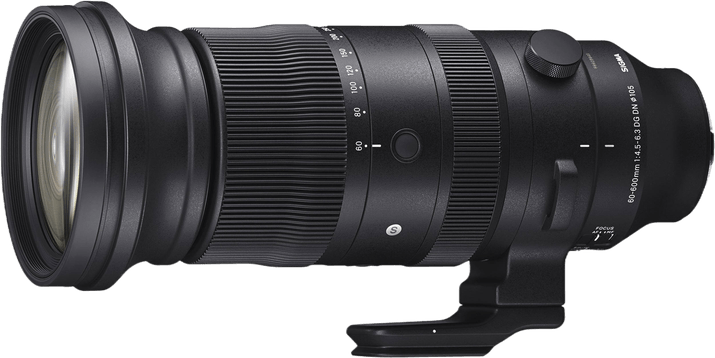
Sigma 60-600mm F/4.5-6.3 DG DN OS | S
Sigma · 60–600 mm · f/4.5–6.3 · Sports · Image Stabilization
Score Breakdown
Scores combine our editorial testing with published lab data.
General | |
|---|---|
About This LensSigma built this 2023 zoom for full-frame mirrorless cameras in Leica L and Sony E mounts. It stretches from 60mm to 600mm, a tenfold span aimed at distant subjects. Wildlife, outdoor sport and aircraft are the natural territory. At 60mm it can also frame portraits and nearby detail. Buyers should pick the mount version matching their camera. The wide 60mm end gives room for an animal in its habitat, while 600mm makes a far-off subject much larger. That range means fewer lens changes in the field. The trade-off is bulk: the Leica L version weighs 5 lb 8 oz (2495 g), and the aperture narrows as you zoom. | |
| Brand | Sigma |
| Release Year | 2023 |
Production Status ⓘCurrent status of lens manufacturing (e.g., in production, discontinued). |  In Production In Production |
Pro Branding ⓘSpecific branding codes used for professional-tier lenses. | Sports |
Lens Mount ⓘThe lens mount will tell you what type of lens range you can fit onto the camera body. Often the same camera company will have different lens ranges for different cameras. | Leica L |
System ⓘIndicates which camera system the lens is designed to attach to. | Leica L |
Maximum Format ⓘLargest sensor size compatible with the lens. |  Full Frame Full Frame |
Physical92/100 | |
About the BuildThe Leica L version weighs 5 lb 8 oz (2495 g) and measures 4.7 in (119.4 mm) across and 10.99 in (279.2 mm) long. The Sony E version differs in weight and length. A filter attached directly must match the 105mm thread. A monopod or tripod can support this substantial lens during long sessions. | |
| Lens Weight | 2495 g |
Lens Diameter ⓘWidth of the lens at its widest point | 119.4 mm |
Lens Length ⓘHow long the lens is from front to back. | 279.2 mm |
Front Filter Compatible ⓘSome lenses are compatible with front filters, some are compatible with back filters and some are compatible with both. Front filters are usually more convenient to add and remove. |  Yes Yes |
Front Filter Size ⓘDiameter of attachable filters. | 105 mm |
Optics55/100 | |
About the OpticsThe 60–600mm range lets one lens handle two very different jobs. At 600mm, distant wildlife and outdoor athletes appear far larger in the frame. Zoom back to 60mm for a habitat shot, a team huddle or a wider airshow scene. You can tighten or widen framing as your subject or position changes. A rotary zoom ring controls that change by hand. The maximum aperture narrows from f/4.5 at 60mm to f/6.3 at 600mm. A higher ISO may help retain a fast shutter speed in fading light. A close subject can still have a soft background when there is enough space behind it. Choose settings for both subject movement and depth of field. Closest focus is 1.5 ft (45 cm) at 60mm, measured from the sensor. Maximum magnification reaches 0.42x at 200mm. These limits apply at different focal lengths. They allow nearby details such as flowers and textured objects, but do not establish a suitable approach distance for insects or other wildlife. Choose a position that leaves the subject undisturbed. Zooming changes framing from that position, while moving the camera changes perspective too. Check for branches or other distractions behind an animal before taking the picture. | |
Focal Range ⓘShortest to longest focal length of the lens (zoom range start - end ) | 60–600 mm |
Aperture Range ⓘLargest aperture at the lens's shortest focal length to longest focal length (aperture range start - end) | 4.5–6.3 |
| Focal Length Angle of View | 39.656917586470676°–4.130191223209278° |
Flange Focal Distance ⓘDistance from lens mount to sensor. | 20 mm |
Diaphragm Type ⓘStructure and design of the aperture |  Automatic Automatic |
Blades ⓘNumber of diaphragm blades in aperture | 9020 |
Zoom Lens ⓘZoom allows you to vary the focal length, change between long shots and close-ups |  Yes Yes |
Zoom Mechanism ⓘSystem enabling zoom function |  Manual Manual |
Zoom Ring ⓘIf zooming is adjusted using a zoom ring |  Yes Yes |
Zoom Type ⓘThe design or approach to zooming |  Rotary Rotary |
Closest Focusing Distance ⓘMinimum distance for a subject to be in focus. | 45 cm01500 |
Maximum Magnification ⓘLargest size a subject can be reproduced | 0.42x |
| Autofocus Mode |  Yes Yes |
| Manual Mode |  Yes Yes |
| Manual Focusing Ring |  Yes Yes |
Features100/100 | |
About the FeaturesOptical stabilisation is built in and helps counter camera shake during handheld shooting. Its benefit shows most at the 600mm end, where small hand movements affect framing strongly. Dust and moisture resistance help during outdoor work. Use cover in persistent rain. The front coating helps water and oily marks wipe away. Remove loose grit before wiping, especially after working beside a dusty path. A zoom lock holds the barrel in place when the camera hangs from a strap. That stops the lens extending under its own weight. | |
Weather Sealing ⓘWeather sealing capabilities will give you more confidence when shooting in unfavourable conditions. |  Yes Yes |
Fluorine Coating ⓘCoating to repel water and oil from lens elements. |  Yes Yes |
| Built In Lens Hood | No |
| Lens Hood Type |  Round Round |
Zoom Lock ⓘZoom lock allows the zoom ring to be locked at the desired focal length |  Yes Yes |
Teleconverter ⓘA teleconverter (extender) is an extra piece of equipment that fits between the lens and the camera body to enhance magnification |  Yes Yes |
| Image Stabilization | Yes |
IS Efficiency ⓘIS efficiency refers to the effectiveness of the image stabilization system in compensating for the blurring effects of camera shake, quantified by the number of stops of stabilization it provides. | 6 stops |
Construction54/100 | |
About the ConstructionThe formula includes two FLD and three SLD elements. These low-dispersion glass types help reduce chromatic aberration, the coloured fringes that can appear along high-contrast edges such as a bird against bright sky. Internal focusing keeps barrel length unchanged as focus moves. Zooming is a separate action. | |
Elements ⓘLens elements refer to individual pieces of glass within the lens. | 27 |
| Groups | 19 |
Aspherical Elements ⓘThe number of aspherical lens elements which can help correct aberrations such as spherical aberration. | 0 |
Bi Aspherical Elements ⓘElements with two non-spherical surfaces | 0 |
Low Dispersion ⓘElements that reduce chromatic aberration | 3 |
Super Low Dispersion ⓘAdvanced elements further reducing chromatic aberration | 0 |
CA Reduction ⓘBuilt-in features to reduce chromatic aberration | 2 |
Internal Focusing ⓘInternal Focusing means that the lens does not change in size during focusing, and the front element does not rotate. |  Yes Yes |