
Sony E 18-105mm F/4 G OSS PZ SELP18105G
Sony · 18–105 mm · f/4 · G · Image Stabilization
Score Breakdown
Scores combine our editorial testing with published lab data.
General | |
|---|---|
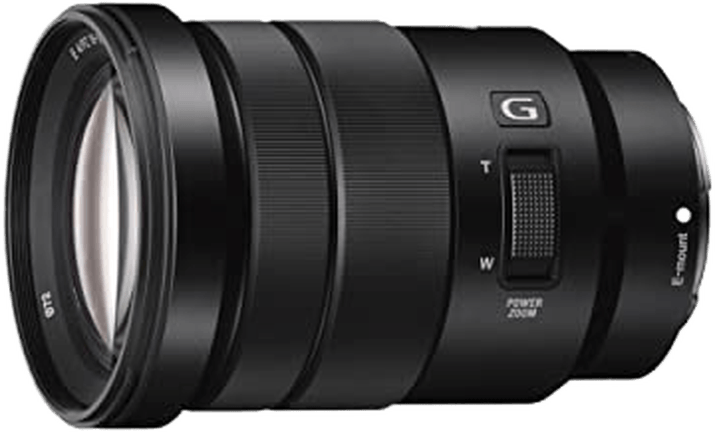
About This LensThis Sony E-mount zoom covers 18–105mm on APS-C bodies. That span runs from wide interior views to short telephoto framing. It suits travel, family events and everyday photography. Portraits, street scenes and holiday pictures all fall inside its reach. The motorised power zoom gives the lens extra video appeal. The main trade-off is the f/4 maximum aperture, which asks for decent light indoors. In daylight, the ceiling rarely holds you back. Sony introduced this lens in 2013, and it remains in production today. | |
| Brand | Sony |
| Release Year | 2013 |
Production Status ⓘCurrent status of lens manufacturing (e.g., in production, discontinued). |  In Production In Production |
Pro Branding ⓘSpecific branding codes used for professional-tier lenses. | G |
Lens Mount ⓘThe lens mount will tell you what type of lens range you can fit onto the camera body. Often the same camera company will have different lens ranges for different cameras. | Sony E |
System ⓘIndicates which camera system the lens is designed to attach to. | Sony E APS-C |
Maximum Format ⓘLargest sensor size compatible with the lens. |  APS-C APS-C |
Physical78/100 | |
About the BuildThe lens weighs 15.1 oz (427 g). It measures 4.33 in (110 mm) long and 3.07 in (78 mm) wide. Our physical score is 78/100. The front accepts screw-in filters, and any filter attached directly must match the 72mm thread. | |
| Lens Weight | 427 g |
Lens Diameter ⓘWidth of the lens at its widest point | 78 mm |
Lens Length ⓘHow long the lens is from front to back. | 110 mm |
Front Filter Compatible ⓘSome lenses are compatible with front filters, some are compatible with back filters and some are compatible with both. Front filters are usually more convenient to add and remove. |  Yes Yes |
Front Filter Size ⓘDiameter of attachable filters. | 72 mm |
Optics66/100 | |
About the OpticsAt the 18mm end, the lens frames wide views of rooms, landscapes and groups. The 105mm end tightens portraits and pulls out details across a room or street. Reframing is often a matter of zooming rather than moving your feet. For events, the long end also lets you photograph speakers from the back rows. One end frames a whole dinner table, the other a single face. The aperture stays at f/4 throughout the zoom, so exposure settings carry over as you reframe. That consistency helps in steady light and during video. At 105mm, f/4 still gives portraits some background softness. In dim rooms, though, the ceiling pushes ISO higher than a brighter lens would need. Evening receptions and candlelit rooms are the demanding cases. Close focus reaches 1.5 ft (45 cm) at 18mm, which suits tabletop subjects such as food or flowers. The minimum distance lengthens as you zoom, so tighter frames at 105mm need more working room. There is no teleconverter support, so 105mm is the full extent of the reach. Our optics score for this lens is 66/100. | |
Focal Range ⓘShortest to longest focal length of the lens (zoom range start - end ) | 18–105 mm |
Aperture Range ⓘLargest aperture at the lens's shortest focal length to longest focal length (aperture range start - end) | 4 |
| Focal Length Angle of View | 76.17°–15.3° |
Flange Focal Distance ⓘDistance from lens mount to sensor. | 18 mm |
Diaphragm Type ⓘStructure and design of the aperture |  Automatic Automatic |
Blades ⓘNumber of diaphragm blades in aperture | 7020 |
Zoom Lens ⓘZoom allows you to vary the focal length, change between long shots and close-ups |  Yes Yes |
Zoom Mechanism ⓘSystem enabling zoom function |  Electric Electric |
Zoom Ring ⓘIf zooming is adjusted using a zoom ring |  Yes Yes |
Zoom Type ⓘThe design or approach to zooming |  Rotary Rotary |
Closest Focusing Distance ⓘMinimum distance for a subject to be in focus. | 45 cm01500 |
Maximum Magnification ⓘLargest size a subject can be reproduced | 0.11x |
| Autofocus Mode |  Yes Yes |
| Manual Mode |  Yes Yes |
| Manual Focusing Ring |  Yes Yes |
Features22/100 | |
About the FeaturesSony's OSS stabilisation is rated at 4 stops, a typical figure for stabilised APS-C standard zooms. It lets you use slower shutter speeds handheld. That matters most at 105mm, where small shakes show up clearly. Handheld interiors at the wide end also benefit. The zoom is electric, so a motor drives focal length changes. Zooming stays smooth and even, which is why this lens appeals to video shooters. Zoom speed stays consistent between takes. Stills photographers can also zoom without jolting the camera. There is no weather sealing, so keep the lens covered in rain or dust. No fluorine coating is fitted either, so the front glass relies on normal cleaning when it picks up dirt. A 72mm protective filter can shield the front glass in dusty conditions. | |
Weather Sealing ⓘWeather sealing capabilities will give you more confidence when shooting in unfavourable conditions. | No |
Fluorine Coating ⓘCoating to repel water and oil from lens elements. | No |
| Built In Lens Hood | No |
| Lens Hood Type |  Petal Petal |
Zoom Lock ⓘZoom lock allows the zoom ring to be locked at the desired focal length | No |
Teleconverter ⓘA teleconverter (extender) is an extra piece of equipment that fits between the lens and the camera body to enhance magnification | No |
| Image Stabilization | Yes |
IS Efficiency ⓘIS efficiency refers to the effectiveness of the image stabilization system in compensating for the blurring effects of camera shake, quantified by the number of stops of stabilization it provides. | 4 stops |
Construction54/100 | |
About the ConstructionThe optical formula uses 16 elements in 12 groups. Three aspherical elements help correct distortion, the fault that curves straight lines near the frame edge. Two ED glass elements help reduce chromatic aberration, the colour fringes that can appear along high-contrast edges. Focusing is internal, so the lens holds its length while focusing. | |
Elements ⓘLens elements refer to individual pieces of glass within the lens. | 16 |
| Groups | 12 |
Aspherical Elements ⓘThe number of aspherical lens elements which can help correct aberrations such as spherical aberration. | 3 |
Bi Aspherical Elements ⓘElements with two non-spherical surfaces | 0 |
Low Dispersion ⓘElements that reduce chromatic aberration | 2 |
Super Low Dispersion ⓘAdvanced elements further reducing chromatic aberration | 0 |
CA Reduction ⓘBuilt-in features to reduce chromatic aberration | 0 |
Internal Focusing ⓘInternal Focusing means that the lens does not change in size during focusing, and the front element does not rotate. |  Yes Yes |