Sigma Art Line
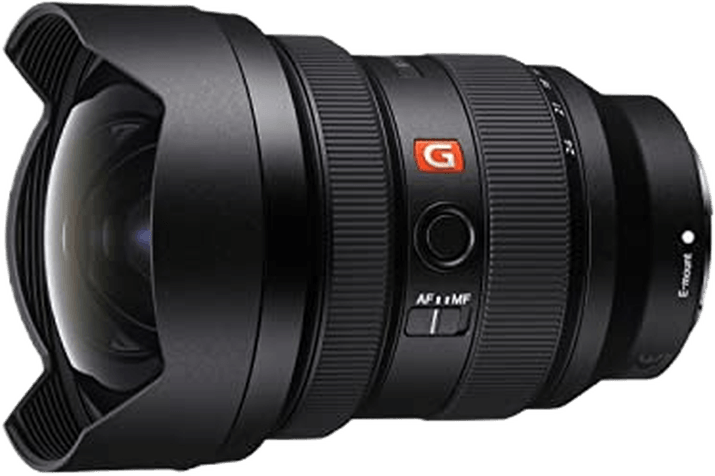
Sony · 12–24 mm · f/2.8 · GM
Scores combine our editorial testing with published lab data.
General | |
|---|---|
About This LensSony made this lens for full-frame E-mount cameras and released it in 2020. It is an ultra-wide zoom that reaches 12mm at its shortest setting. That range suits architecture, interiors, landscapes and night-sky photography. The 24mm end gives a more moderate wide view when 12mm stretches a scene too far. The constant f/2.8 maximum aperture is useful in dim interiors and at night. The lens also takes more bag space than a compact prime. Its very wide range suits photographers who regularly include large scenes or strong foregrounds. There is no stabilisation inside the lens. | |
| Brand | Sony |
| Release Year | 2020 |
Production Status ⓘCurrent status of lens manufacturing (e.g., in production, discontinued). |  In Production |
Pro Branding ⓘSpecific branding codes used for professional-tier lenses. | GM |
Lens Mount ⓘThe lens mount will tell you what type of lens range you can fit onto the camera body. Often the same camera company will have different lens ranges for different cameras. | Sony E |
System ⓘIndicates which camera system the lens is designed to attach to. | Sony E |
Maximum Format ⓘLargest sensor size compatible with the lens. |  Full Frame |
Physical93/100 | |
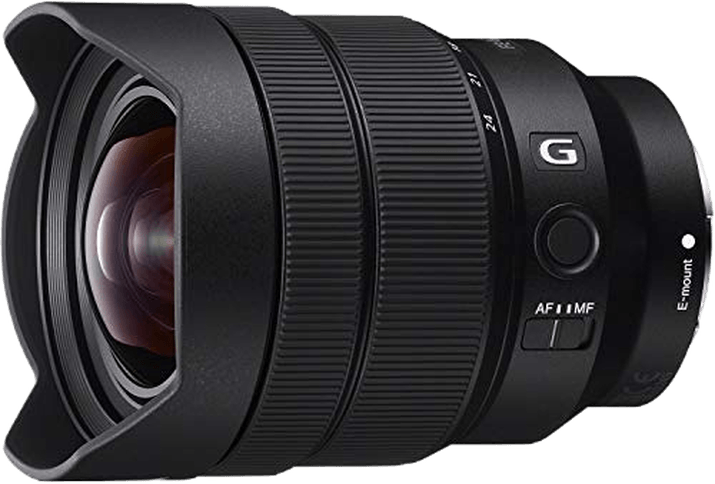
About the BuildThe lens weighs 1 lb 13.9 oz (847 g) and measures 3.84 in (97.6 mm) across and 5.39 in (137 mm) long. Allow space for that body in your bag. There is no front filter thread, so ordinary screw-in filters cannot attach directly. Check a filter system for compatibility before planning a shoot that needs one. | |
| Lens Weight | 847 g |
Lens Diameter ⓘWidth of the lens at its widest point | 97.6 mm |
Lens Length ⓘHow long the lens is from front to back. | 137 mm |
Front Filter Compatible ⓘSome lenses are compatible with front filters, some are compatible with back filters and some are compatible with both. Front filters are usually more convenient to add and remove. | No |
Optics80/100 | |
About the OpticsThe 12mm setting takes in a very wide view. It can help with small interiors and building exteriors, although the amount included depends on your position. Perspective follows viewpoint: moving near a foreground object makes it look larger relative to the background. Keep faces away from the extreme edges when their shape matters. The f/2.8 maximum aperture stays available right through the zoom. That helps in dim interiors, where flash may be unwelcome, and at night. Night-sky work in particular benefits, because a wide opening lets faint stars register in less time than a smaller aperture would need. Closest focus is 0.9 ft (28 cm), measured from the sensor. A nearby rock or plant can become a foreground subject with the wider scene behind it. Both will not necessarily be sharp together. Choose aperture and focus position for the depth you need, and check the result at a useful viewing size. | |
Focal Range ⓘShortest to longest focal length of the lens (zoom range start - end ) | 12–24 mm |
Aperture Range ⓘLargest aperture at the lens's shortest focal length to longest focal length (aperture range start - end) | 2.8 |
| Focal Length Angle of View | 121.97°–84.07° |
Flange Focal Distance ⓘDistance from lens mount to sensor. | 18 mm |
Diaphragm Type ⓘStructure and design of the aperture |  Automatic |
Blades ⓘNumber of diaphragm blades in aperture | 9020 |
Zoom Lens ⓘZoom allows you to vary the focal length, change between long shots and close-ups |  Yes |
Zoom Mechanism ⓘSystem enabling zoom function |  Manual |
Zoom Ring ⓘIf zooming is adjusted using a zoom ring |  Yes |
Zoom Type ⓘThe design or approach to zooming |  Rotary |
Closest Focusing Distance ⓘMinimum distance for a subject to be in focus. | 28 cm01500 |
Maximum Magnification ⓘLargest size a subject can be reproduced | 0.14x |
| Autofocus Mode |  Yes |
| Manual Mode |  Yes |
| Manual Focusing Ring |  Yes |
Features52/100 | |
About the FeaturesThe lens is sealed against dust and moisture. That helps for landscape and outdoor architecture work, where wind-blown dust and damp air are part of the day. A fluorine coating helps water and oil slide off the glass. That makes the front easier to clean after a dusty or coastal shoot. Loose grit should still be blown away first, since the coating eases cleaning rather than stopping abrasion. There is no stabilisation in the lens. A camera with body stabilisation can help with shake, while a tripod supports long exposures of still scenes. A moving subject still needs a suitable shutter speed. There is no zoom lock; this alone does not establish whether the zoom will creep. | |
Weather Sealing ⓘWeather sealing capabilities will give you more confidence when shooting in unfavourable conditions. |  Yes |
Fluorine Coating ⓘCoating to repel water and oil from lens elements. |  Yes |
| Built In Lens Hood |  Yes |
| Lens Hood Type |  Petal |
Zoom Lock ⓘZoom lock allows the zoom ring to be locked at the desired focal length | No |
Teleconverter ⓘA teleconverter (extender) is an extra piece of equipment that fits between the lens and the camera body to enhance magnification | No |
| Image Stabilization | No |
Construction49/100 | |
About the ConstructionThe design has four aspherical elements, including three XA elements. Their shaped surfaces help correct spherical aberration and distortion. That is useful when photographing buildings, where curved-looking straight edges are easy to notice. These design features do not establish measured image quality on their own. Three ED and two Super ED elements help reduce chromatic aberration. This appears as coloured fringes along high-contrast edges such as branches against bright sky. Careful composition and exposure still matter when the scene contains bright highlights. | |
Elements ⓘLens elements refer to individual pieces of glass within the lens. | 17 |
| Groups | 14 |
Aspherical Elements ⓘThe number of aspherical lens elements which can help correct aberrations such as spherical aberration. | 4 |
Bi Aspherical Elements ⓘElements with two non-spherical surfaces | 1 |
Low Dispersion ⓘElements that reduce chromatic aberration | 3 |
Super Low Dispersion ⓘAdvanced elements further reducing chromatic aberration | 2 |
CA Reduction ⓘBuilt-in features to reduce chromatic aberration | 0 |
Internal Focusing ⓘInternal Focusing means that the lens does not change in size during focusing, and the front element does not rotate. | No |