
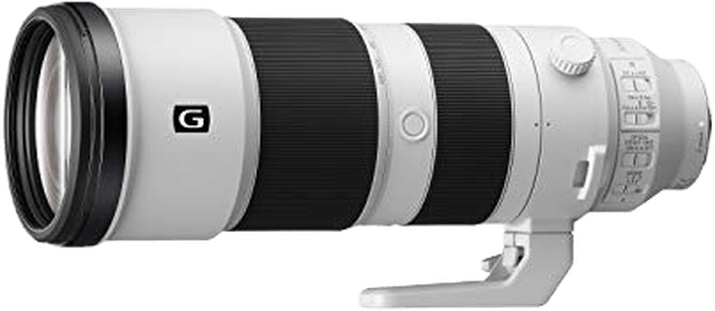
Sony FE 200-600mm F/5.6-6.3 G OSS SEL200600G
Sony · 200–600 mm · f/5.6–6.3 · G · Image Stabilization
Score Breakdown
Scores combine our editorial testing with published lab data.
General | |
|---|---|
About This LensThis Sony E full-frame zoom covers 200–600mm for distant subjects. Wildlife photographers can follow a bird from a fixed hide, and sports shooters can track action across a wide pitch. The 200mm end gives room for larger animals or nearer play, while 600mm tightens on small or wary subjects. Sony introduced the lens in 2019, and it remains in production. The trade-off is light gathering. The f/5.6–6.3 maximum aperture keeps the size manageable, but it demands higher ISO in dim conditions. Built-in stabilisation and weather sealing support long handheld days outdoors. | |
| Brand | Sony |
| Release Year | 2019 |
Production Status ⓘCurrent status of lens manufacturing (e.g., in production, discontinued). |  In Production In Production |
Pro Branding ⓘSpecific branding codes used for professional-tier lenses. | G |
Lens Mount ⓘThe lens mount will tell you what type of lens range you can fit onto the camera body. Often the same camera company will have different lens ranges for different cameras. | Sony E |
System ⓘIndicates which camera system the lens is designed to attach to. | Sony E |
Maximum Format ⓘLargest sensor size compatible with the lens. |  Full Frame Full Frame |
Physical85/100 | |
About the BuildThe lens weighs 4 lb 10.6 oz (2115 g) and measures 12.52 in (318 mm) long with a 4.39 in (111.5 mm) body. That is a substantial package for a day of walking, so a monopod or tripod helps on longer outings. The front accepts 95mm filters threaded directly onto the lens. | |
| Lens Weight | 2115 g |
Lens Diameter ⓘWidth of the lens at its widest point | 111.5 mm |
Lens Length ⓘHow long the lens is from front to back. | 318 mm |
Front Filter Compatible ⓘSome lenses are compatible with front filters, some are compatible with back filters and some are compatible with both. Front filters are usually more convenient to add and remove. |  Yes Yes |
Front Filter Size ⓘDiameter of attachable filters. | 95 mm |
Optics54/100 | |
About the OpticsThe 200–600mm range is the reason to buy this lens. At 600mm, a perched bird or a distant player fills the frame without a closer approach. Zooming back to 200mm keeps larger animals or nearer action in frame without changing position. A rotary zoom ring sets the focal length by hand, so reframing takes one motion. The aperture costs light. It opens to f/5.6 at 200mm and only f/6.3 at 600mm, so early mornings, woodland and floodlit evening games push ISO upward and add noise. Fast shutter speeds need that headroom because long focal lengths magnify camera and subject movement. At 600mm, f/6.3 can separate a bird from reeds or a player from the crowd. Leave space between the subject and its background to make this effect more useful. The amount of blur depends on those distances as well as the focal length and aperture. Closest focus is 7.9 ft (240 cm). Most wildlife and outdoor sport happens well beyond that distance, so the working range rarely limits your framing. Wary subjects that keep their distance stay comfortably within reach. | |
Focal Range ⓘShortest to longest focal length of the lens (zoom range start - end ) | 200–600 mm |
Aperture Range ⓘLargest aperture at the lens's shortest focal length to longest focal length (aperture range start - end) | 5.6–6.3 |
| Focal Length Angle of View | 12.35°–4.13° |
Flange Focal Distance ⓘDistance from lens mount to sensor. | 18 mm |
Diaphragm Type ⓘStructure and design of the aperture |  Automatic Automatic |
Blades ⓘNumber of diaphragm blades in aperture | 11020 |
Zoom Lens ⓘZoom allows you to vary the focal length, change between long shots and close-ups |  Yes Yes |
Zoom Mechanism ⓘSystem enabling zoom function |  Manual Manual |
Zoom Ring ⓘIf zooming is adjusted using a zoom ring |  Yes Yes |
Zoom Type ⓘThe design or approach to zooming |  Rotary Rotary |
Closest Focusing Distance ⓘMinimum distance for a subject to be in focus. | 240 cm01500 |
Maximum Magnification ⓘLargest size a subject can be reproduced | 0.2x |
| Autofocus Mode |  Yes Yes |
| Manual Mode |  Yes Yes |
| Manual Focusing Ring |  Yes Yes |
Features91/100 | |
About the FeaturesBuilt-in OSS stabilisation is the key usability feature. It counters camera shake at long focal lengths, so handheld shots at 600mm become practical in reasonable light. A tripod or monopod still gives the steadiest base, but stabilisation covers handheld bursts when support would slow you down. Weather sealing is fitted, so dusty hides and drizzle-soaked touchlines are less of a worry. A fluorine coating on the front element helps water and oil slide off. That makes wiping spray or fingerprints from a large front surface quick work. Sony supports its SEL14TC 1.4x and SEL20TC 2.0x teleconverters with this lens. They extend its reach for distant subjects, but reduce the maximum aperture. The choice trades light gathering for tighter framing. | |
Weather Sealing ⓘWeather sealing capabilities will give you more confidence when shooting in unfavourable conditions. |  Yes Yes |
Fluorine Coating ⓘCoating to repel water and oil from lens elements. |  Yes Yes |
| Built In Lens Hood | No |
| Lens Hood Type |  Round Round |
Zoom Lock ⓘZoom lock allows the zoom ring to be locked at the desired focal length | No |
Teleconverter ⓘA teleconverter (extender) is an extra piece of equipment that fits between the lens and the camera body to enhance magnification |  Yes Yes |
| Image Stabilization | Yes |
IS Efficiency ⓘIS efficiency refers to the effectiveness of the image stabilization system in compensating for the blurring effects of camera shake, quantified by the number of stops of stabilization it provides. | 3.5 stops |
Construction31/100 | |
About the ConstructionInside sit 24 elements in 17 groups. One aspherical element uses a specially shaped surface to help correct distortion and spherical aberration, faults that can bend straight lines or soften fine detail. Five low-dispersion elements help reduce chromatic aberration, the coloured fringes that can appear along high-contrast edges such as branches against a bright sky. | |
Elements ⓘLens elements refer to individual pieces of glass within the lens. | 24 |
| Groups | 17 |
Aspherical Elements ⓘThe number of aspherical lens elements which can help correct aberrations such as spherical aberration. | 1 |
Bi Aspherical Elements ⓘElements with two non-spherical surfaces | 0 |
Low Dispersion ⓘElements that reduce chromatic aberration | 5 |
Super Low Dispersion ⓘAdvanced elements further reducing chromatic aberration | 0 |
CA Reduction ⓘBuilt-in features to reduce chromatic aberration | 0 |
Internal Focusing ⓘInternal Focusing means that the lens does not change in size during focusing, and the front element does not rotate. | No |