
Sigma Contemporary Line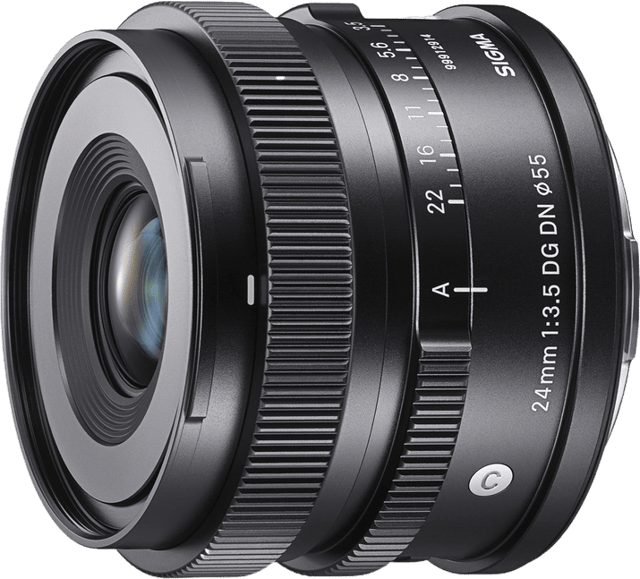
Sigma 24mm F/3.5 DG DN | C
f/3.5 instead of f/2.8
Tamron · 24 mm · f/2.8
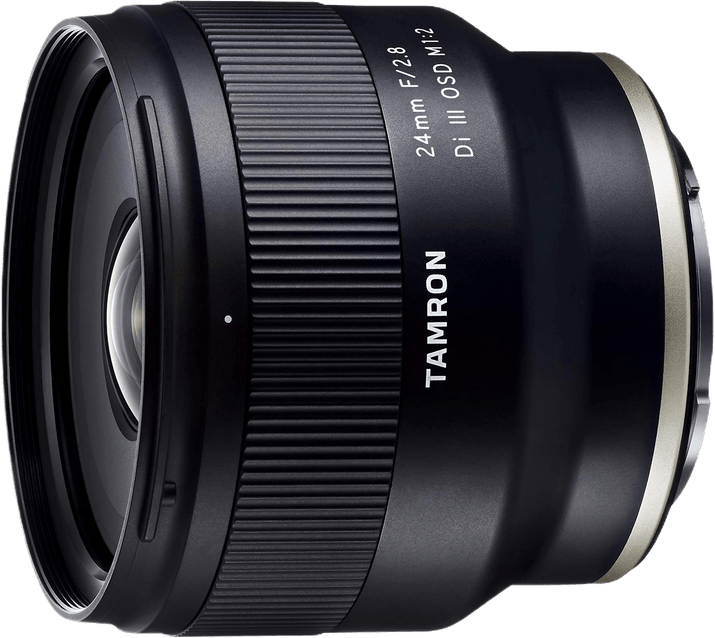
This lens score is calculated from published specifications.
General | |
|---|---|
About This LensTamron's 24mm F/2.8 Di III OSD is a small, light wide-angle prime for Sony E full-frame cameras. The single focal length keeps the optical design simple. It suits travel, street, interior and landscape work where you want to move quickly and carry little. One focal length also means you frame by moving, not by zooming. Tamron introduced this lens in 2019, and it remains in production. The main trade-off is the modest f/2.8 maximum aperture. In return, the lens stays small enough to carry anywhere. Close focusing also lets it double as a detail lens without changing focal length. | |
| Brand | Tamron |
| Release Year | 2019 |
Production Status ⓘCurrent status of lens manufacturing (e.g., in production, discontinued). |  In Production |
Version ⓘThe iteration or release number of a particular lens model. | III |
Lens Mount ⓘThe lens mount will tell you what type of lens range you can fit onto the camera body. Often the same camera company will have different lens ranges for different cameras. | Sony E |
System ⓘIndicates which camera system the lens is designed to attach to. | Sony E |
Maximum Format ⓘLargest sensor size compatible with the lens. |  Full Frame |
Physical64/100 | |
About the BuildThe lens weighs 7.6 oz (215 g) and measures 2.87 in (73 mm) across by 2.52 in (64 mm) long. It is short and light enough to leave on the camera all day. A screw-in filter attaches directly to the 67mm front thread, so any filter you buy must match that size. | |
| Lens Weight | 215 g |
Lens Diameter ⓘWidth of the lens at its widest point | 73 mm |
Lens Length ⓘHow long the lens is from front to back. | 64 mm |
Front Filter Compatible ⓘSome lenses are compatible with front filters, some are compatible with back filters and some are compatible with both. Front filters are usually more convenient to add and remove. |  Yes |
Front Filter Size ⓘDiameter of attachable filters. | 67 mm |
Optics77/100 | |
About the OpticsAt 24mm on a full-frame sensor, this prime takes in a wide view. It fits whole rooms, building facades and street corners from a normal working distance. In cramped interiors, you can keep both the subject and its setting in frame. Landscapes gain the same advantage, because one frame takes in a broad scene. The f/2.8 maximum aperture is modest for a prime, yet it admits useful light. Dim interiors and evening streets stay workable without forcing ISO very high. Stopped down a little, depth of field runs deep across the wide view. Subject separation at 24mm and f/2.8 is gentle rather than dramatic. Distant backgrounds stay recognisable behind your subject, which favours environmental portraits and reportage. The seven-blade diaphragm shapes out-of-focus highlights. Close focusing suits detail work. The lens focuses as close as 0.4 ft (12 cm), so you can move right up to a small subject. Its 0.5x maximum magnification suits food, flowers and found objects. At this focal length, a close subject still shows some of its setting. At these distances, depth of field turns thin, and backgrounds blur softly. | |
Focal Range ⓘShortest to longest focal length of the lens (zoom range start - end ) | 24 mm |
Aperture Range ⓘLargest aperture at the lens's shortest focal length to longest focal length (aperture range start - end) | 2.8 |
| Focal Length Angle of View | 84.06668552322992° |
Flange Focal Distance ⓘDistance from lens mount to sensor. | 18 mm |
Diaphragm Type ⓘStructure and design of the aperture |  Automatic |
Blades ⓘNumber of diaphragm blades in aperture | 7020 |
Zoom Lens ⓘZoom allows you to vary the focal length, change between long shots and close-ups | No |
Closest Focusing Distance ⓘMinimum distance for a subject to be in focus. | 12 cm01500 |
Maximum Magnification ⓘLargest size a subject can be reproduced | 0.5x |
| Autofocus Mode |  Yes |
| Manual Mode |  Yes |
| Manual Focusing Ring |  Yes |
Features71/100 | |
About the FeaturesThis lens has no built-in image stabilisation. Wide framing shows camera shake less than a long lens would, so many handheld shots still succeed. The gap matters most for stationary subjects in fading light. There, a monopod or tripod does the steadying work. Handheld video also shows small movements less at 24mm. The body is weather-sealed, which helps keep dust and moisture away from the interior during outdoor shoots. A fluorine coating on the front glass helps water and oil bead off, so rain, spray and fingerprints wipe away more easily. The coating sits on the exposed surface, the one most likely to collect marks. | |
Weather Sealing ⓘWeather sealing capabilities will give you more confidence when shooting in unfavourable conditions. |  Yes |
Fluorine Coating ⓘCoating to repel water and oil from lens elements. |  Yes |
| Built In Lens Hood | No |
| Lens Hood Type |  Petal |
Teleconverter ⓘA teleconverter (extender) is an extra piece of equipment that fits between the lens and the camera body to enhance magnification |  Yes |
| Image Stabilization | No |
Construction31/100 | |
About the ConstructionTen elements in nine groups include aspherical surfaces and low-dispersion glass. The aspherical surfaces help correct distortion, where straight edges appear curved. That matters when you photograph buildings and interiors. The low-dispersion glass helps reduce chromatic aberration, which shows as coloured fringes along high-contrast edges such as window frames against bright sky. | |
Elements ⓘLens elements refer to individual pieces of glass within the lens. | 10 |
| Groups | 9 |
Aspherical Elements ⓘThe number of aspherical lens elements which can help correct aberrations such as spherical aberration. | 1 |
Bi Aspherical Elements ⓘElements with two non-spherical surfaces | 0 |
Low Dispersion ⓘElements that reduce chromatic aberration | 1 |
Super Low Dispersion ⓘAdvanced elements further reducing chromatic aberration | 0 |
CA Reduction ⓘBuilt-in features to reduce chromatic aberration | 0 |
Internal Focusing ⓘInternal Focusing means that the lens does not change in size during focusing, and the front element does not rotate. | No |
f/3.5 instead of f/2.8
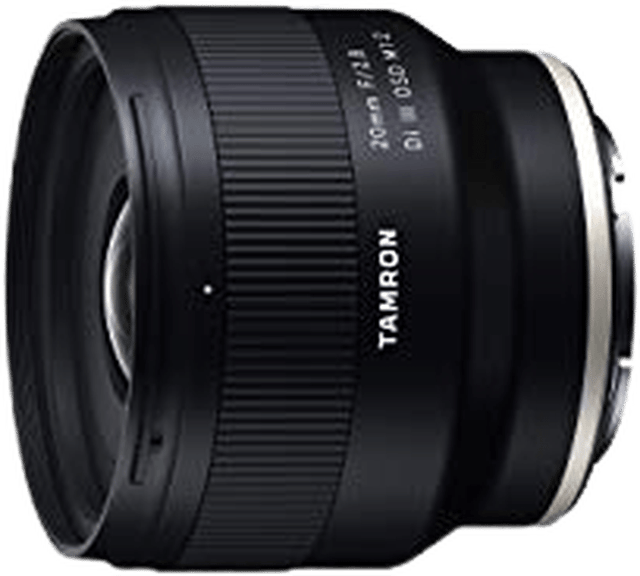
20 mm instead of 24 mm