
Sigma Contemporary Line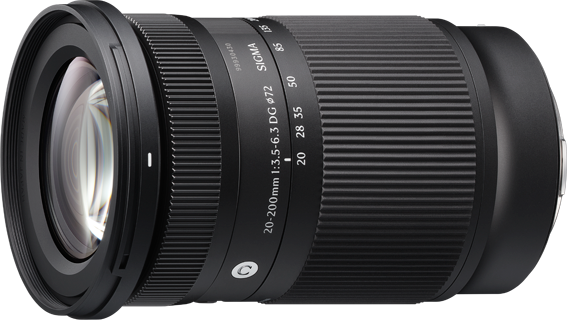
Sigma 20-200mm F3.5-6.3 DG Contemporary
20–200 mm instead of 25–200 mm
Tamron · 25–200 mm · f/2.8–5.6
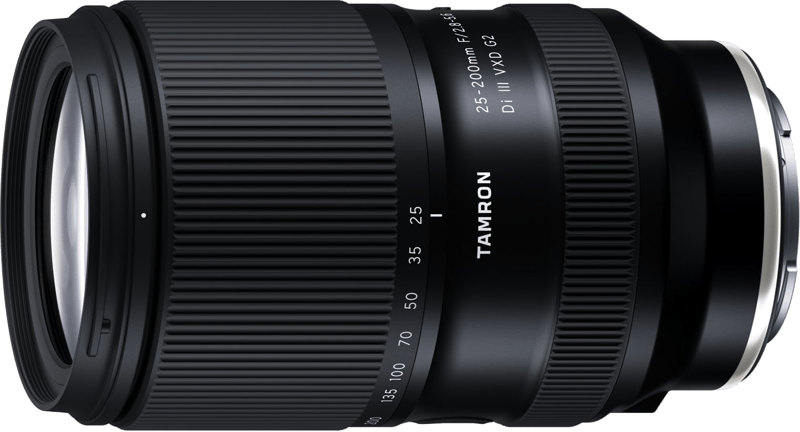
This lens score is calculated from published specifications.
General | |
|---|---|
About This LensThe Tamron 25-200mm f/2.8-5.6 Di III VXD G2 (Model A075) is a superzoom for Sony E full-frame cameras. It arrived in 2025 and remains in production. The span runs from a slightly wide 25mm to a long 200mm, so one lens can cover a whole trip. Use the short end for streets and interiors, and the long end for distant subjects. The main trade-off is speed. The aperture opens to f/2.8 at 25mm but falls to f/5.6 at 200mm. Handheld shooting in dim light at the long end therefore needs some planning. Travel and everyday photographers who want one lens for everything will get the most from it. | |
| Brand | Tamron |
| Release Year | 2025 |
Production Status ⓘCurrent status of lens manufacturing (e.g., in production, discontinued). |  In Production |
Version ⓘThe iteration or release number of a particular lens model. | G2 |
Lens Mount ⓘThe lens mount will tell you what type of lens range you can fit onto the camera body. Often the same camera company will have different lens ranges for different cameras. | Sony E |
System ⓘIndicates which camera system the lens is designed to attach to. | Sony E |
Maximum Format ⓘLargest sensor size compatible with the lens. |  Full Frame |
Physical64/100 | |
About the BuildThe Tamron weighs 1 lb 4.3 oz (575 g) and measures 4.78 in (121.5 mm) long. Screw-in filters fit the 67mm thread on the front. One filter covers the whole zoom, so a polariser for skies at 25mm also works at 200mm. | |
| Lens Weight | 575 g |
Lens Diameter ⓘWidth of the lens at its widest point | 76.2 mm |
Lens Length ⓘHow long the lens is from front to back. | 121.5 mm |
Front Filter Compatible ⓘSome lenses are compatible with front filters, some are compatible with back filters and some are compatible with both. Front filters are usually more convenient to add and remove. |  Yes |
Front Filter Size ⓘDiameter of attachable filters. | 67 mm |
Optics64/100 | |
About the OpticsThe 25–200mm range is the reason to buy this lens. At 25mm it frames interiors and street corners with a little width. At 200mm it makes distant subjects larger: a bird across a field, a performer on a far stage, a facade detail high on a building. Between those ends, the zoom handles portraits and general views. The variable aperture sets the main limit. At f/2.8, the wide end keeps ISO low indoors and in evening streets. As you zoom toward 200mm, the maximum closes to f/5.6. Daylight telephoto shots stay easy, but at dusk you will raise ISO or slow the shutter. Nine aperture blades keep the opening close to round when stopped down. This helps out-of-focus areas stay smooth in portraits at the wide end. Close focusing adds a useful bonus for a travel zoom. The lens focuses as near as 0.5 ft (16 cm). Its maximum magnification reaches 0.53x, which fills the frame with a flower, a market find, or a plate of food. | |
Focal Range ⓘShortest to longest focal length of the lens (zoom range start - end ) | 25–200 mm |
Aperture Range ⓘLargest aperture at the lens's shortest focal length to longest focal length (aperture range start - end) | 2.8–5.6 |
| Focal Length Angle of View | 81.73°–12.35° |
Flange Focal Distance ⓘDistance from lens mount to sensor. | 18 mm |
Diaphragm Type ⓘStructure and design of the aperture |  Automatic |
Blades ⓘNumber of diaphragm blades in aperture | 9020 |
Zoom Lens ⓘZoom allows you to vary the focal length, change between long shots and close-ups |  Yes |
Zoom Mechanism ⓘSystem enabling zoom function |  Electric |
Zoom Ring ⓘIf zooming is adjusted using a zoom ring |  Yes |
Zoom Type ⓘThe design or approach to zooming |  Rotary |
Closest Focusing Distance ⓘMinimum distance for a subject to be in focus. | 16 cm01500 |
Maximum Magnification ⓘLargest size a subject can be reproduced | 0.53x |
| Autofocus Mode |  Yes |
| Manual Mode |  Yes |
| Manual Focusing Ring |  Yes |
Features52/100 | |
About the FeaturesWeather sealing guards the joints against dust and moisture, useful on beaches, dusty trails, and wet markets. A fluorine coating on the front element sheds water and oil. Spray and fingerprints wipe off with a cloth instead of stubborn smears. A zoom lock stops the barrel from creeping open in a bag or on a sling. The zoom itself is electric and rotary, so a motor drives the focal length. There is no stabilization built into the lens. Steady handheld results at 200mm therefore depend on your shutter speed and on any stabilization in the camera body. Features specification score: 52/100. | |
Weather Sealing ⓘWeather sealing capabilities will give you more confidence when shooting in unfavourable conditions. |  Yes |
Fluorine Coating ⓘCoating to repel water and oil from lens elements. |  Yes |
| Built In Lens Hood | No |
| Lens Hood Type |  Petal |
Zoom Lock ⓘZoom lock allows the zoom ring to be locked at the desired focal length |  Yes |
Teleconverter ⓘA teleconverter (extender) is an extra piece of equipment that fits between the lens and the camera body to enhance magnification | No |
| Image Stabilization | No |
Construction54/100 | |
About the ConstructionThe optical formula uses 18 elements in 14 groups. Two of them are aspherical, specially shaped surfaces that help correct distortion and spherical aberration. That correction matters when you photograph buildings at the wide end. Four low-dispersion elements help reduce chromatic aberration, the coloured fringes that can appear along high-contrast edges such as branches against bright sky at 200mm. | |
Elements ⓘLens elements refer to individual pieces of glass within the lens. | 18 |
| Groups | 14 |
Aspherical Elements ⓘThe number of aspherical lens elements which can help correct aberrations such as spherical aberration. | 2 |
Bi Aspherical Elements ⓘElements with two non-spherical surfaces | 0 |
Low Dispersion ⓘElements that reduce chromatic aberration | 4 |
Super Low Dispersion ⓘAdvanced elements further reducing chromatic aberration | 0 |
CA Reduction ⓘBuilt-in features to reduce chromatic aberration | 0 |
Internal Focusing ⓘInternal Focusing means that the lens does not change in size during focusing, and the front element does not rotate. |  Yes |
20–200 mm instead of 25–200 mm