
Other Brand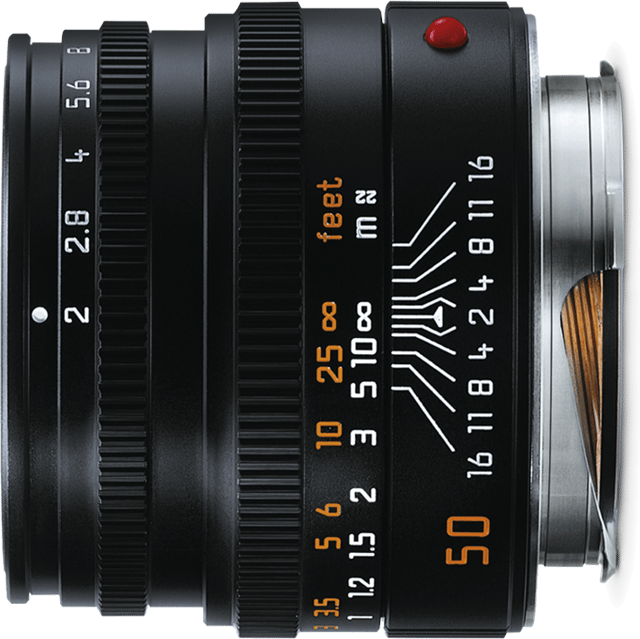
Leica 50mm f/2 Summicron-M
f/2 instead of f/0.95
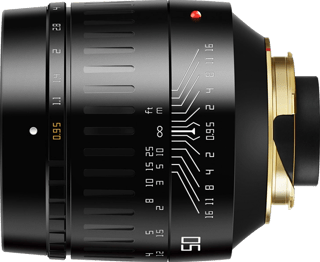
TTArtisan · 50 mm · f/0.95
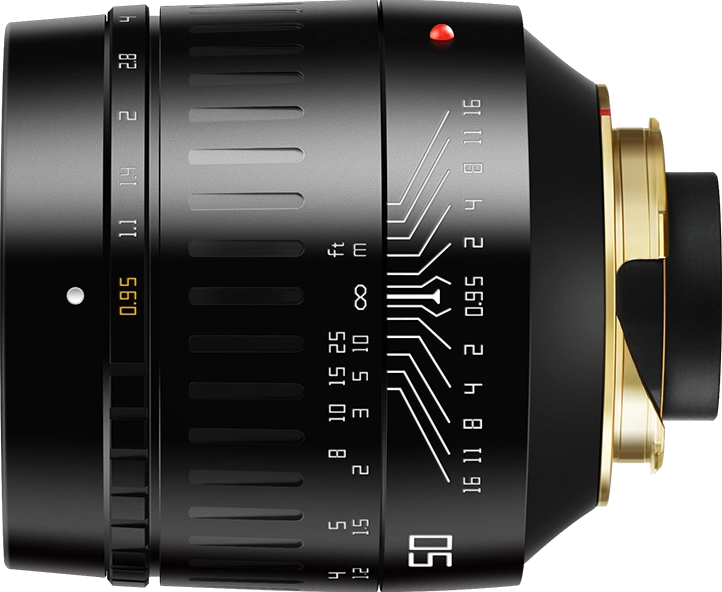
This lens score is calculated from published specifications.
General | |
|---|---|
About This LensTTArtisan released this 50mm prime in 2020 for Leica M mount. It covers the full frame, so the focal length frames people, food and everyday scenes as the eye sees them. The f/0.95 maximum aperture is the main draw, aimed at low light and portraits with strong background separation. The trade-off is handling. Focusing is manual only, so the lens rewards slow, deliberate framing over quick grab shots. At 1 lb 7.6 oz (670 g), it also sits heavy on a compact rangefinder body. Anyone wanting autofocus, stabilization or a sealed barrel should look elsewhere. | |
| Brand | TTArtisan |
| Release Year | 2020 |
Lens Mount ⓘThe lens mount will tell you what type of lens range you can fit onto the camera body. Often the same camera company will have different lens ranges for different cameras. | Leica M |
System ⓘIndicates which camera system the lens is designed to attach to. | Leica M |
Maximum Format ⓘLargest sensor size compatible with the lens. |  Full Frame |
Physical64/100 | |
About the BuildThe lens weighs 1 lb 7.6 oz (670 g), substantial for a 50mm prime, since an f/0.95 aperture needs large front glass. The barrel measures 2.83 in (72 mm) across. A screw-in filter attaches directly to the 67mm front thread. In bright daylight, an ND filter on that thread lets you keep f/0.95 open for shallow depth of field. | |
| Lens Weight | 670 g |
Lens Diameter ⓘWidth of the lens at its widest point | 72 mm |
Front Filter Compatible ⓘSome lenses are compatible with front filters, some are compatible with back filters and some are compatible with both. Front filters are usually more convenient to add and remove. |  Yes |
Front Filter Size ⓘDiameter of attachable filters. | 67 mm |
Optics74/100 | |
About the OpticsThis lens opens to f/0.95, far wider than the usual 50mm maximum. That extra width passes more light, so handheld frames in dark rooms and late-evening streets stay practical at lower ISO settings. Faster shutter speeds also help freeze a walking subject, which matters for street reportage. The optics specification scores 74 out of 100. Depth of field at f/0.95 is extremely thin. For a portrait, you focus on the eyes and let the background fall away. At portrait distance, eyelashes stay crisp while ears soften into blur. A slight focus miss softens the eyes, so use the rangefinder patch carefully. Stopped to f/2.8, the lens covers small groups with both faces in focus. Closest focus is 2.3 ft (70 cm), a comfortable working distance for portraits and everyday subjects. The 14 aperture blades keep the opening nearly round as you stop down. Point lights behind a street subject then render as smooth discs rather than clipped shapes. Night street scenes full of distant lamps show this effect most clearly. | |
Focal Range ⓘShortest to longest focal length of the lens (zoom range start - end ) | 50 mm |
Aperture Range ⓘLargest aperture at the lens's shortest focal length to longest focal length (aperture range start - end) | 0.95 |
| Focal Length Angle of View | 45° |
Flange Focal Distance ⓘDistance from lens mount to sensor. | 27.8 mm |
Diaphragm Type ⓘStructure and design of the aperture |  Manual |
Blades ⓘNumber of diaphragm blades in aperture | 14020 |
Zoom Lens ⓘZoom allows you to vary the focal length, change between long shots and close-ups | No |
Closest Focusing Distance ⓘMinimum distance for a subject to be in focus. | 70 cm01500 |
Maximum Magnification ⓘLargest size a subject can be reproduced | 0.05x |
| Autofocus Mode | No |
| Manual Mode |  Yes |
| Manual Focusing Ring |  Yes |
Features0/100 | |
About the FeaturesThere is no image stabilization, so the shutter speed you choose is the only defence against camera shake. The wide aperture keeps speeds high in the light it targets, but braced or tripod work is the answer in near dark. For still subjects in dim interiors, resting the camera on a table or rail works just as well. There is no weather sealing, so keep rain and blowing dust away from the barrel. The front glass also carries no fluorine coating. Such a coating, where fitted, helps oil and water run off, so fingerprints here need prompt and careful wiping. | |
Weather Sealing ⓘWeather sealing capabilities will give you more confidence when shooting in unfavourable conditions. | No |
Fluorine Coating ⓘCoating to repel water and oil from lens elements. | No |
| Built In Lens Hood | No |
Teleconverter ⓘA teleconverter (extender) is an extra piece of equipment that fits between the lens and the camera body to enhance magnification | No |
| Image Stabilization | No |
Construction46/100 | |
About the ConstructionThe optical path holds 11 elements in 8 groups, including one bi-aspherical element. Specially shaped surfaces of this kind help correct distortion and spherical aberration, faults a wide f/0.95 aperture can expose. Two low-dispersion elements help reduce chromatic aberration, where colours focus at different points and leave coloured fringes along high-contrast edges. | |
Elements ⓘLens elements refer to individual pieces of glass within the lens. | 11 |
| Groups | 8 |
Aspherical Elements ⓘThe number of aspherical lens elements which can help correct aberrations such as spherical aberration. | 1 |
Bi Aspherical Elements ⓘElements with two non-spherical surfaces | 1 |
Low Dispersion ⓘElements that reduce chromatic aberration | 2 |
Super Low Dispersion ⓘAdvanced elements further reducing chromatic aberration | 0 |
CA Reduction ⓘBuilt-in features to reduce chromatic aberration | 0 |
Internal Focusing ⓘInternal Focusing means that the lens does not change in size during focusing, and the front element does not rotate. | No |
f/2 instead of f/0.95
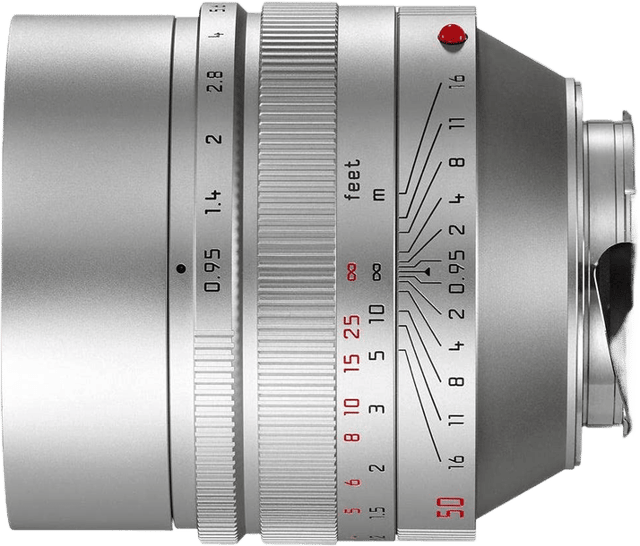
f/1 instead of f/0.95
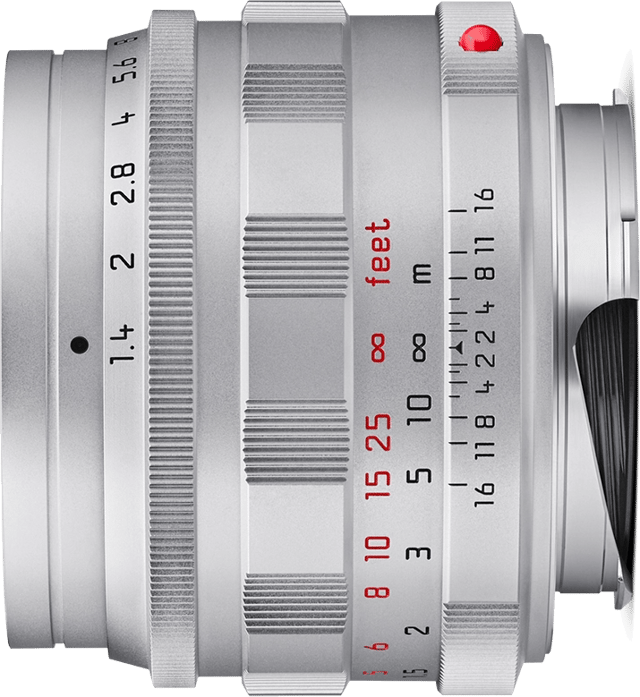
f/1.4 instead of f/0.95
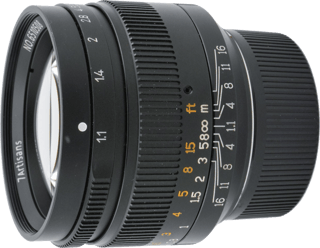
0.07× vs 0.05× close-up reach · 400 g vs 670 g
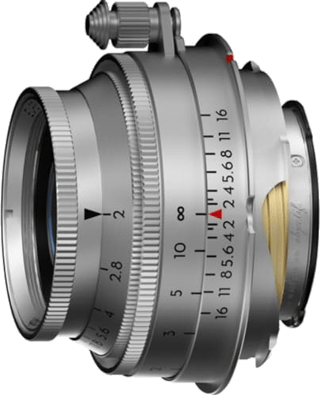
f/2 vs f/0.95 · 0.066× vs 0.05× close-up reach · 120 g vs 670 g
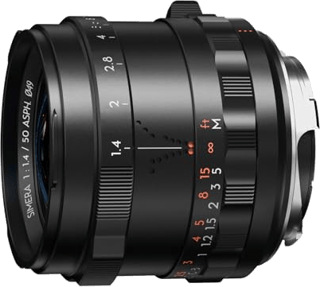
f/1.4 vs f/0.95 · 0.16× vs 0.05× close-up reach · 280 g vs 670 g