
Viltrox AF 13mm f/1.4
Viltrox · 13 mm · f/1.4
Score Breakdown
Scores combine our editorial testing with published lab data.
General | |
|---|---|
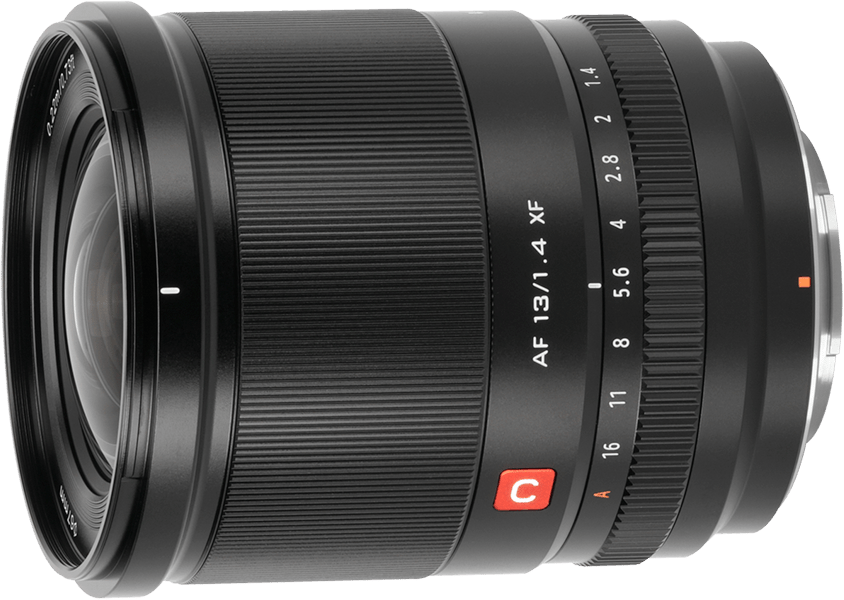
About This LensThis Viltrox prime is a wide-angle lens for APS-C cameras, launched in 2022. It comes in Fujifilm X, Nikon Z and Sony E mount versions, so you buy the one made for your camera. All three share the same optical design. At 13mm it suits interiors, architecture, city streets and sweeping landscapes. The f/1.4 aperture opens wide for dim spaces and night skies. Together they point the lens at low-light wide-angle shooting. The main trade-off is the fixed focal length: you compose by changing position rather than turning a ring. Built-in stabilization is absent as well. | |
| Brand | Viltrox |
| Release Year | 2022 |
Lens Mount ⓘThe lens mount will tell you what type of lens range you can fit onto the camera body. Often the same camera company will have different lens ranges for different cameras. | Fujifilm X |
System ⓘIndicates which camera system the lens is designed to attach to. | Fujifilm X |
Maximum Format ⓘLargest sensor size compatible with the lens. |  APS-C APS-C |
Physical57/100 | |
About the BuildThe Fujifilm X version weighs 14.6 oz (415 g) and measures 3.54 in (90 mm) long and 2.91 in (74 mm) across. The Nikon Z version is longer and heavier. Choose the mount made for your camera. A 67mm screw-in filter attaches directly to the front thread, shared by every version. | |
| Lens Weight | 415 g |
Lens Diameter ⓘWidth of the lens at its widest point | 74 mm |
Lens Length ⓘHow long the lens is from front to back. | 90 mm |
Front Filter Compatible ⓘSome lenses are compatible with front filters, some are compatible with back filters and some are compatible with both. Front filters are usually more convenient to add and remove. |  Yes Yes |
Front Filter Size ⓘDiameter of attachable filters. | 67 mm |
Optics86/100 | |
About the OpticsThe 13mm focal length gives a very wide view on APS-C. It can help with room interiors or a building across a narrow street, although framing depends on your position. Moving close to a foreground object makes it look larger relative to the scene behind it. Check frame edges. The f/1.4 maximum aperture is the lens's key advantage. It gathers far more light than a small opening, so star fields and dim interiors stay within reach of workable exposures. Handheld evening shooting becomes easier, though the exact shutter speed still depends on your scene. Depth of field depends on aperture and focus distance. At f/1.4, a close subject can leave the background soft despite the wide view. Closest focus is 0.7 ft (22 cm), measured from the sensor. A near rock or flower can anchor a landscape composition, but stop down when more depth is needed. Maximum magnification is 0.1x. This describes the size of the subject image on the sensor at the closest range. It can help with foreground details, while very small objects will occupy less of the frame. Keep space ahead of the lens so the camera does not shade them. | |
Focal Range ⓘShortest to longest focal length of the lens (zoom range start - end ) | 13 mm |
Aperture Range ⓘLargest aperture at the lens's shortest focal length to longest focal length (aperture range start - end) | 1.4 |
| Focal Length Angle of View | 94.1° |
Flange Focal Distance ⓘDistance from lens mount to sensor. | 17.7 mm |
Diaphragm Type ⓘStructure and design of the aperture |  Automatic Automatic |
Blades ⓘNumber of diaphragm blades in aperture | 9020 |
Zoom Lens ⓘZoom allows you to vary the focal length, change between long shots and close-ups | No |
Closest Focusing Distance ⓘMinimum distance for a subject to be in focus. | 22 cm01500 |
Maximum Magnification ⓘLargest size a subject can be reproduced | 0.1x |
| Autofocus Mode |  Yes Yes |
| Manual Mode |  Yes Yes |
| Manual Focusing Ring |  Yes Yes |
Features52/100 | |
About the FeaturesDust seals at the aperture ring and body joints help protect the lens during outdoor work. Use cover in rain and avoid exposing it to blowing sand. Keep the mount clean when changing lenses, especially on a dusty trail. There is no image stabilization built in. At 13mm, camera shake shows up less quickly than at longer focal lengths, but the lens adds no help of its own. For long night exposures, plan on a tripod. The front glass has a water-repellent and anti-fouling coating to help with cleaning. Remove loose grit before wiping the surface. Keep both ends capped during transport, and check the front glass for marks before photographing a bright night scene. | |
Weather Sealing ⓘWeather sealing capabilities will give you more confidence when shooting in unfavourable conditions. |  Yes Yes |
Fluorine Coating ⓘCoating to repel water and oil from lens elements. |  Yes Yes |
| Built In Lens Hood | No |
| Lens Hood Type |  Petal Petal |
Teleconverter ⓘA teleconverter (extender) is an extra piece of equipment that fits between the lens and the camera body to enhance magnification | No |
| Image Stabilization | No |
Construction54/100 | |
About the ConstructionInside sit 14 elements in 11 groups. Two aspherical elements help correct optical faults such as distortion, which can bend straight edges in wide-angle images. Four low-dispersion elements help reduce chromatic aberration, the colored fringes that can appear along high-contrast edges such as branches against a bright sky. Focusing is internal, so the barrel holds its length while you focus. | |
Elements ⓘLens elements refer to individual pieces of glass within the lens. | 14 |
| Groups | 11 |
Aspherical Elements ⓘThe number of aspherical lens elements which can help correct aberrations such as spherical aberration. | 2 |
Bi Aspherical Elements ⓘElements with two non-spherical surfaces | 0 |
Low Dispersion ⓘElements that reduce chromatic aberration | 4 |
Super Low Dispersion ⓘAdvanced elements further reducing chromatic aberration | 0 |
CA Reduction ⓘBuilt-in features to reduce chromatic aberration | 0 |
Internal Focusing ⓘInternal Focusing means that the lens does not change in size during focusing, and the front element does not rotate. |  Yes Yes |