
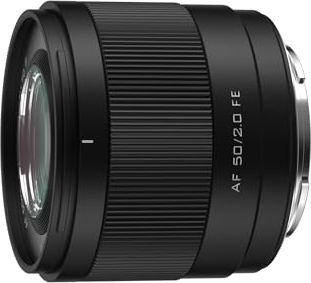
Viltrox AF 50mm F2.0 Air
Viltrox · 50 mm · f/2 · Air
Score Breakdown
Scores combine our editorial testing with published lab data.
General | |
|---|---|
About This LensThis light full-frame prime gives Nikon Z and Sony E photographers a straightforward 50mm, released in 2025 and still in production. Viltrox offers this same optical design as separate mount versions, so choose the one made for your camera. The 50mm view renders people and places at a familiar size, which suits street photography, everyday records, food and half-length portraits. Faces also keep natural proportions at portrait distance rather than stretching or flattening. The trade-off sits in the slim build. There is no image stabilization and no weather sealing, so low-light handheld work and damp conditions need planning around them. | |
| Brand | Viltrox |
| Release Year | 2025 |
Production Status ⓘCurrent status of lens manufacturing (e.g., in production, discontinued). |  In Production In Production |
Pro Branding ⓘSpecific branding codes used for professional-tier lenses. | Air |
Lens Mount ⓘThe lens mount will tell you what type of lens range you can fit onto the camera body. Often the same camera company will have different lens ranges for different cameras. | Nikon Z |
System ⓘIndicates which camera system the lens is designed to attach to. | Nikon Z |
Maximum Format ⓘLargest sensor size compatible with the lens. |  Full Frame Full Frame |
Physical64/100 | |
About the BuildAt 7.2 oz (205 g) and 2.22 in (56.5 mm) long, this lens is light and slim for a full-frame prime. The body is 2.56 in (65 mm) across. The 58mm thread accepts common screw-in filters, so a polariser or ND filter attaches directly without adapters. The physical specification scores 64 out of 100. | |
| Lens Weight | 205 g |
Lens Diameter ⓘWidth of the lens at its widest point | 65 mm |
Lens Length ⓘHow long the lens is from front to back. | 56.5 mm |
Front Filter Compatible ⓘSome lenses are compatible with front filters, some are compatible with back filters and some are compatible with both. Front filters are usually more convenient to add and remove. |  Yes Yes |
Front Filter Size ⓘDiameter of attachable filters. | 58 mm |
Optics82/100 | |
About the OpticsA 50mm prime on full frame sees subjects much as your eye does. Dinner tables, shop fronts and relaxed portraits all fall naturally into place. Because there is no zoom, you compose by stepping nearer or back, which keeps the pictures direct. The F2.0 maximum aperture gives working light indoors and after sunset. It lets you favour faster shutter speeds when you work handheld, and it passes more light than the F2.8 settings typical of standard zooms. Stopping down to middle settings then brings a small group sharp at the table. At portrait distance it softens a busy street behind the subject, though the effect is gentler than faster 50mm lenses give. Nine aperture blades help the opening stay round as you stop down. Rounder out-of-focus highlights keep evening lights and sunlit leaves smooth behind portraits instead of clipped into flat shapes. Closest focus sits at 1.7 ft (51 cm), which covers a plate of food, garden flowers and casual portraits at a comfortable working distance. The optics specification scores 82 out of 100. | |
Focal Range ⓘShortest to longest focal length of the lens (zoom range start - end ) | 50 mm |
Aperture Range ⓘLargest aperture at the lens's shortest focal length to longest focal length (aperture range start - end) | 2 |
| Focal Length Angle of View | 47.4° |
Flange Focal Distance ⓘDistance from lens mount to sensor. | 16 mm |
Diaphragm Type ⓘStructure and design of the aperture |  Automatic Automatic |
Blades ⓘNumber of diaphragm blades in aperture | 9020 |
Zoom Lens ⓘZoom allows you to vary the focal length, change between long shots and close-ups | No |
Closest Focusing Distance ⓘMinimum distance for a subject to be in focus. | 51 cm01500 |
Maximum Magnification ⓘLargest size a subject can be reproduced | 0.11x |
| Autofocus Mode |  Yes Yes |
| Manual Mode |  Yes Yes |
| Manual Focusing Ring |  Yes Yes |
Features | |
About the FeaturesThere is no in-lens image stabilization. For sharp handheld frames in dim rooms you rely on shutter speed, a steady grip and the F2.0 aperture, which buys back some speed. On a tripod or in daylight the gap barely matters. There is no weather sealing. Keep the lens dry, and shelter it from spray on coastal paths or dusty trails if your portraits drift outdoors. The Nikon Z version also has no fluorine coating. The front element therefore does without that treatment, and care stays with regular cleaning. | |
Weather Sealing ⓘWeather sealing capabilities will give you more confidence when shooting in unfavourable conditions. | No |
Fluorine Coating ⓘCoating to repel water and oil from lens elements. | No |
| Built In Lens Hood | No |
| Lens Hood Type |  Round Round |
Teleconverter ⓘA teleconverter (extender) is an extra piece of equipment that fits between the lens and the camera body to enhance magnification | No |
| Image Stabilization | No |
Construction54/100 | |
About the ConstructionThe formula includes one aspherical element. Its specially shaped surface helps correct distortion and spherical aberration, the faults that curve straight door frames and railings in street scenes. Three low-dispersion elements help reduce chromatic aberration, the coloured fringes that can appear along high-contrast edges such as backlit hair. Focusing is internal, with the moving elements inside the barrel. | |
Elements ⓘLens elements refer to individual pieces of glass within the lens. | 13 |
| Groups | 9 |
Aspherical Elements ⓘThe number of aspherical lens elements which can help correct aberrations such as spherical aberration. | 1 |
Bi Aspherical Elements ⓘElements with two non-spherical surfaces | 0 |
Low Dispersion ⓘElements that reduce chromatic aberration | 3 |
Super Low Dispersion ⓘAdvanced elements further reducing chromatic aberration | 0 |
CA Reduction ⓘBuilt-in features to reduce chromatic aberration | 0 |
Internal Focusing ⓘInternal Focusing means that the lens does not change in size during focusing, and the front element does not rotate. |  Yes Yes |