
Voigtlander COLOR-SKOPAR Vintage Line Aspherical 21mm f/3.5
Voigtlander · 21 mm · f/3.5 · Vintage Line
Score Breakdown
This product does not have an overall score yet.
General | |
|---|---|
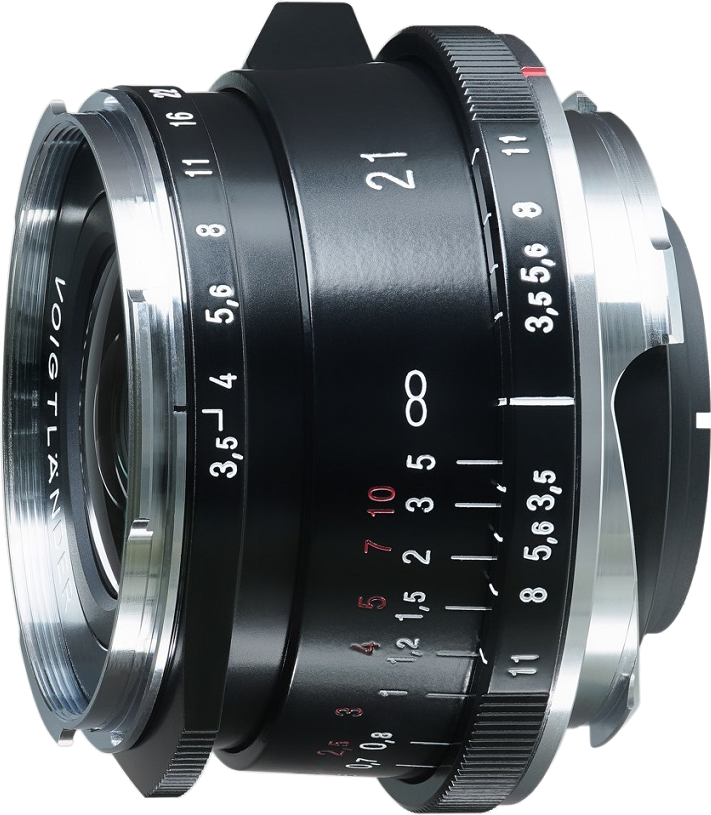
About This LensThe Color-Skopar 21mm f/3.5 is a compact wide-angle prime for Leica M full-frame cameras. It suits architecture, street scenes and travel, where 21mm framing takes in a whole building or a busy square. It also fits interiors, where you often cannot step back far enough. The modest size makes it a natural choice for rangefinder shooters who want a wide lens without bulk. Voigtlander released it in 2018 as part of the Vintage Line. The design keeps the lens small enough to carry every day, but the trade-off is a modest f/3.5 maximum aperture and fully manual focusing. | |
| Brand | Voigtlander |
| Release Year | 2018 |
Pro Branding ⓘSpecific branding codes used for professional-tier lenses. | Vintage Line |
Lens Mount ⓘThe lens mount will tell you what type of lens range you can fit onto the camera body. Often the same camera company will have different lens ranges for different cameras. | Leica M |
System ⓘIndicates which camera system the lens is designed to attach to. | Leica M |
Maximum Format ⓘLargest sensor size compatible with the lens. |  Full Frame |
Physical | |
About the BuildThis is a very small lens. It weighs 6.3 oz (180 g), runs 2.05 in (52 mm) long and measures 1.18 in (29.9 mm) across. A screw-in filter must match the 39mm thread at the front. That small thread also keeps filters compact, so a UV or polarising filter adds little weight. | |
| Lens Weight | 180 g |
Lens Diameter ⓘWidth of the lens at its widest point | 29.9 mm |
Lens Length ⓘHow long the lens is from front to back. | 52 mm |
Front Filter Compatible ⓘSome lenses are compatible with front filters, some are compatible with back filters and some are compatible with both. Front filters are usually more convenient to add and remove. |  Yes |
Front Filter Size ⓘDiameter of attachable filters. | 39 mm |
Optics | |
About the OpticsFraming at 21mm places the emphasis on the foreground. A near subject, such as a doorway or a boulder, can anchor the picture and lead the eye into the wider scene behind it. Leading lines, such as pavements or fences, also gain strength at this focal length. The f/3.5 maximum aperture is modest for a prime. Daylight and bright interiors supply plenty of light, and stopping down brings more of the scene into focus. In dim evening streets you will lean on higher ISO settings rather than the aperture. Focusing is manual only. The focusing ring sets distances precisely, and depth of field at 21mm is generous once you stop down. Street and travel shooters can preset a distance and let that depth cover the scene. Closest focus sits at 1.6 ft (50 cm), so a nearby detail cannot fill the frame. For landscape frames that run from a foreground rock to a distant horizon, that is rarely a limit. Ten aperture blades help keep the opening round as you stop down, which keeps out-of-focus highlights smooth. | |
Focal Range ⓘShortest to longest focal length of the lens (zoom range start - end ) | 21 mm |
Aperture Range ⓘLargest aperture at the lens's shortest focal length to longest focal length (aperture range start - end) | 3.5 |
Flange Focal Distance ⓘDistance from lens mount to sensor. | 27.8 mm |
Diaphragm Type ⓘStructure and design of the aperture |  Manual |
Blades ⓘNumber of diaphragm blades in aperture | 10020 |
Zoom Lens ⓘZoom allows you to vary the focal length, change between long shots and close-ups | No |
Closest Focusing Distance ⓘMinimum distance for a subject to be in focus. | 50 cm01500 |
| Autofocus Mode | No |
| Manual Mode |  Yes |
| Manual Focusing Ring |  Yes |
Features | |
About the FeaturesThe feature list is short. There is no image stabilization, so in dim light you need a steady hold or a support. In good light the wide 21mm view keeps handheld work practical. For long exposures, set the camera on a tripod or rest it on something solid. There is no weather sealing. Keep the lens out of rain and blowing dust, which is worth remembering on outdoor shoots. There is no fluorine coating either, so the front element needs ordinary care against smears. These absences fit the lens's small, simple character. They just ask you to plan around the light and the weather. | |
Weather Sealing ⓘWeather sealing capabilities will give you more confidence when shooting in unfavourable conditions. | No |
Fluorine Coating ⓘCoating to repel water and oil from lens elements. | No |
| Built In Lens Hood | No |
Teleconverter ⓘA teleconverter (extender) is an extra piece of equipment that fits between the lens and the camera body to enhance magnification | No |
| Image Stabilization | No |
Construction | |
About the ConstructionNine elements sit in eight groups. One aspherical element uses a specially shaped surface to help correct distortion, which can bend straight edges. One low-dispersion element helps reduce chromatic aberration, where colours fringe along high-contrast edges. Both corrections matter for architecture, where window frames and rooflines reveal small faults. | |
Elements ⓘLens elements refer to individual pieces of glass within the lens. | 9 |
| Groups | 8 |
Aspherical Elements ⓘThe number of aspherical lens elements which can help correct aberrations such as spherical aberration. | 1 |
Bi Aspherical Elements ⓘElements with two non-spherical surfaces | 0 |
Low Dispersion ⓘElements that reduce chromatic aberration | 1 |
Super Low Dispersion ⓘAdvanced elements further reducing chromatic aberration | 0 |
CA Reduction ⓘBuilt-in features to reduce chromatic aberration | 0 |
Internal Focusing ⓘInternal Focusing means that the lens does not change in size during focusing, and the front element does not rotate. | No |