
Zeiss Otus ML 50mm f/1.4
Zeiss · 50 mm · f/1.4 · Otus
Score Breakdown
Scores combine our editorial testing with published lab data.
General | |
|---|---|
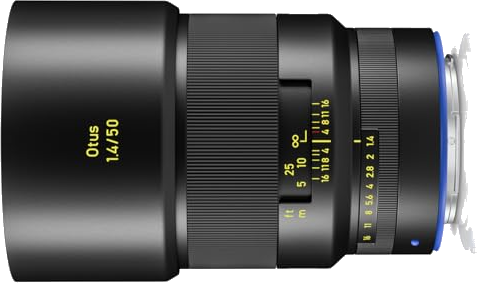
About This LensThe Otus ML 50mm f/1.4 is a manual-focus prime for full-frame mirrorless cameras. Zeiss offers it in Canon RF, Sony E and Nikon Z versions, so you pick the version made for your system. A 50mm lens frames people, streets and everyday scenes with a natural perspective. Available light portraits, quiet street scenes and travel work all fit. The wide f/1.4 aperture suits portraits and low light. The trade-off is focusing. This lens does not autofocus, so every shot depends on turning the ring yourself. Zeiss released the lens in 2025 and it remains in production. It suits photographers who work at a deliberate pace, such as portrait and still-life shooters. | |
| Brand | Zeiss |
| Release Year | 2025 |
Production Status ⓘCurrent status of lens manufacturing (e.g., in production, discontinued). |  In Production In Production |
Pro Branding ⓘSpecific branding codes used for professional-tier lenses. | Otus |
Lens Mount ⓘThe lens mount will tell you what type of lens range you can fit onto the camera body. Often the same camera company will have different lens ranges for different cameras. | Canon RF |
System ⓘIndicates which camera system the lens is designed to attach to. | Canon EOS R |
Maximum Format ⓘLargest sensor size compatible with the lens. |  Full Frame Full Frame |
Physical100/100 | |
About the BuildThe lens weighs 1 lb 7.9 oz (677 g) and measures 3.94 in (100 mm) long. Screw-in filters of 67mm fit straight onto the front thread, and any polariser or ND filter must match that size. | |
| Lens Weight | 677 g |
Lens Diameter ⓘWidth of the lens at its widest point | 77 mm |
Lens Length ⓘHow long the lens is from front to back. | 100 mm |
Front Filter Compatible ⓘSome lenses are compatible with front filters, some are compatible with back filters and some are compatible with both. Front filters are usually more convenient to add and remove. |  Yes Yes |
Front Filter Size ⓘDiameter of attachable filters. | 67 mm |
Optics75/100 | |
About the OpticsAt 50mm, this prime gives one fixed framing. That length suits half-length portraits, street work and reportage at a comfortable working distance. You change the framing by stepping closer or further back rather than zooming. One focal length also keeps the handling simple: the frame stays constant as you work. The f/1.4 maximum aperture is the defining strength. It passes a great deal of light, so you can hold shutter speeds up in dim rooms or at dusk without pushing ISO far. The cost is depth of field. Wide open, only a thin plane stays sharp, which lifts a portrait subject away from a busy background but demands precise focusing. Stop down one or two stops when you want more of the scene sharp. At f/2.8, more of a face holds sharp and the background stays soft. Ten aperture blades help keep out-of-focus highlights round as the aperture closes. Close focus sits at 0.9 ft (27 cm), close enough to shoot objects on a table or a nearby face. Maximum magnification reaches 0.14x, so even a small subject fills only part of the frame. | |
Focal Range ⓘShortest to longest focal length of the lens (zoom range start - end ) | 50 mm |
Aperture Range ⓘLargest aperture at the lens's shortest focal length to longest focal length (aperture range start - end) | 1.4 |
| Focal Length Angle of View | 47° |
Flange Focal Distance ⓘDistance from lens mount to sensor. | 20 mm |
Diaphragm Type ⓘStructure and design of the aperture |  Manual Manual |
Blades ⓘNumber of diaphragm blades in aperture | 10020 |
Zoom Lens ⓘZoom allows you to vary the focal length, change between long shots and close-ups | No |
Closest Focusing Distance ⓘMinimum distance for a subject to be in focus. | 27 cm01500 |
Maximum Magnification ⓘLargest size a subject can be reproduced | 0.14x |
| Autofocus Mode | No |
| Manual Mode |  Yes Yes |
| Manual Focusing Ring |  Yes Yes |
Features32/100 | |
About the FeaturesThe feature set is lean, scoring 32/100 on our features measure. Weather sealing guards the joints against dust and moisture, so the lens can stay mounted through light rain or a dusty street shoot. There is no image stabilization. As light falls you need either a shutter speed you can hand-hold at 50mm or a steady support such as a tripod for still subjects. The front glass also has no fluorine coating, a treatment that on other lenses repels water and oil. Cleaning off fingerprints and rain spots here calls for a little more care. A blower and a soft cloth handle most cleaning. | |
Weather Sealing ⓘWeather sealing capabilities will give you more confidence when shooting in unfavourable conditions. |  Yes Yes |
Fluorine Coating ⓘCoating to repel water and oil from lens elements. | No |
| Built In Lens Hood | No |
| Lens Hood Type |  Round Round |
Teleconverter ⓘA teleconverter (extender) is an extra piece of equipment that fits between the lens and the camera body to enhance magnification | No |
| Image Stabilization | No |
Construction38/100 | |
About the ConstructionFourteen elements in eleven groups include two aspherical elements. Their specially shaped surfaces help correct optical faults, including distortion and spherical aberration. For portraits and street scenes, that correction aims to curb the bowing of straight edges such as door frames. Focusing is internal, so the lens keeps a constant length as you focus. | |
Elements ⓘLens elements refer to individual pieces of glass within the lens. | 14 |
| Groups | 11 |
Aspherical Elements ⓘThe number of aspherical lens elements which can help correct aberrations such as spherical aberration. | 2 |
Bi Aspherical Elements ⓘElements with two non-spherical surfaces | 0 |
Low Dispersion ⓘElements that reduce chromatic aberration | 0 |
Super Low Dispersion ⓘAdvanced elements further reducing chromatic aberration | 0 |
CA Reduction ⓘBuilt-in features to reduce chromatic aberration | 0 |
Internal Focusing ⓘInternal Focusing means that the lens does not change in size during focusing, and the front element does not rotate. |  Yes Yes |