
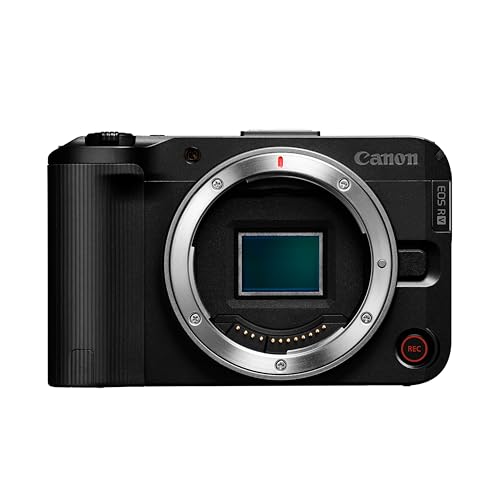
Canon EOS R50 V
Canon · Mirrorless · 24.2 MP · APS-C · 6K video
Score Breakdown
This product does not have an overall score yet.
General | |
|---|---|
About This CameraCanon launched the EOS R50 V in 2025 as a mirrorless camera with an APS-C sensor. There is no viewfinder, so you compose every shot on the 3-inch flip-out touchscreen. That layout marks it out for people who shoot facing the lens, filming themselves or working from unusual angles. The RF mount takes native RF and RF-S lenses, and an adapter adds the older EF and EF-S ranges. A 1.6x crop narrows each lens's field of view, which matters most when you need wide framing indoors. Video is the focus. The camera records 4K up to 60p in 10-bit colour with Canon Log 3, giving creators real room to grade their footage. | |
| Brand | Canon |
Announcement date ⓘRefers to the date the manufacturer publicly announced the upcoming release and general specs of this camera. | Mar 2025 |
Released ⓘRefers to the year this camera was officially made available for sale. | 2025 |
| Camera type |  Mirrorless Mirrorless |
Sensor | |
| Type | 24.2MP APS-C CMOS |
| Image Processor | DIGIC X |
| ISO | 100-32,000 (expandable to 51,200 for stills), 100-12,800 (expandable to 16,000-25,600 for movies) |
Video | |
About the VideoRecording modes split cleanly by need. 4K UHD at 60p applies a 1.56x crop, while 4K at 30p uses the full sensor width with 6K oversampling for fine detail. Knowing which mode suits a scene is part of planning the shoot. Full HD at 120p is the slow-motion route, alongside a dedicated Slow/Fast motion recording mode. Footage from these modes stretches time without editing tricks. Colour depth is the serious part. 10-bit 4:2:2 recording with Canon Log 3, HLG, PQ and Canon709 covers both graded and ready-to-share looks, and clips record in XF-AVC S or XF-HEVC S. Shooting aids include false colour and zebras for exposure control, Movie IS to reduce camera shake, Smooth Skin and Close-up Demo modes for presenter work, and Cinema View for 2.35:1 framing. Paired with the flip screen, this toolset is aimed at creators filming themselves. | |
| Max Resolution | 4K UHD 60p (with 1.56x crop), 4K 30p (6K oversampled, full-width), Full HD 120p |
| Color Depth | 10-bit 4:2:2 |
| Recording Formats | XF-AVC S, XF-HEVC S |
| Log Modes | Canon Log 3, HLG, PQ, Canon709 |
| Features | False Color, Zebras, Cinema View (2.35:1 aspect ratio), Movie IS, Smooth Skin mode, Close-up Demo mode, Slow/Fast motion recording |
Max video resolution ⓘThe best resolution this camera can capture video in. Modern cameras can capture up to 8K video. |  6K 6K |
Autofocus | |
| System | Dual Pixel CMOS AF II |
| Modes | Face/Eye/Head/Body detection, Animal detection (Dogs, Cats, Birds, Horses), Vehicle detection (Racing cars, Motorcycles, Aircraft, Trains), Spot AF, 1-point AF, Flexible Zone AF |
| Coverage | 651 zones/4503 positions for stills, 527 zones/3713 positions for movies |
Shutter | |
| Electronic | 1/8000s |
| First Curtain Electronic | 1/4000s |
| X Sync | 1/250s (electronic, 1st curtain only) |
Continuous shooting | |
| First Curtain Electronic | 12 fps |
| Silent Electronic | 15 fps with RAW over 2 seconds |
ISO | |
| Stills | 100-32,000 (expandable to 51,200) |
| Video | 100-12,800 (expandable to 16,000-25,600) |
Display | |
| Type | 3.0-inch vari-angle touchscreen |
| Dots | 1,040,000 |
| Aspect Ratio | 3:2 |
Build | |
| Screen | 3.0-inch 1,040,000-dot vari-angle touchscreen LCD |
| Design Features | Front record button, vertical and horizontal tripod mounts, zoom lever for Power Zoom lenses, tally light, side-mounted SD card slot |
Audio | |
| Input | 3.5mm stereo mini-jack (external microphone) |
| Output | 3.5mm stereo mini-jack (headphone) |
| Microphone Array | 3-microphone array with noise reduction |
| Recording | LPCM 24-bit, 4-channel audio |
Connectivity | |
| Wireless | Wi-Fi 5 GHz/2.4 GHz, Bluetooth 5.1 |
| Ports | USB-C (UVC/UAC streaming, charging), Micro-HDMI, 3.5mm microphone jack, 3.5mm headphone jack, Multi-function accessory shoe |
| Streaming | Live Switcher Mobile app, Camera Connect app, HDMI streaming, USB UVC/UAC |
Battery | |
| Type | LP-E17 |
| Life | Approx. 480 shots (LCD) |
Mode dial | |
| Video Modes | 7 video-focused modes |
| Features | Auto, Manual, Scene (Close-up Demo, Smooth Skin), Movie IS, Slow/Fast motion, stills mode |
Optics | |
About the OpticsThe 24.2 megapixel APS-C sensor provides resolution suited to large prints and leaves room to crop a composition when needed. For most subject matter, from portraits to travel, that level of resolution is comfortable rather than constraining. The RF mount is the system's practical strength. Native RF and RF-S lenses mount directly, and an adapter opens the door to the older EF and EF-S ranges. Existing Canon DSLR owners can keep their glass working, which eases a move to this body. The 1.6x crop factor has a strong effect on framing. Wide lenses behave less wide, so tight interiors and open landscapes call for genuinely short focal lengths. The crop effectively lengthens telephoto reach for distant subjects like birds or field sports. There is no viewfinder, which changes how stills shooting feels. You frame on the flipping rear screen at arm's length, a posture that suits video and tripod work better than fast handheld photography. | |
| Lens Compatibility | RF and RF-S lenses natively; EF/EF-S with Mount Adapter |
| Crop Factor | 1.6x (APS-C) |
Megapixels ⓘThe higher the number of megapixels, the more detail the cameras sensor can capture. | 24.2 MP050 |
Sensor format ⓘRefers to the most commonly used sensor sizes. |  APS-C APS-C |
Lens mount ⓘThe lens mount will tell you what type of lens range you can fit onto the camera body. Often the same camera company will have different lens ranges for different cameras. | Canon RF |
Viewfinder type ⓘThe viewfinder type is either electronic or optical. Electronic viewfinders will have a small screen in the viewfinder. Optical viewfinders will use prisms and mirrors to look through the lens. | None |
Performance | |
| Continuous Shooting | 12 fps (first-curtain electronic), 15 fps (silent electronic shutter) |
| Buffer | RAW: 59 frames, JPEG: 140 frames |
| Shutter Speed | 1/8000 (electronic), 1/4000 (first-curtain electronic), 1/250 X-Sync |
| Battery Life | Approx. 480 shots (at 23°C) |
Recording | |
| Audio | 3-microphone array, supports 24-bit 4-channel LPCM recording via multi-function shoe |
| Recording Time | Up to 2 hours at 4K 60p |
| Media | UHS-II SD card slot |
Features | |
About the FeaturesHandling centres on the 3-inch flip-out touchscreen. The screen flips so you can watch yourself while recording, and touch input makes quick setting changes simple. Because there is no viewfinder, that screen is your only view of the scene. Bright outdoor light can make screen-only framing harder to judge, so expect to adjust your stance or shading occasionally. Built-in Wi-Fi is on board for wireless connection. The supplied specifications don't detail which transfer or remote functions that connection supports, so check those details before building a phone-based workflow around them. For a camera aimed at solo video production, that confirmation is a sensible early step. | |
| Screen size | 3.0" |
Flip screen ⓘA flip screen (or articulating screen) is a second screen which can flip out from the side or top of the camera. This rotating screen allows you more freedom to take photos at different angles. |  Yes Yes |
Touch screen ⓘTouchscreen allows you to change camera settings and access menus with a swipe of your finger, instead of using buttons. |  Yes Yes |
Wi-Fi ⓘBuilt-in Wi-Fi allows you to connect your camera and share images wirelessly. |  Yes Yes |
Storage & Battery | |
About the Storage & BatteryA single memory card slot shapes how you plan a shoot. There is no in-camera backup, so your footage exists in one place until you copy it elsewhere. For events that cannot be repeated, offload files the same day and keep spare cards in the bag. Recording choices also affect capacity. 4K clips in 10-bit colour carry more data than casual Full HD shooting, so size your card to the session and the modes you actually use. The supplied specifications stop there. No battery life rating, charging options or card format is listed, so confirm power endurance and media compatibility before relying on the camera for a long event or a trip. | |
| Dual memory card slots | No |