
Canon EF 24-105mm F/4L IS II USM vs Canon EF 24-70mm F/2.8L II USM — Which Is Better?
Side by side43 specifications |
Canon · f/4 · Canon EF mount
Canon EF 24-105mm F/4L IS II USM
73
SCORE
|
Canon · f/2.8 · Canon EF mount
Canon EF 24-70mm F/2.8L II USM
87
WINNER
|
|---|---|---|
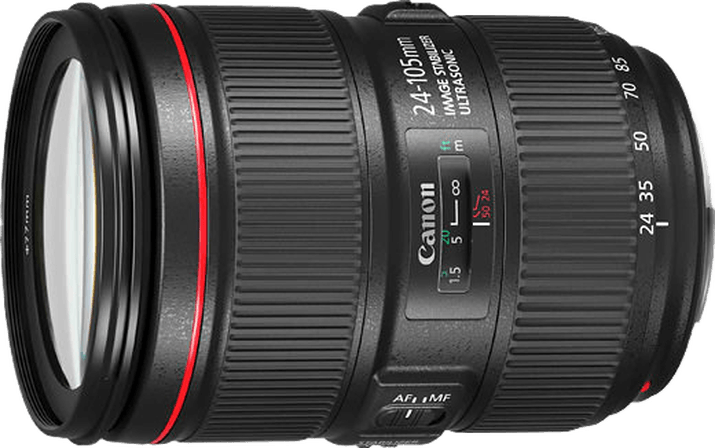 | 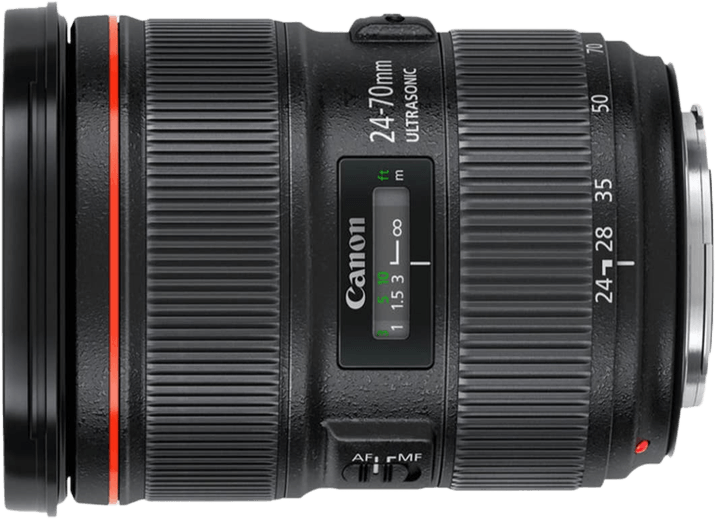 | |
| General | ||
Read the General ComparisonGeneralThe Canon EF 24-105mm F/4L IS II USM, introduced in 2016, and the Canon EF 24-70mm F/2.8L II USM, introduced in 2012, are both second-generation L-series standard zooms for Canon EOS full-frame cameras. Each fits the same Canon EF mount, so either can serve as your one everyday zoom on the same bodies. The 24-105mm arrived four years later as the newer of the two designs. | ||
| Release Year | 2016 | 2012 |
Production Status ⓘCurrent status of lens manufacturing (e.g., in production, discontinued). |
 In Production In Production | In Production |
Version ⓘThe iteration or release number of a particular lens model. |
II | II |
Pro Branding ⓘSpecific branding codes used for professional-tier lenses. |
L | L |
Lens Mount ⓘThe lens mount will tell you what type of lens range you can fit onto the camera body. Often the same camera company will have different lens ranges for different cameras. |
Canon EF | Canon EF |
System ⓘIndicates which camera system the lens is designed to attach to. |
Canon EOS | Canon EOS |
Maximum Format ⓘLargest sensor size compatible with the lens. |
 Full Frame Full Frame | Full Frame |
| Physical | 100/100 | 100/100 |
Read the Physical ComparisonPhysicalThe 24-105mm is the slimmer lens at 83.5 mm in diameter against 89 mm for the 24-70mm, which is 5 mm shorter at 113 mm. Their weights sit close, 795 g against 805 g. Filter threads differ, 77 mm on the 24-105mm and 82 mm on the 24-70mm, so a filter that threads directly onto one will not fit the other. | ||
| Lens Weight | 795 g | 805 g |
Lens Diameter ⓘWidth of the lens at its widest point |
83.5 mm | 89 mm |
Lens Length ⓘHow long the lens is from front to back. |
118 mm | 113 mm |
Front Filter Compatible ⓘSome lenses are compatible with front filters, some are compatible with back filters and some are compatible with both. Front filters are usually more convenient to add and remove. |
 Yes Yes | Yes |
Front Filter Size ⓘDiameter of attachable filters. |
77 mm | 82 mm |
| Optics | 73/100 | 81/100 |
Read the Optics ComparisonOpticsThe 24-70mm is the stronger choice for dim rooms and shallow depth of field. Its maximum aperture stays at f/2.8 across the zoom range, wider than the 24-105mm's constant f/4, so you can keep shutter speeds higher at indoor events and isolate subjects more in portraits. The 24-105mm answers with reach. It extends to 105 mm against 70 mm, 35 mm more for tighter framing of distant subjects, and magnifies to 0.24x versus 0.21x. The 24-70mm does focus closer, at 38 cm against 45 cm. Both start at the shared 24 mm wide end and offer autofocus with a manual focusing ring. | ||
Focal Range ⓘShortest to longest focal length of the lens (zoom range start - end ) |
24–105 mm | 24–70 mm |
Aperture Range ⓘLargest aperture at the lens's shortest focal length to longest focal length (aperture range start - end) |
4 | 2.8 |
| Focal Length Angle of View | 84.07°–23.29° | 84.07°–34.35° |
Flange Focal Distance ⓘDistance from lens mount to sensor. |
44 mm | 44 mm |
Diaphragm Type ⓘStructure and design of the aperture |
 Automatic Automatic | Automatic |
Blades ⓘNumber of diaphragm blades in aperture |
10020 | 9020 |
Zoom Lens ⓘZoom allows you to vary the focal length, change between long shots and close-ups |
 Yes Yes | Yes |
Zoom Mechanism ⓘSystem enabling zoom function |
 Manual Manual | Manual |
Zoom Ring ⓘIf zooming is adjusted using a zoom ring |
 Yes Yes | Yes |
Zoom Type ⓘThe design or approach to zooming |
 Rotary Rotary | Rotary |
Closest Focusing Distance ⓘMinimum distance for a subject to be in focus. |
45 cm01500 | 38 cm01500 |
Maximum Magnification ⓘLargest size a subject can be reproduced |
0.24x | 0.21x |
| Autofocus Mode |  Yes Yes | Yes |
| Manual Mode |  Yes Yes | Yes |
| Manual Focusing Ring |  Yes Yes | Yes |
| Features | 73/100 | 52/100 |
Read the Features ComparisonFeaturesImage stabilization gives the 24-105mm a practical advantage for handheld shooting: it offers four stops of stabilization, while the 24-70mm has none, so the faster lens depends on shutter speed or support in low light. Beyond that difference, both carry weather sealing for outdoor work, a fluorine coating that helps keep the front element easier to wipe clean, and a zoom lock against barrel creep. Neither accepts teleconverters. | ||
Weather Sealing ⓘWeather sealing capabilities will give you more confidence when shooting in unfavourable conditions. |
 Yes Yes | Yes |
Fluorine Coating ⓘCoating to repel water and oil from lens elements. |
 Yes Yes | Yes |
| Built In Lens Hood | ✗ | ✗ |
| Lens Hood Type |  Petal Petal | Petal |
Zoom Lock ⓘZoom lock allows the zoom ring to be locked at the desired focal length |
 Yes Yes | Yes |
Teleconverter ⓘA teleconverter (extender) is an extra piece of equipment that fits between the lens and the camera body to enhance magnification |
✗ | ✗ |
| Image Stabilization | ✓ | ✗ |
IS Efficiency ⓘIS efficiency refers to the effectiveness of the image stabilization system in compensating for the blurring effects of camera shake, quantified by the number of stops of stabilization it provides. |
4 stops | N/A |
| Construction | 15/100 | 32/100 |
Read the Construction ComparisonConstructionThe 24-70mm carries the larger optical formula, 18 elements in 13 groups against 17 elements in 12 groups in the 24-105mm, and it is the only one here to include low-dispersion and super-low-dispersion elements. Both designs use a single aspherical element. Neither focuses internally or uses a floating element system, so each extends its barrel while zooming. | ||
Elements ⓘLens elements refer to individual pieces of glass within the lens. |
17 | 18 |
| Groups | 12 | 13 |
Aspherical Elements ⓘThe number of aspherical lens elements which can help correct aberrations such as spherical aberration. |
1 | 1 |
Bi Aspherical Elements ⓘElements with two non-spherical surfaces |
0 | 0 |
Low Dispersion ⓘElements that reduce chromatic aberration |
0 | 1 |
Super Low Dispersion ⓘAdvanced elements further reducing chromatic aberration |
0 | 1 |
CA Reduction ⓘBuilt-in features to reduce chromatic aberration |
0 | 0 |
Internal Focusing ⓘInternal Focusing means that the lens does not change in size during focusing, and the front element does not rotate. |
✗ | ✗ |
Read: Verdict
Verdict
Choose the EF 24-70mm F/2.8L II USM for weddings, indoor events and portraits, where its constant f/2.8 aperture buys shutter speed and background separation. Choose the EF 24-105mm F/4L IS II USM as a travel and walkaround lens, where its stabilization, 105 mm reach and 0.24x magnification cover more situations handheld. Both are sealed L-series zooms on the same EF mount, so the practical decision is speed against versatility.