
Canon RF 14-35mm F/4L IS USM vs Canon RF 24-70mm F/2.8L IS USM — Which Is Better?
Side by side43 specifications |
Canon · f/4 · Canon RF mount
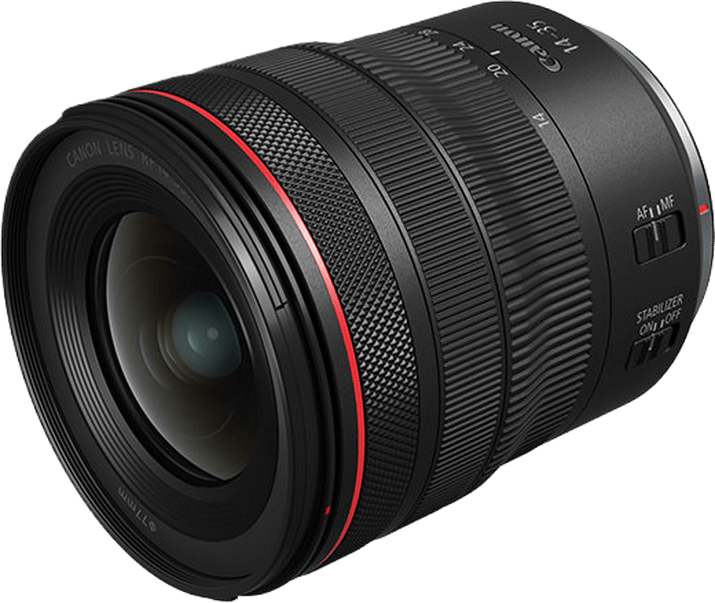
Canon RF 14-35mm F/4L IS USM
75
SCORE
|
Canon · f/2.8 · Canon RF mount
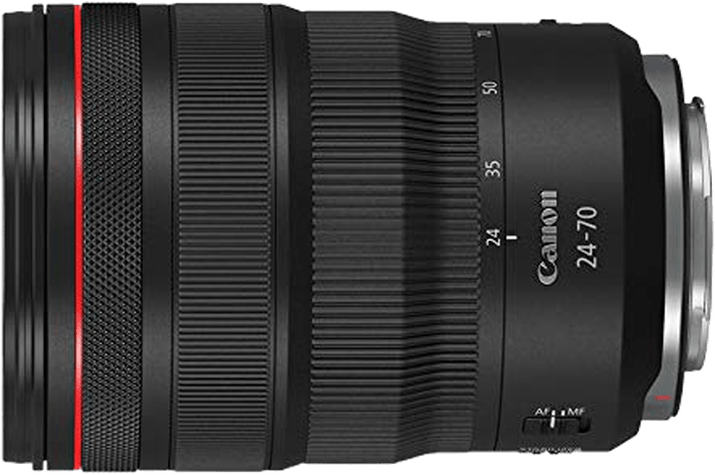
Canon RF 24-70mm F/2.8L IS USM
79
WINNER
|
|---|---|---|
 |  | |
| General | ||
Read the General ComparisonGeneralThe Canon RF 14-35mm F/4L IS USM and the Canon RF 24-70mm F/2.8L IS USM are both L-series full-frame zooms for the Canon EOS R system, so either one mounts natively on the same RF camera bodies. The 14-35mm, released in 2021, is an ultra-wide zoom for sweeping landscapes, architecture and tight interiors. The 24-70mm, released in 2019, is a standard zoom covering the classic walk-around range. | ||
| Release Year | 2021 | 2019 |
Production Status ⓘCurrent status of lens manufacturing (e.g., in production, discontinued). |
 In Production In Production | In Production |
Version ⓘThe iteration or release number of a particular lens model. |
N/A | I |
Pro Branding ⓘSpecific branding codes used for professional-tier lenses. |
L | L |
Lens Mount ⓘThe lens mount will tell you what type of lens range you can fit onto the camera body. Often the same camera company will have different lens ranges for different cameras. |
Canon RF | Canon RF |
System ⓘIndicates which camera system the lens is designed to attach to. |
Canon EOS R | Canon EOS R |
Maximum Format ⓘLargest sensor size compatible with the lens. |
 Full Frame Full Frame | Full Frame |
| Physical | 100/100 | 100/100 |
Read the Physical ComparisonPhysicalFor travel and long days of shooting, the 14-35mm is the lighter and more compact carry. It weighs 540 g against 900 g for the 24-70mm, and measures 99.8 mm long against 125.7 mm. The 14-35mm also takes 77mm front filters while the 24-70mm takes 82mm, so the two need different direct-fit filter sizes. | ||
| Lens Weight | 540 g | 900 g |
Lens Diameter ⓘWidth of the lens at its widest point |
84.1 mm | 88.5 mm |
Lens Length ⓘHow long the lens is from front to back. |
99.8 mm | 125.7 mm |
Front Filter Compatible ⓘSome lenses are compatible with front filters, some are compatible with back filters and some are compatible with both. Front filters are usually more convenient to add and remove. |
 Yes Yes | Yes |
Front Filter Size ⓘDiameter of attachable filters. |
77 mm | 82 mm |
| Optics | 72/100 | 81/100 |
Read the Optics ComparisonOpticsChoose the 14-35mm when you want to fit more of the scene in. Its 14mm wide end reaches far beyond the 24-70mm's 24mm, for dramatic landscapes, interiors and architectural detail. Choose the 24-70mm when you need light and background separation. It opens to a constant f/2.8 while the 14-35mm stays at f/4, which matters for indoor events and portraits at its 70mm long end. Both lenses focus close for their class, with minimum distances of 20 cm on the 14-35mm and 21 cm on the 24-70mm. For close work, the 14-35mm offers the higher maximum magnification, 0.38x against 0.3x, so it can fill the frame more with a nearby subject. The two also share a 9-blade automatic diaphragm, autofocus and a manual focusing ring. | ||
Focal Range ⓘShortest to longest focal length of the lens (zoom range start - end ) |
14–35 mm | 24–70 mm |
Aperture Range ⓘLargest aperture at the lens's shortest focal length to longest focal length (aperture range start - end) |
4 | 2.8 |
| Focal Length Angle of View | 114.19°–63.44° | 84.07°–34.35° |
Flange Focal Distance ⓘDistance from lens mount to sensor. |
20 mm | 20 mm |
Diaphragm Type ⓘStructure and design of the aperture |
 Automatic Automatic | Automatic |
Blades ⓘNumber of diaphragm blades in aperture |
9020 | 9020 |
Zoom Lens ⓘZoom allows you to vary the focal length, change between long shots and close-ups |
 Yes Yes | Yes |
Zoom Mechanism ⓘSystem enabling zoom function |
 Manual Manual | Manual |
Zoom Ring ⓘIf zooming is adjusted using a zoom ring |
 Yes Yes | Yes |
Zoom Type ⓘThe design or approach to zooming |
 Rotary Rotary | Rotary |
Closest Focusing Distance ⓘMinimum distance for a subject to be in focus. |
20 cm01500 | 21 cm01500 |
Maximum Magnification ⓘLargest size a subject can be reproduced |
0.38x | 0.3x |
| Autofocus Mode |  Yes Yes | Yes |
| Manual Mode |  Yes Yes | Yes |
| Manual Focusing Ring |  Yes Yes | Yes |
| Features | 79/100 | 78/100 |
Read the Features ComparisonFeaturesBoth lenses give you weather sealing, a fluorine coating that helps dirt and moisture wipe off easily, and built-in image stabilisation for steadier handheld frames. The 14-35mm's stabilisation is rated at 5.5 stops against 5 stops for the 24-70mm. One control difference favours the 24-70mm: it has a zoom lock to keep the barrel from extending in a bag, which the 14-35mm lacks. | ||
Weather Sealing ⓘWeather sealing capabilities will give you more confidence when shooting in unfavourable conditions. |
 Yes Yes | Yes |
Fluorine Coating ⓘCoating to repel water and oil from lens elements. |
 Yes Yes | Yes |
| Built In Lens Hood | ✗ | ✗ |
| Lens Hood Type |  Petal Petal | Petal |
Zoom Lock ⓘZoom lock allows the zoom ring to be locked at the desired focal length |
No |  Yes Yes |
Teleconverter ⓘA teleconverter (extender) is an extra piece of equipment that fits between the lens and the camera body to enhance magnification |
✗ | ✗ |
| Image Stabilization | ✓ | ✓ |
IS Efficiency ⓘIS efficiency refers to the effectiveness of the image stabilization system in compensating for the blurring effects of camera shake, quantified by the number of stops of stabilization it provides. |
5.5 stops | 5 stops |
| Construction | 31/100 | 31/100 |
Read the Construction ComparisonConstructionThe 24-70mm carries the larger optical formula, 21 elements in 15 groups against 16 elements in 12 groups for the 14-35mm. The special-element counts are shared, with three aspherical elements and three low-dispersion elements in each design to control distortion and chromatic aberration. Neither uses internal focusing, so the front of each lens moves during focus. | ||
Elements ⓘLens elements refer to individual pieces of glass within the lens. |
16 | 21 |
| Groups | 12 | 15 |
Aspherical Elements ⓘThe number of aspherical lens elements which can help correct aberrations such as spherical aberration. |
3 | 3 |
Bi Aspherical Elements ⓘElements with two non-spherical surfaces |
0 | 0 |
Low Dispersion ⓘElements that reduce chromatic aberration |
3 | 3 |
Super Low Dispersion ⓘAdvanced elements further reducing chromatic aberration |
0 | 0 |
CA Reduction ⓘBuilt-in features to reduce chromatic aberration |
0 | 0 |
Internal Focusing ⓘInternal Focusing means that the lens does not change in size during focusing, and the front element does not rotate. |
✗ | ✗ |
Read: Verdict
Verdict
These two lenses answer different photographic needs rather than competing for one slot. Buy the RF 14-35mm F/4L IS USM if your work leans on ultra-wide views, from mountain landscapes and cathedral interiors to cramped rooms. Buy the RF 24-70mm F/2.8L IS USM if you shoot in dim venues or want subject separation at 70mm, where its constant f/2.8 aperture earns its place.
Their focal ranges overlap only between 24mm and 35mm, so many photographers will carry them as a complementary pair rather than choose between them.