
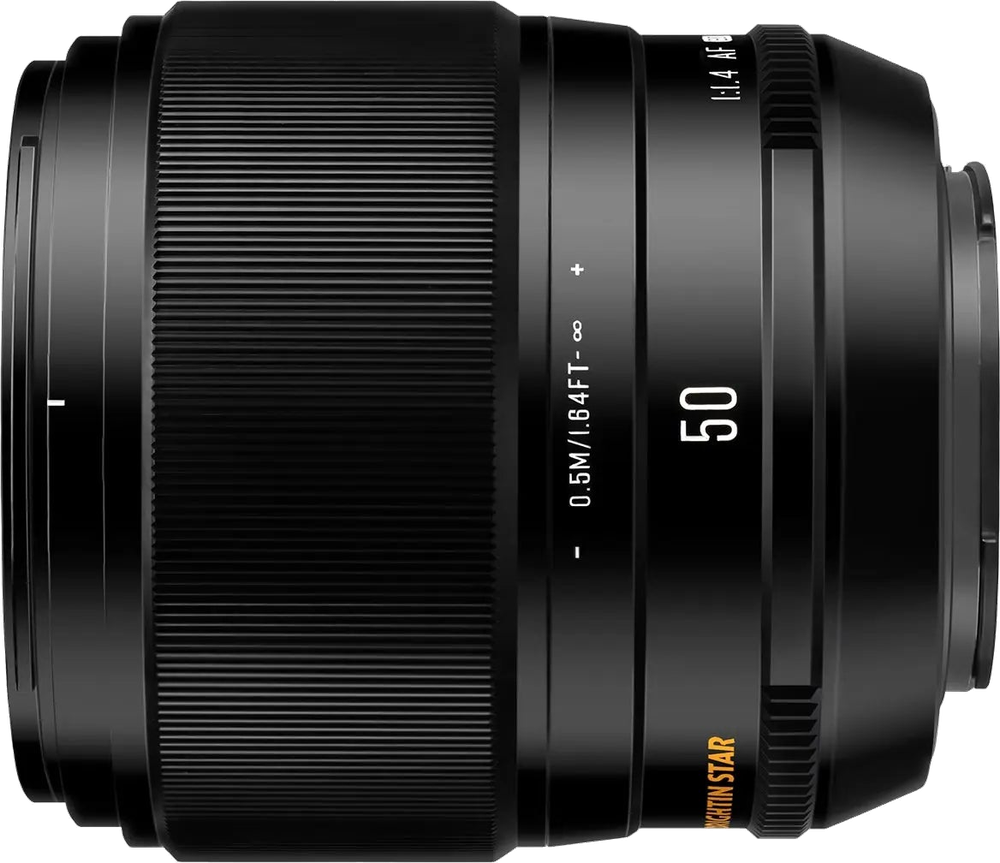
Brightin Star AF 50mm f/1.4
Brightin Star · 50 mm · f/1.4
Score Breakdown
This product does not have an overall score yet.
General | |
|---|---|
About This LensBrightin Star introduced this 50mm prime in 2023, and it remains in production today. On the Sony E version's APS-C format, that focal length gives a short-telephoto view. The framing suits portraits, candid street shots and tight details of people. It comes in Sony E and Fujifilm X versions, so choose the one made for your camera. The f/1.4 maximum aperture is the main draw. It gathers light quickly, so shutter speeds stay usable indoors and after dark. The trade-off is a single focal length with no zoom, and no image stabilization or weather sealing. | |
| Brand | Brightin Star |
| Release Year | 2024 |
Lens Mount ⓘThe lens mount will tell you what type of lens range you can fit onto the camera body. Often the same camera company will have different lens ranges for different cameras. | Fujifilm X |
System ⓘIndicates which camera system the lens is designed to attach to. | Fujifilm X |
Physical | |
About the BuildThe Sony E version weighs 15.8 oz (449 g) and measures 3.1 in (78.8 mm) long. Fujifilm X sizes may differ. The lens takes screw-in filters on its 58mm thread. A 58mm polariser or neutral-density filter fits directly, which is handy when you want f/1.4 in daylight. | |
| Lens Weight | 450 g |
Lens Length ⓘHow long the lens is from front to back. | 79 mm |
Front Filter Compatible ⓘSome lenses are compatible with front filters, some are compatible with back filters and some are compatible with both. Front filters are usually more convenient to add and remove. |  Yes Yes |
Front Filter Size ⓘDiameter of attachable filters. | 58 mm |
Optics | |
About the OpticsOn the APS-C format, 50mm frames a head-and-shoulders portrait from a comfortable working distance. It also narrows a street scene to one or two people instead of a whole crowd. There is no zoom, so you frame with your feet and move to change the composition. For a tighter head shot, step closer. The f/1.4 aperture passes a large amount of light to the sensor. Indoors under household lamps, or outside after sunset, shutter speeds stay fast enough for handheld work. That speed also helps freeze a walking subject in evening light. It makes the lens a practical choice for dim restaurants and evening events. Wide open, depth of field is very shallow. A portrait subject's eyes stay sharp while the ears and background soften, which lifts the person away from busy surroundings. Stopping down a little brings more of the face into focus. The nine blades help keep out-of-focus highlights round at smaller apertures. Closest focus is 1.6 ft (50 cm). That distance suits half-length portraits and detail work at a natural range from your subject. | |
Focal Range ⓘShortest to longest focal length of the lens (zoom range start - end ) | 50 mm |
Aperture Range ⓘLargest aperture at the lens's shortest focal length to longest focal length (aperture range start - end) | 1.4 |
| Focal Length Angle of View | 32° |
Flange Focal Distance ⓘDistance from lens mount to sensor. | 17.7 mm |
Diaphragm Type ⓘStructure and design of the aperture |  Automatic Automatic |
Blades ⓘNumber of diaphragm blades in aperture | 9020 |
Zoom Lens ⓘZoom allows you to vary the focal length, change between long shots and close-ups | No |
Closest Focusing Distance ⓘMinimum distance for a subject to be in focus. | 50 cm01500 |
| Autofocus Mode |  Yes Yes |
| Manual Mode |  Yes Yes |
| Manual Focusing Ring |  Yes Yes |
Features | |
About the FeaturesThere is no image stabilization. In bright daylight, the absence is easy to forget. The f/1.4 aperture also does part of that work by allowing faster shutter speeds in low light. For video or slow handheld exposures, you will need steady technique or a support. The gap shows up when light falls and the shutter speed drops, such as a posed portrait at dusk. A support steadies the camera, but it cannot freeze a moving subject. The lens has no weather sealing, so keep it away from rain, spray and dust. The Sony E version also has no fluorine coating. For dry, fair-weather work, these gaps change little. | |
Weather Sealing ⓘWeather sealing capabilities will give you more confidence when shooting in unfavourable conditions. | No |
Fluorine Coating ⓘCoating to repel water and oil from lens elements. |  Yes Yes |
| Built In Lens Hood | No |
Teleconverter ⓘA teleconverter (extender) is an extra piece of equipment that fits between the lens and the camera body to enhance magnification | No |
| Image Stabilization | No |
Construction | |
About the ConstructionFocusing is internal: the elements that move during focusing sit inside the barrel. The barrel therefore keeps a constant length while you focus. The optical path uses 12 elements in 8 groups, with no aspherical and no special-dispersion glass among them. That simple layout suits a prime: there is no zoom mechanism, and the whole design serves one focal length. | |
Elements ⓘLens elements refer to individual pieces of glass within the lens. | 12 |
| Groups | 8 |
Aspherical Elements ⓘThe number of aspherical lens elements which can help correct aberrations such as spherical aberration. | 0 |
Bi Aspherical Elements ⓘElements with two non-spherical surfaces | 0 |
Low Dispersion ⓘElements that reduce chromatic aberration | 2 |
Super Low Dispersion ⓘAdvanced elements further reducing chromatic aberration | 0 |
CA Reduction ⓘBuilt-in features to reduce chromatic aberration | 0 |
Internal Focusing ⓘInternal Focusing means that the lens does not change in size during focusing, and the front element does not rotate. |  Yes Yes |