
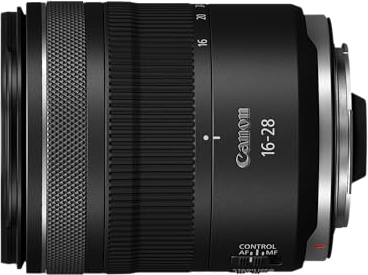
Canon RF 16-28mm F2.8 IS STM
Canon · 16–28 mm · f/2.8 · Image Stabilization
Score Breakdown
Scores combine our editorial testing with published lab data.
General | |
|---|---|
About This LensThis Canon wide-angle zoom spans 16–28mm on full-frame RF-mount cameras. Released in 2025 and still in production, it mounts directly on the system's mirrorless bodies. Its natural subjects are architecture, landscapes, city streets and other wide scenes. Wedding and event photographers also use this span for venue interiors and group spaces. The range runs from a very wide 16mm to a moderate 28mm. The main trade-off is reach. It stops at 28mm, so portraits, details and everyday shots call for a second lens. In return, you get a fast aperture in a light body. | |
| Brand | Canon |
| Release Year | 2025 |
Production Status ⓘCurrent status of lens manufacturing (e.g., in production, discontinued). |  In Production In Production |
Lens Mount ⓘThe lens mount will tell you what type of lens range you can fit onto the camera body. Often the same camera company will have different lens ranges for different cameras. | Canon RF |
System ⓘIndicates which camera system the lens is designed to attach to. | Canon EOS R |
Maximum Format ⓘLargest sensor size compatible with the lens. |  Full Frame Full Frame |
Physical64/100 | |
About the BuildAt 15.7 oz (445 g), this is a light lens for a constant f/2.8 wide zoom. The barrel measures 3.01 in (76.5 mm) across and 3.58 in (91 mm) long, so it stays compact in a bag. A screw-in filter must match the lens's 67mm thread. | |
| Lens Weight | 445 g |
Lens Diameter ⓘWidth of the lens at its widest point | 76.5 mm |
Lens Length ⓘHow long the lens is from front to back. | 91 mm |
Front Filter Compatible ⓘSome lenses are compatible with front filters, some are compatible with back filters and some are compatible with both. Front filters are usually more convenient to add and remove. |  Yes Yes |
Front Filter Size ⓘDiameter of attachable filters. | 67 mm |
Optics74/100 | |
About the OpticsAt 16mm you can frame a whole room or a sweeping coastline from close in. Zooming to 28mm gives a calmer view that still keeps width for streets and buildings. Between the two, you can adjust composition without stepping back in cramped spaces. That flexibility matters for interiors and tight urban scenes. The f/2.8 maximum stays constant through the zoom. Your exposure and shutter speed therefore hold as you zoom. The wide aperture also gathers more light for dim churches, evening streets and night skies. Depth of field remains deep at these focal lengths, so the gain is workable shutter speeds rather than blurred backgrounds. Close focus reaches 0.8 ft (25 cm). You can place a foreground rock, plant or doorway near the camera and still keep the wider scene beyond it. Maximum magnification reaches 0.26x, so a near subject can become a clear feature of the picture. Nine aperture blades help keep the opening round as you stop down. That helps night highlights, such as distant street lamps, stay evenly shaped. | |
Focal Range ⓘShortest to longest focal length of the lens (zoom range start - end ) | 16–28 mm |
Aperture Range ⓘLargest aperture at the lens's shortest focal length to longest focal length (aperture range start - end) | 2.8 |
| Focal Length Angle of View | 108.167°–75° |
Flange Focal Distance ⓘDistance from lens mount to sensor. | 20 mm |
Diaphragm Type ⓘStructure and design of the aperture |  Automatic Automatic |
Blades ⓘNumber of diaphragm blades in aperture | 9020 |
Zoom Lens ⓘZoom allows you to vary the focal length, change between long shots and close-ups |  Yes Yes |
Zoom Mechanism ⓘSystem enabling zoom function |  Manual Manual |
Zoom Ring ⓘIf zooming is adjusted using a zoom ring |  Yes Yes |
Zoom Type ⓘThe design or approach to zooming |  Rotary Rotary |
Closest Focusing Distance ⓘMinimum distance for a subject to be in focus. | 25 cm01500 |
Maximum Magnification ⓘLargest size a subject can be reproduced | 0.26x |
| Autofocus Mode |  Yes Yes |
| Manual Mode |  Yes Yes |
| Manual Focusing Ring | No |
Features60/100 | |
About the FeaturesImage stabilisation steadies the camera for handheld work. In dim interiors, at dusk, or under night street lights, it helps hold shots steady at slower shutter speeds. The steadier view through the finder also makes careful framing easier. Weather sealing guards against dust and moisture. That suits coastal paths, changeable mountain weather and long days outdoors. A damp morning by the sea is less of a concern. Two absences stand out. There is no zoom lock, so check the barrel position before shooting. The front element also carries no fluorine coating, so fingerprints and rain drops need routine cleaning. | |
Weather Sealing ⓘWeather sealing capabilities will give you more confidence when shooting in unfavourable conditions. |  Yes Yes |
Fluorine Coating ⓘCoating to repel water and oil from lens elements. | No |
| Built In Lens Hood | No |
| Lens Hood Type |  Round Round |
Zoom Lock ⓘZoom lock allows the zoom ring to be locked at the desired focal length | No |
Teleconverter ⓘA teleconverter (extender) is an extra piece of equipment that fits between the lens and the camera body to enhance magnification | No |
| Image Stabilization | Yes |
IS Efficiency ⓘIS efficiency refers to the effectiveness of the image stabilization system in compensating for the blurring effects of camera shake, quantified by the number of stops of stabilization it provides. | 5.5 stops |
Construction54/100 | |
About the ConstructionFocus is internal, so the moving parts stay inside the barrel while you focus. Two aspherical elements help correct distortion, which can bend straight lines at these focal lengths. That matters when walls and doorframes should stay straight in the frame. Four low-dispersion elements help reduce chromatic aberration, where colours separate into fringes along high-contrast edges. Night scenes with bright lamps are one place those edges appear. | |
Elements ⓘLens elements refer to individual pieces of glass within the lens. | 16 |
| Groups | 13 |
Aspherical Elements ⓘThe number of aspherical lens elements which can help correct aberrations such as spherical aberration. | 2 |
Bi Aspherical Elements ⓘElements with two non-spherical surfaces | 0 |
Low Dispersion ⓘElements that reduce chromatic aberration | 4 |
Super Low Dispersion ⓘAdvanced elements further reducing chromatic aberration | 0 |
CA Reduction ⓘBuilt-in features to reduce chromatic aberration | 0 |
Internal Focusing ⓘInternal Focusing means that the lens does not change in size during focusing, and the front element does not rotate. |  Yes Yes |