
Laowa 12mm f/2.8 ZERO-D
Laowa · 12 mm · f/2.8 · Zero-D
Score Breakdown
This lens score is calculated from published specifications.
General | |
|---|---|
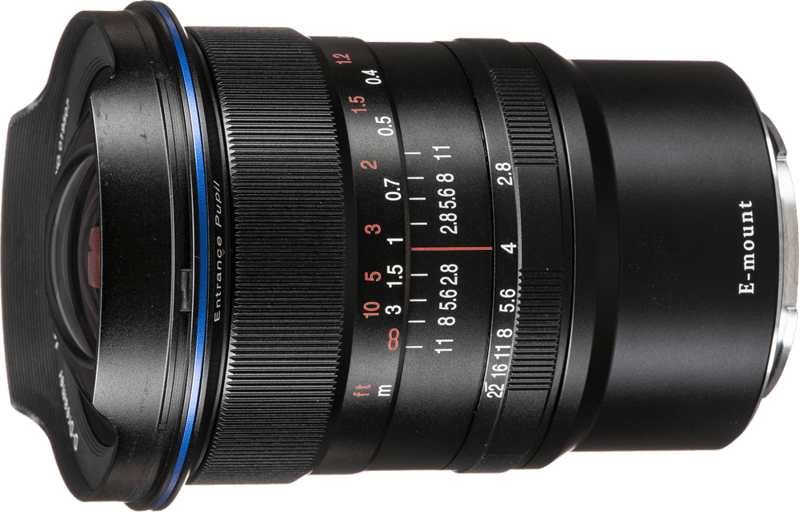
About This LensThe Laowa 12mm f/2.8 ZERO-D is an ultra-wide prime dating from 2016, offered in Canon EF, Sony E, Nikon F and Pentax K mount versions. A 12mm focal length suits architecture, large interiors, tight urban scenes and sweeping landscapes. It lets you fit a whole room or facade from within the space. The Canon EF version covers full-frame sensors; other mounts differ in format coverage. The f/2.8 maximum aperture is wide, gathering light in dim churches, dusk streets and night-sky work. The trade-off is manual-only operation: you focus by hand, and there is no stabilisation or weather sealing. It suits deliberate, support-based shooting more than quick grab shots. | |
| Brand | Laowa |
| Release Year | 2016 |
Pro Branding ⓘSpecific branding codes used for professional-tier lenses. | Zero-D |
Lens Mount ⓘThe lens mount will tell you what type of lens range you can fit onto the camera body. Often the same camera company will have different lens ranges for different cameras. | Pentax K |
System ⓘIndicates which camera system the lens is designed to attach to. | Pentax K |
Maximum Format ⓘLargest sensor size compatible with the lens. |  Full Frame |
Physical57/100 | |
About the BuildThe Canon EF version is 3.11 in (79 mm) across and 3.86 in (98 mm) long. Other mount versions differ in these measurements. On our physical specifications it scores 57/100. | |
| Lens Weight | 609 g |
Lens Diameter ⓘWidth of the lens at its widest point | 75 mm |
Lens Length ⓘHow long the lens is from front to back. | 83 mm |
Front Filter Compatible ⓘSome lenses are compatible with front filters, some are compatible with back filters and some are compatible with both. Front filters are usually more convenient to add and remove. | No |
Optics63/100 | |
About the OpticsAt 12mm, perspective runs strong. Straight lines converge when you tilt the camera, and near objects loom large against the background. Keeping the camera level helps verticals stay parallel. Place a foreground subject close to the lens and the whole frame gains depth. Small changes of position reshape the composition far more than at normal focal lengths. The bright f/2.8 maximum aperture helps handheld shooting in dim interiors and keeps ISO lower under night skies. Seven aperture blades shape out-of-focus highlights and point-light sources. For architecture, stopping down to f/8 or f/11 brings most of the scene within depth of field. Closest focus is 0.6 ft (18 cm), so you can place a foreground object, such as a rock, a doorway or a gate post, very close to the lens. Maximum magnification is 0.2x, recording a subject at a fifth of life size. Focusing is manual, with a dedicated focusing ring. Depth of field runs deep at 12mm once you stop down, so focus is forgiving at moderate apertures. Wide open and near, take more care. On our optics specifications it scores 63/100. | |
Focal Range ⓘShortest to longest focal length of the lens (zoom range start - end ) | 12 mm |
Aperture Range ⓘLargest aperture at the lens's shortest focal length to longest focal length (aperture range start - end) | 2.8 |
| Focal Length Angle of View | 122° |
Flange Focal Distance ⓘDistance from lens mount to sensor. | 45.5 mm |
Blades ⓘNumber of diaphragm blades in aperture | 7020 |
Zoom Lens ⓘZoom allows you to vary the focal length, change between long shots and close-ups | No |
Closest Focusing Distance ⓘMinimum distance for a subject to be in focus. | 18 cm01500 |
Maximum Magnification ⓘLargest size a subject can be reproduced | 0.2x |
| Autofocus Mode | No |
| Manual Mode |  Yes |
| Manual Focusing Ring |  Yes |
Features0/100 | |
About the FeaturesThere is no optical stabilisation. For tripod-based architecture and landscape work, that costs little. Handheld frames in fading light rely on your own steadiness, although the f/2.8 aperture gives you a head start before ISO climbs. Weather sealing is absent. Keep the lens shielded from dust and rain at the coast, in deserts or on building sites. A simple rain cover adds protection in a shower. There is no fluorine coating on the front element. Water and oil cling more readily without that layer, so dry and clean the glass gently after seaside or damp-weather shoots. | |
Weather Sealing ⓘWeather sealing capabilities will give you more confidence when shooting in unfavourable conditions. | No |
Fluorine Coating ⓘCoating to repel water and oil from lens elements. | No |
| Lens Hood Type |  Petal |
Teleconverter ⓘA teleconverter (extender) is an extra piece of equipment that fits between the lens and the camera body to enhance magnification | No |
| Image Stabilization | No |
Construction31/100 | |
About the ConstructionThe 16 elements in 10 groups include two aspherical elements. These specially shaped surfaces help correct optical faults, including distortion, which can make straight edges appear curved. That correction matters for architecture and interiors, where walls and rooflines run through the frame. Three low-dispersion elements help reduce chromatic aberration, where colours focus differently and fringe along high-contrast edges, such as branches against a bright sky. On our construction specifications it scores 31/100. | |
Elements ⓘLens elements refer to individual pieces of glass within the lens. | 16 |
| Groups | 10 |
Aspherical Elements ⓘThe number of aspherical lens elements which can help correct aberrations such as spherical aberration. | 2 |
Bi Aspherical Elements ⓘElements with two non-spherical surfaces | 0 |
Low Dispersion ⓘElements that reduce chromatic aberration | 3 |
Super Low Dispersion ⓘAdvanced elements further reducing chromatic aberration | 0 |
CA Reduction ⓘBuilt-in features to reduce chromatic aberration | 0 |
Internal Focusing ⓘInternal Focusing means that the lens does not change in size during focusing, and the front element does not rotate. |  Yes |