
TTArtisan 11mm f/2.8 Fisheye
TTArtisan · 11 mm · f/2.8
Score Breakdown
Scores combine our editorial testing with published lab data.
General | |
|---|---|
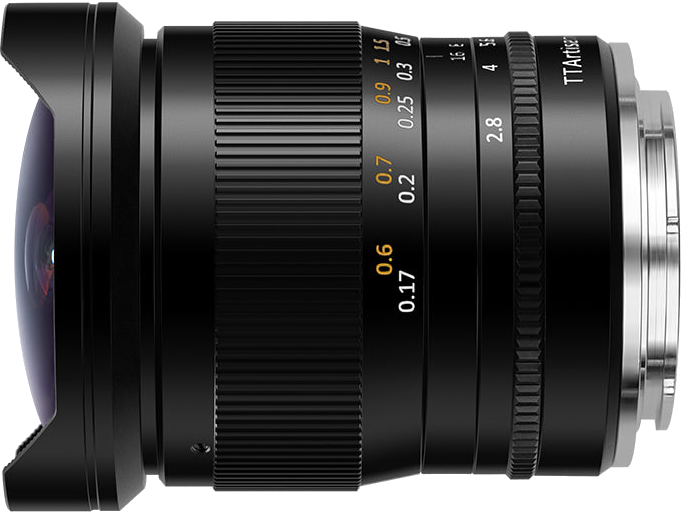
About This LensTTArtisan released this manual fisheye prime in 2022. It offers a single 11mm focal length in versions for Canon EF, Fujifilm G, Leica L, Leica M, Nikon F, Nikon Z and Sony E. Choose the version made for your camera. The Canon EF version covers full frame, and the measurements quoted here describe it. An 11mm fisheye suits photographers who want an extremely wide view of tight interiors, architecture and the night sky. Straight lines near the edges bend strongly, so it rewards creative framing rather than a faithful record. The main trade-off is the fully manual design: you focus by ring, and the lens offers no stabilisation or sealing. | |
| Brand | TTArtisan |
| Release Year | 2020 |
Production Status ⓘCurrent status of lens manufacturing (e.g., in production, discontinued). |  In Production In Production |
Lens Mount ⓘThe lens mount will tell you what type of lens range you can fit onto the camera body. Often the same camera company will have different lens ranges for different cameras. | Sony E |
System ⓘIndicates which camera system the lens is designed to attach to. | Sony E |
Maximum Format ⓘLargest sensor size compatible with the lens. |  Full Frame Full Frame |
Physical57/100 | |
About the BuildThe Canon EF version measures 2.83 in (72 mm) across the front. No version takes a screw-in filter, so you cannot fit an ND or polariser directly. | |
Lens Diameter ⓘWidth of the lens at its widest point | 67 mm |
Front Filter Compatible ⓘSome lenses are compatible with front filters, some are compatible with back filters and some are compatible with both. Front filters are usually more convenient to add and remove. | No |
Optics69/100 | |
About the OpticsAt 11mm, this prime squeezes an entire room or courtyard into one frame. The fisheye design bends any straight line placed away from the centre, and the effect grows stronger toward the edges. Use that curve deliberately for dramatic skies and interiors. Leave this lens behind when a job needs straight walls. The f/2.8 maximum aperture gathers useful light for dim interiors and night skies. Depth of field runs deep at 11mm, even wide open, so small focusing errors matter less. That forgiving depth of field makes the manual focus ring easier to use at speed. Precise work still rewards a slow check of focus before you shoot. The Canon EF version also uses 10 aperture blades. Stopped down, bright points such as stars or streetlights can form ten-ray stars. The Canon EF version focuses as close as 0.8 ft (25 cm). You can press the lens toward a foreground object and let the fisheye curve stretch it across the frame. That near viewpoint gives interiors and sculptural details a strong sense of space. This lens scores 69/100 for optics on our specification measure. | |
Focal Range ⓘShortest to longest focal length of the lens (zoom range start - end ) | 11 mm |
Aperture Range ⓘLargest aperture at the lens's shortest focal length to longest focal length (aperture range start - end) | 2.8 |
| Focal Length Angle of View | 180° |
Flange Focal Distance ⓘDistance from lens mount to sensor. | 18 mm |
Diaphragm Type ⓘStructure and design of the aperture |  Manual Manual |
Blades ⓘNumber of diaphragm blades in aperture | 7020 |
Zoom Lens ⓘZoom allows you to vary the focal length, change between long shots and close-ups | No |
Closest Focusing Distance ⓘMinimum distance for a subject to be in focus. | 17 cm01500 |
Maximum Magnification ⓘLargest size a subject can be reproduced | 0.13x |
| Autofocus Mode | No |
| Manual Mode |  Yes Yes |
| Manual Focusing Ring |  Yes Yes |
Features | |
About the FeaturesThere is no image stabilisation. The 11mm focal length partly offsets that, because tiny camera movements shift the frame far less than they would on a longer lens. Handheld shooting in reasonable light stays practical without stabilisation. The lens carries no weather sealing and no fluorine coating. Nothing protects the joints from rain, sea spray or blowing dust, so keep it covered in poor conditions and dry it before packing it away. Focus is entirely manual. Static interiors and night skies suit this pace, while moving subjects force you to judge distance and pre-focus by hand. The focusing ring gives direct control over exactly where focus lands. | |
Weather Sealing ⓘWeather sealing capabilities will give you more confidence when shooting in unfavourable conditions. | No |
Fluorine Coating ⓘCoating to repel water and oil from lens elements. | No |
| Built In Lens Hood |  Yes Yes |
| Lens Hood Type |  Petal Petal |
Teleconverter ⓘA teleconverter (extender) is an extra piece of equipment that fits between the lens and the camera body to enhance magnification | No |
| Image Stabilization | No |
Construction15/100 | |
About the ConstructionInside, the Canon EF version holds 12 elements in 10 groups, one of them a low-dispersion element. Low-dispersion glass helps reduce chromatic aberration, where colours focus at different points and leave coloured fringes along high-contrast edges. That design aim matters for night skies, where bright points sit against dark sky. | |
Elements ⓘLens elements refer to individual pieces of glass within the lens. | 11 |
| Groups | 7 |
Aspherical Elements ⓘThe number of aspherical lens elements which can help correct aberrations such as spherical aberration. | 0 |
Bi Aspherical Elements ⓘElements with two non-spherical surfaces | 0 |
Super Low Dispersion ⓘAdvanced elements further reducing chromatic aberration | 0 |
CA Reduction ⓘBuilt-in features to reduce chromatic aberration | 0 |
Internal Focusing ⓘInternal Focusing means that the lens does not change in size during focusing, and the front element does not rotate. | No |