
Zeiss Planar T* 50mm f/1.4
Zeiss · 50 mm · f/1.4
Score Breakdown
This lens score is calculated from published specifications.
General | |
|---|---|
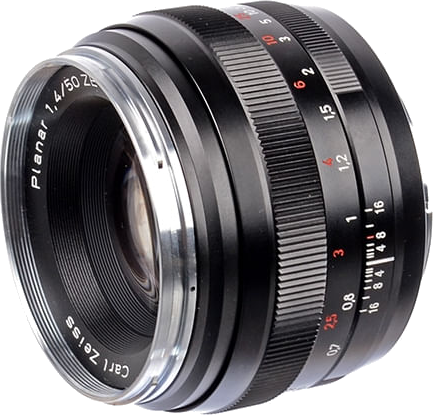
About This LensThis Zeiss Planar T* 50mm f/1.4 is a standard prime with a manual-focus design. The Canon EF version covers full frame, and Zeiss also produced a Nikon F version of the same optical family. On a full-frame body, a 50mm focal length suits portraits, street scenes and everyday indoor photography. It is the kind of lens you carry to a friend's dinner table or a quiet street corner. The main trade-off is focusing. There is no autofocus motor, so every shot depends on turning the ring yourself. That suits photographers who enjoy deliberate, hands-on work, but it slows you down with fast-moving subjects. Zeiss has discontinued this lens, so it is an older design rather than a current model. | |
| Brand | Zeiss |
| Release Year | 2006 |
Production Status ⓘCurrent status of lens manufacturing (e.g., in production, discontinued). |  Discontinued |
Lens Mount ⓘThe lens mount will tell you what type of lens range you can fit onto the camera body. Often the same camera company will have different lens ranges for different cameras. | Nikon F |
System ⓘIndicates which camera system the lens is designed to attach to. | Nikon F |
Physical64/100 | |
About the BuildAt 12.3 oz (350 g), the Canon EF version is light for a full-frame standard prime. It is also compact, measuring 2.6 in (66 mm) across and 2.72 in (69 mm) long. A screw-in filter attaches directly to the lens and must match the 58mm thread. This lens earns a physical specification score of 64. | |
| Lens Weight | 330 g |
Lens Diameter ⓘWidth of the lens at its widest point | 66 mm |
Front Filter Compatible ⓘSome lenses are compatible with front filters, some are compatible with back filters and some are compatible with both. Front filters are usually more convenient to add and remove. |  Yes |
Front Filter Size ⓘDiameter of attachable filters. | 58 mm |
Optics77/100 | |
About the OpticsThe 50mm focal length frames a scene much as the eye sees it on a full-frame camera. As a prime, it changes framing only when you move. That encourages a deliberate shooting style and keeps the design small. The f/1.4 maximum aperture is the defining strength. It passes much more light than a typical zoom, so handheld shutter speeds stay usable indoors under lamps or outdoors at dusk. It also narrows depth of field heavily at portrait distances, separating a sitter from a softly rendered background. Nine aperture blades help the opening stay close to a circle when the lens is stopped down. That shape keeps out-of-focus highlights round and gentle behind the subject. Closest focus is 1.5 ft (45 cm), enough for head-and-shoulders portraits. Focusing is manual throughout, and at f/1.4 the band of sharpness is thin, so the ring gives the fine control needed to place focus precisely. This lens scores 77 for optical specifications. | |
Focal Range ⓘShortest to longest focal length of the lens (zoom range start - end ) | 50 mm |
Aperture Range ⓘLargest aperture at the lens's shortest focal length to longest focal length (aperture range start - end) | 1.4 |
| Focal Length Angle of View | 45° |
Flange Focal Distance ⓘDistance from lens mount to sensor. | 46.5 mm |
Diaphragm Type ⓘStructure and design of the aperture |  Automatic |
Blades ⓘNumber of diaphragm blades in aperture | 9020 |
Zoom Lens ⓘZoom allows you to vary the focal length, change between long shots and close-ups | No |
Closest Focusing Distance ⓘMinimum distance for a subject to be in focus. | 45 cm01500 |
Maximum Magnification ⓘLargest size a subject can be reproduced | 0.15x |
| Autofocus Mode | No |
| Manual Mode |  Yes |
| Manual Focusing Ring |  Yes |
Features0/100 | |
About the FeaturesNo image stabilization is built in. In dim light the wide aperture does the work instead, keeping shutter speeds fast enough for steady handheld shots. When the light falls further, bracing the camera, using a tripod or raising the ISO keeps things sharp. There is no weather sealing, so keep the lens out of rain and blowing dust. The front element carries no fluorine coating either. That means fingerprints and dust cling more easily and need more frequent cleaning. These points matter less for the controlled indoor and fair-weather work this lens suits best, but they count against long days outdoors. | |
Weather Sealing ⓘWeather sealing capabilities will give you more confidence when shooting in unfavourable conditions. | No |
Fluorine Coating ⓘCoating to repel water and oil from lens elements. | No |
| Built In Lens Hood | No |
| Lens Hood Type |  Round |
Teleconverter ⓘA teleconverter (extender) is an extra piece of equipment that fits between the lens and the camera body to enhance magnification | No |
| Image Stabilization | No |
Construction0/100 | |
About the ConstructionZeiss assembled the Planar from seven elements in six groups, a simple layout for a classic standard prime. No aspherical elements are used, and the Canon EF version lists no low-dispersion glass. All focusing runs through the single manual ring on the barrel. | |
Elements ⓘLens elements refer to individual pieces of glass within the lens. | 7 |
| Groups | 6 |
Aspherical Elements ⓘThe number of aspherical lens elements which can help correct aberrations such as spherical aberration. | 0 |
Bi Aspherical Elements ⓘElements with two non-spherical surfaces | 0 |
Super Low Dispersion ⓘAdvanced elements further reducing chromatic aberration | 0 |
CA Reduction ⓘBuilt-in features to reduce chromatic aberration | 0 |
Internal Focusing ⓘInternal Focusing means that the lens does not change in size during focusing, and the front element does not rotate. | No |