
AstrHori 120mm f/2.8 2x Macro
AstrHori · 120 mm · f/2.8
Score Breakdown
Scores combine our editorial testing with published lab data.
General | |
|---|---|
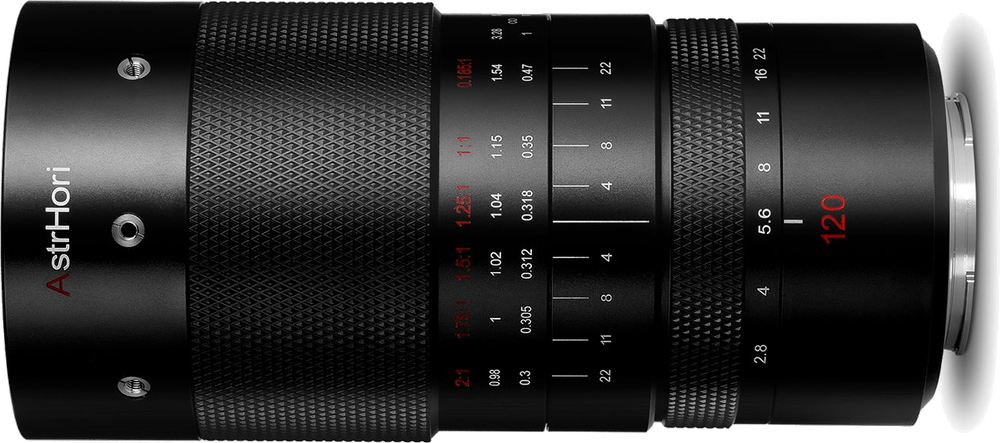
About This LensThe AstrHori 120mm f/2.8 2x Macro is a manual-focus prime for extreme close-up work, released in 2024 and still in production. It comes in Sony E, Canon RF, Canon EF, Leica L and Nikon Z versions, so pick the one made for your camera. The Sony E version covers full frame. It suits photographers who work deliberately on flowers, insects, product shots and copied artwork. The 120mm focal length lets you fill the frame with a small subject from farther away, so you disturb less and light more easily. The trade-off is pace. Autofocus and image stabilization are both absent, so allow extra time for each shot. | |
| Brand | AstrHori |
| Release Year | 2024 |
Lens Mount ⓘThe lens mount will tell you what type of lens range you can fit onto the camera body. Often the same camera company will have different lens ranges for different cameras. | Nikon Z |
System ⓘIndicates which camera system the lens is designed to attach to. | Nikon Z |
Maximum Format ⓘLargest sensor size compatible with the lens. |  Full Frame Full Frame |
Physical64/100 | |
About the BuildAt 2 lb 0.8 oz (930 g), 3.03 in (77 mm) across and 6.5 in (165 mm) long, this is a big, heavy prime. A screw-in filter must match the 72mm thread on the front. Our specification score for physical is 64/100. | |
| Lens Weight | 930 g |
Lens Diameter ⓘWidth of the lens at its widest point | 77 mm |
Lens Length ⓘHow long the lens is from front to back. | 165 mm |
Front Filter Compatible ⓘSome lenses are compatible with front filters, some are compatible with back filters and some are compatible with both. Front filters are usually more convenient to add and remove. |  Yes Yes |
Front Filter Size ⓘDiameter of attachable filters. | 72 mm |
Optics70/100 | |
About the OpticsThe headline number is 2x magnification, twice life size and well beyond the 1:1 that marks true macro. Framed at 2x, a compound eye or a leaf vein spans the frame with visible texture. Insects, water droplets and stamp-sized details take on scale a life-size lens cannot match. The 120mm focal length leaves more room between lens and subject than a short macro. Skittish insects stay calmer, and lights or reflectors fit around your set more easily. Depth of field at high magnification is razor thin, so aperture choice becomes your main control over what stays sharp. The f/2.8 maximum helps in shaded woodland and separates a subject from a busy background when you work below maximum magnification. Beyond close-ups, 120mm at f/2.8 also serves as a short telephoto for tight portraits. Thirteen aperture blades keep the opening round as you stop down, so out-of-focus highlights stay smooth. Closest focus sits at 1 ft (30 cm). Our specification score for optics is 70/100. | |
Focal Range ⓘShortest to longest focal length of the lens (zoom range start - end ) | 120 mm |
Aperture Range ⓘLargest aperture at the lens's shortest focal length to longest focal length (aperture range start - end) | 2.8 |
| Focal Length Angle of View | 20.44°–20.6° |
Flange Focal Distance ⓘDistance from lens mount to sensor. | 16 mm |
Diaphragm Type ⓘStructure and design of the aperture |  Manual Manual |
Blades ⓘNumber of diaphragm blades in aperture | 13020 |
Zoom Lens ⓘZoom allows you to vary the focal length, change between long shots and close-ups | No |
Closest Focusing Distance ⓘMinimum distance for a subject to be in focus. | 30 cm01500 |
Maximum Magnification ⓘLargest size a subject can be reproduced | 2x |
| Autofocus Mode | No |
| Manual Mode |  Yes Yes |
| Manual Focusing Ring |  Yes Yes |
Features | |
About the FeaturesTwo absences shape daily use. There is no image stabilization, so a tripod, a focus rail or flash does the steadying work. A support holds the camera but cannot stop a moving subject. At 2x, camera movement is magnified along with the subject, so lock the camera down before refining focus. There is no autofocus either. The manual focusing ring rewards slow, careful turns, and magnified view or focus peaking, where your camera offers them, helps confirm focus. The Sony E version has no weather sealing, so shelter it from rain and grit when working low in damp grass. That version also skips a fluorine coating, so clean smudges from the front element promptly and gently. | |
Weather Sealing ⓘWeather sealing capabilities will give you more confidence when shooting in unfavourable conditions. |  Yes Yes |
Fluorine Coating ⓘCoating to repel water and oil from lens elements. | No |
| Built In Lens Hood | No |
| Lens Hood Type |  Round Round |
Teleconverter ⓘA teleconverter (extender) is an extra piece of equipment that fits between the lens and the camera body to enhance magnification | No |
| Image Stabilization | No |
Construction38/100 | |
About the ConstructionFour of the 14 elements are low-dispersion glass, a type that helps reduce chromatic aberration. That aberration shows as coloured fringes along high-contrast edges, such as dew on a backlit stem or the rim of a wing. Our specification score for construction is 38/100. | |
Elements ⓘLens elements refer to individual pieces of glass within the lens. | 14 |
| Groups | 9 |
Bi Aspherical Elements ⓘElements with two non-spherical surfaces | 0 |
Low Dispersion ⓘElements that reduce chromatic aberration | 4 |
Super Low Dispersion ⓘAdvanced elements further reducing chromatic aberration | 0 |
CA Reduction ⓘBuilt-in features to reduce chromatic aberration | 0 |
Internal Focusing ⓘInternal Focusing means that the lens does not change in size during focusing, and the front element does not rotate. |  Yes Yes |