
Sigma 24mm F/3.5 DG DN | C
Sigma · 24 mm · f/3.5 · Contemporary
Score Breakdown
Scores combine our editorial testing with published lab data.
General | |
|---|---|
About This LensThis Sigma is a compact 24mm prime for full-frame mirrorless cameras. It comes in Leica L and Sony E mounts, so choose the version made for your system. Sigma introduced it in 2020, and it remains in production. A 24mm focal length suits street photography, travel, landscapes and interiors, where you want to include the whole setting. It also works for architecture, where whole facades need to fit. Indoors, it lets you frame a room from a doorway. The main trade-off is the F/3.5 maximum aperture, which favours daylight scenes over dim interiors. In return, the body stays compact for everyday carrying. That balance suits travellers more than event shooters, who often need wider apertures in dark venues. | |
| Brand | Sigma |
| Release Year | 2020 |
Production Status ⓘCurrent status of lens manufacturing (e.g., in production, discontinued). |  In Production In Production |
Pro Branding ⓘSpecific branding codes used for professional-tier lenses. | Contemporary |
Lens Mount ⓘThe lens mount will tell you what type of lens range you can fit onto the camera body. Often the same camera company will have different lens ranges for different cameras. | Leica L |
System ⓘIndicates which camera system the lens is designed to attach to. | Leica L |
Maximum Format ⓘLargest sensor size compatible with the lens. |  Full Frame Full Frame |
Physical93/100 | |
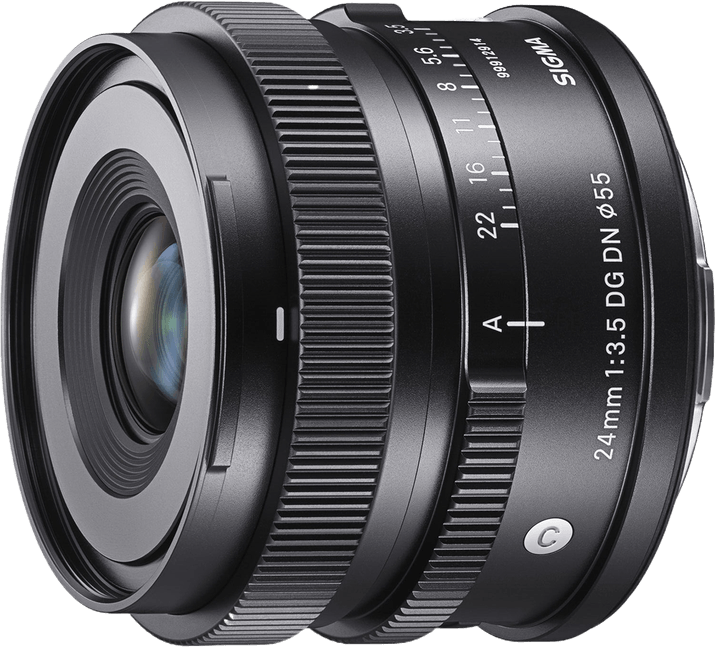
About the BuildThe Leica L version weighs 7.9 oz (225 g). The lens body measures 2.52 in (64 mm) across and 1.92 in (48.8 mm) long, so it adds little bulk to a mirrorless camera. A screw-in filter must match the 55mm thread. A polariser or ND filter of that thread size screws straight on. The physical score is 93 out of 100. | |
| Lens Weight | 225 g |
Lens Diameter ⓘWidth of the lens at its widest point | 64 mm |
Lens Length ⓘHow long the lens is from front to back. | 48.8 mm |
Front Filter Compatible ⓘSome lenses are compatible with front filters, some are compatible with back filters and some are compatible with both. Front filters are usually more convenient to add and remove. |  Yes Yes |
Front Filter Size ⓘDiameter of attachable filters. | 55 mm |
Optics71/100 | |
About the OpticsAt 24mm, you take in wide scenes in a single frame. Whole streets and full rooms fit without stepping back. There is no zoom range, so you frame by moving your feet. The F/3.5 maximum aperture is modest for a prime. After sunset or inside dim buildings, handheld shutter speeds fall and ISO climbs. A small tripod or a handy wall keeps things steady in those moments. At 24mm, depth of field runs deep even wide open. Landscapes stay in focus from foreground stones to distant hills, which is why wide lenses suit them. Isolating a subject against a blurred background is harder, so flattering portraits are not this lens's job. Close work is a strength. The lens focuses as close as 0.4 ft (10.8 cm). Its maximum magnification reaches 0.5x, so small subjects can fill much of the frame. The wide view also keeps a nearby subject's surroundings in the picture. Flowers, market finds and cafe details all gain from that nearness. | |
Focal Range ⓘShortest to longest focal length of the lens (zoom range start - end ) | 24 mm |
Aperture Range ⓘLargest aperture at the lens's shortest focal length to longest focal length (aperture range start - end) | 3.5 |
| Focal Length Angle of View | 84.06668552322992° |
Flange Focal Distance ⓘDistance from lens mount to sensor. | 20 mm |
Diaphragm Type ⓘStructure and design of the aperture |  Automatic Automatic |
Blades ⓘNumber of diaphragm blades in aperture | 7020 |
Zoom Lens ⓘZoom allows you to vary the focal length, change between long shots and close-ups | No |
Closest Focusing Distance ⓘMinimum distance for a subject to be in focus. | 10.8 cm01500 |
Maximum Magnification ⓘLargest size a subject can be reproduced | 0.5x |
| Autofocus Mode |  Yes Yes |
| Manual Mode |  Yes Yes |
| Manual Focusing Ring |  Yes Yes |
Features32/100 | |
About the FeaturesWeather sealing is present, and it fits the outdoor role of a travel wide-angle. Dust, sand and light rain become less of a worry on coastal walks and dusty trails. Sealing helps most when the camera body is sealed too. Image stabilization is absent. At 24mm, most handheld work stays practical, so the omission hurts less than it would on a long lens. This section scores 32 out of 100. The front element has no fluorine coating, so there is no extra layer to shed water and smudges. A cloth in the bag covers damp outdoor days. | |
Weather Sealing ⓘWeather sealing capabilities will give you more confidence when shooting in unfavourable conditions. |  Yes Yes |
Fluorine Coating ⓘCoating to repel water and oil from lens elements. | No |
| Built In Lens Hood | No |
| Lens Hood Type |  Petal Petal |
Teleconverter ⓘA teleconverter (extender) is an extra piece of equipment that fits between the lens and the camera body to enhance magnification | No |
| Image Stabilization | No |
Construction54/100 | |
About the ConstructionInside sit ten elements in eight groups, including aspherical elements and low-dispersion glass. The aspherical surfaces help correct distortion and spherical aberration, which is welcome where straight edges can otherwise bow. The low-dispersion glass helps reduce colour fringing along high-contrast edges, such as branches against a bright sky. | |
Elements ⓘLens elements refer to individual pieces of glass within the lens. | 10 |
| Groups | 8 |
Aspherical Elements ⓘThe number of aspherical lens elements which can help correct aberrations such as spherical aberration. | 1 |
Bi Aspherical Elements ⓘElements with two non-spherical surfaces | 0 |
Low Dispersion ⓘElements that reduce chromatic aberration | 1 |
Super Low Dispersion ⓘAdvanced elements further reducing chromatic aberration | 0 |
CA Reduction ⓘBuilt-in features to reduce chromatic aberration | 0 |
Internal Focusing ⓘInternal Focusing means that the lens does not change in size during focusing, and the front element does not rotate. |  Yes Yes |