
The OM System Tough TG-7 is our best camera with GPS for most people who want to remember where they took a photo. It combines location tags with a pocket-size body, an optical zoom and RAW files for editing.
For a speed or route overlay on moving footage, choose the GoPro HERO13 Black. The Nikon Z9 suits photographers who need interchangeable lenses and much more image detail. The other picks cover visible coordinate stamps, Canon RF action photography and 360-degree video.
Our Picks at a Glance
All 6 Cameras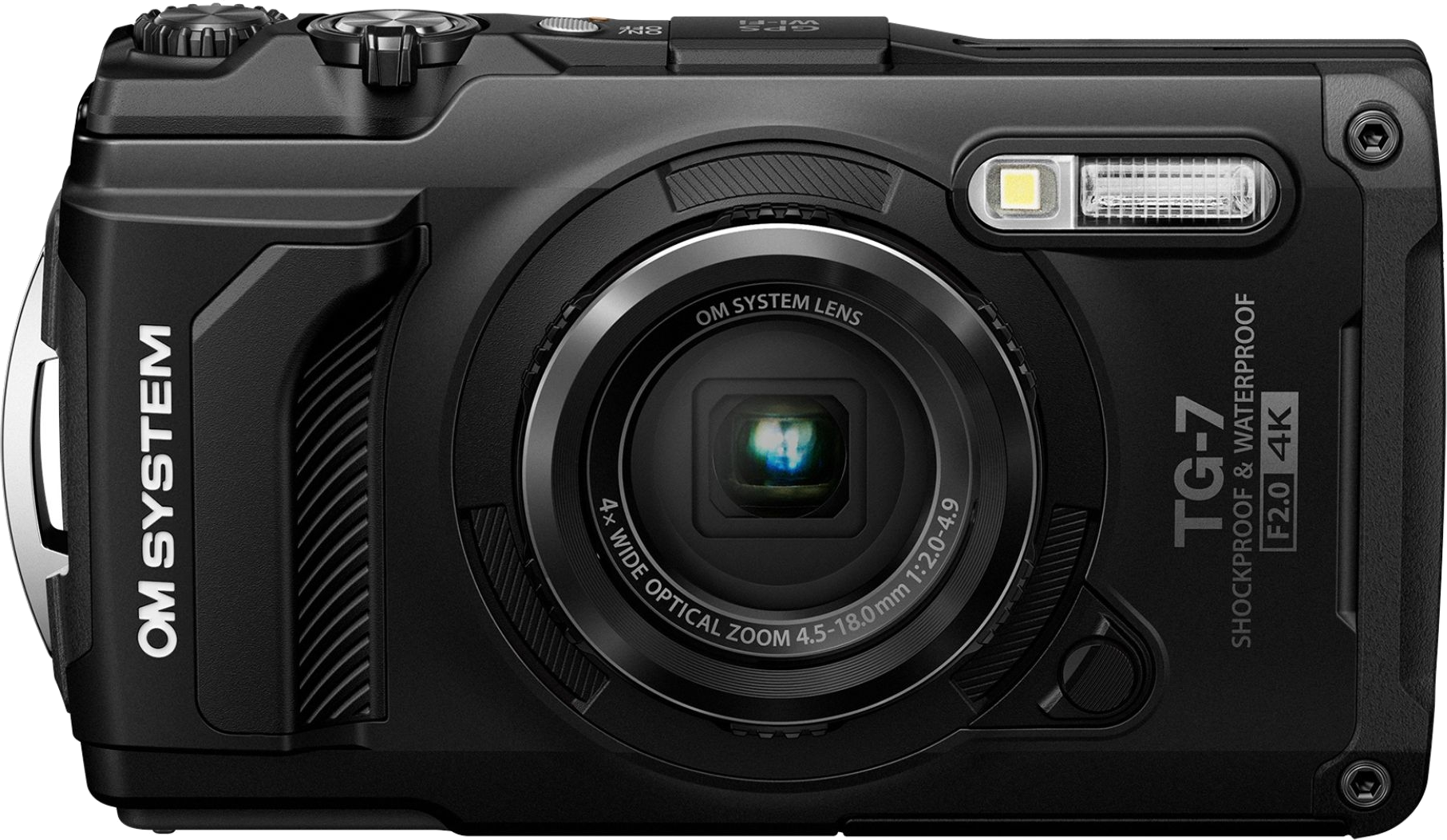
Our everyday photo pick: optical zoom, RAW files and location tags in one small body.

Choose this for mounted video with speed and route data.
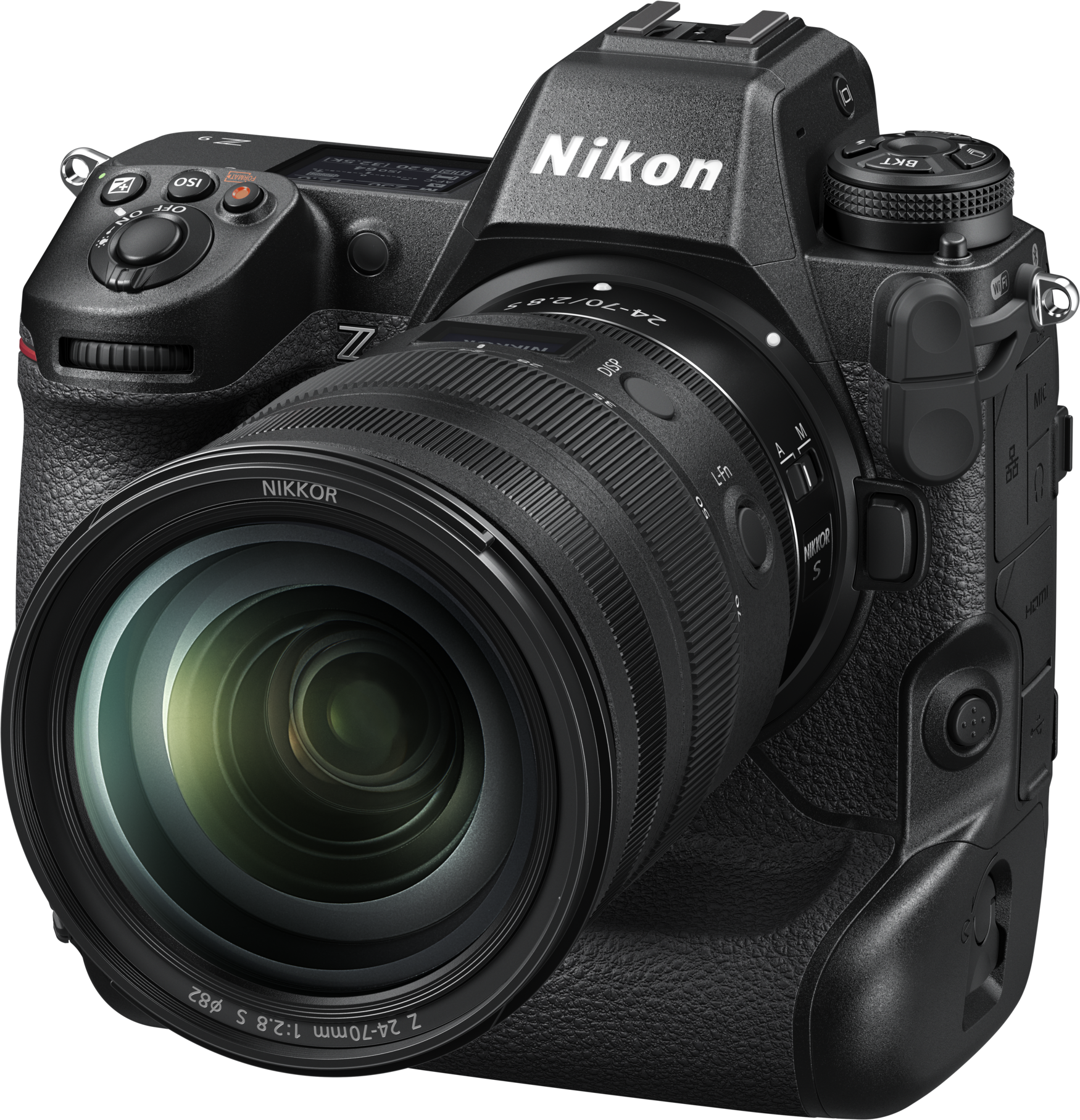
Our pick for detailed still photography with location tags and a separate route log.
The Best Cameras With GPS
Every camera below has its own satellite receiver, so it can acquire its position without a paired phone. The useful difference is what happens next: a location saved with a photo, a separate route log or telemetry that can become a video overlay. For a map of where you took each photograph, location tags are enough. To show the route between pictures, look for a track log.
- RAW files for flexible photo editing
- 25–100mm equivalent optical zoom
- Position and sensor logs for a trip record
- Pocket-size body with a built-in lens
- GPS telemetry for speed and route overlays
- 5.3K video at up to 60 fps in 16:9
- HyperSmooth 6.0 video stabilization
- Built-in mounting fingers
- Visible coordinate stamps on photos
- NMEA or KML route-log export
- 28–140mm equivalent optical zoom
- Six-LED ring light for close-up subjects
- 45.7MP full-frame detail and crop room
- Full-resolution RAW bursts up to 20 fps
- Separate NMEA track logs
- Nikon Z interchangeable lenses
- Electronic-shutter bursts up to 40 fps
- Built-in vertical grip for portrait shooting
- Dual CFexpress Type B card slots
- Selectable GPS reception power modes
- 8K 360 capture for reframing later
- Built-in GPS telemetry
- Hand-replaceable glass lenses
- 4K60 single-lens recording option
The Best Cameras With GPS in Detail
A compact camera is the practical starting point for geotagged travel photos. Move to an action camera for mounted video or to a large interchangeable-lens body for demanding still photography. The weights below include a battery; the Nikon and Canon figures exclude a lens. MAX2’s 8K figure covers a full 360-degree image, so it is not directly equivalent to the Z9’s conventional 8K frame.
OM System Tough TG-7
- Location Output
- Photo Tags + Track Logs
- Lens Setup
- 25–100mm Equivalent Zoom
- Maximum Video
- 4K
- Weight With Battery
- 8.8 oz
Strengths
- RAW files for flexible photo editing
- 25–100mm equivalent optical zoom
- Position and sensor logs for a trip record
- Pocket-size body with a built-in lens
Trade-Offs
- Small 12MP sensor limits cropping
- Viewing tracks uses OM Image Share
The OM System Tough TG-7 makes the most sense when you want a small camera for a walk, a boat trip or a vacation. You can save the location with each picture without keeping a phone connected. Its 25–100mm equivalent zoom gives you more framing freedom than a fixed wide-angle action camera.
The TG-7 also records position and sensor logs. You can view logs through OM Image Share after the trip. Capture itself does not depend on a phone signal, but viewing and organizing the results still involves software. The logging controls deserve attention: logging can continue while the camera is off and uses battery power.
For photography, RAW recording is the main reason to choose it over the Pentax WG-8. RAW leaves more room to adjust the finished image. The TG-7's lens also starts wider and opens to f/2 at its wide end, which helps when light is limited.
Its small 12MP sensor limits cropping flexibility compared with the larger camera bodies below. Choose the WG-8 instead if visible coordinate stamps or its longer zoom matter more than RAW editing.
GoPro HERO13 Black
- Location Output
- Video Telemetry
- Lens Setup
- Fixed Wide-Angle Lens
- Maximum Video
- 5.3K
- Weight With Battery
- 5.6 oz
Strengths
- GPS telemetry for speed and route overlays
- 5.3K video at up to 60 fps in 16:9
- HyperSmooth 6.0 video stabilization
- Built-in mounting fingers
Trade-Offs
- Fixed wide-angle view; no optical zoom
- GPS overlays need a signal lock and compatible software
The GoPro HERO13 Black is the pick for recording a ride, run or descent with useful movement data. It combines GPS with stabilized 5.3K video at up to 60 fps in its 16:9 mode. Its built-in mounting fingers make it easier to attach than either compact camera.
The recording can include GPMF telemetry, GoPro’s format for storing data alongside the video. Compatible software can use it for speed, altitude and route displays. Quik also supports GPS Performance Stickers. Check the GPS guidance before recording: the GPS icon must show a lock, and Performance Stickers do not work with time-lapse videos or photos.
A fixed wide-angle lens is useful for mounted footage but less flexible for still photography. The TG-7 is a better choice for distant details and ordinary travel photos. Choose the GoPro MAX2 if you want to pick the viewing direction after filming.
GoPro’s newer MISSION 1 range also has GPS. Its larger sensor and 8K options deserve a look if cinematic video is your main goal. The HERO13 remains our lighter choice for conventional action footage with telemetry.
Pentax WG-8
- Location Output
- Photo Tags + NMEA/KML Logs
- Lens Setup
- 28–140mm Equivalent Zoom
- Maximum Video
- 4K
- Weight With Battery
- 8.5 oz
Strengths
- Visible coordinate stamps on photos
- NMEA or KML route-log export
- 28–140mm equivalent optical zoom
- Six-LED ring light for close-up subjects
Trade-Offs
- JPEG stills; no RAW recording
- Imprinted coordinates cannot be removed from the original
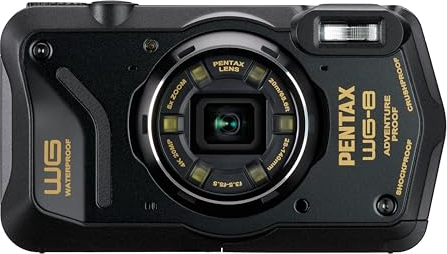
The Pentax WG-8 is the most useful compact here for field records. It can imprint coordinates directly on a photograph, so a viewer can see the location without opening the file’s metadata. That suits site visits and outdoor documentation more than a polished vacation album.
It can also save a route log in NMEA or KML format. Those files can be opened in compatible mapping software. Its six-LED ring light is another useful distinction when you need a close view of a small object.
The 28–140mm equivalent lens reaches farther than the TG-7, but does not go as wide. The WG-8 records JPEG stills rather than RAW files. Choose it for records that should be useful straight from the camera; choose the TG-7 when editing flexibility matters more.
The imprinted location cannot be deleted from the original picture. Use ordinary location metadata instead when you may need to share a clean image without revealing the site.
Nikon Z9
- Location Output
- Photo Tags + NMEA Logs
- Lens Setup
- Nikon Z Interchangeable
- Maximum Video
- 8K
- Weight With Battery
- 47.3 oz
Strengths
- 45.7MP full-frame detail and crop room
- Full-resolution RAW bursts up to 20 fps
- Separate NMEA track logs
- Nikon Z interchangeable lenses
Trade-Offs
- Large body; a lens adds weight and cost
- Movie location is recorded at the start
The Nikon Z9 is our choice for detailed still photographs with location data. Its 45.7MP full-frame sensor and Nikon Z lens mount make it suitable for wildlife or landscape work that would exceed the limits of the compact cameras. It can shoot full-resolution RAW files at up to 20 fps; the faster headline burst modes have different file or resolution limits.
Its GPS function can save coordinates with photographs and record a separate NMEA track log. For movies, the saved location is where recording began. It is not the moving speed-and-route overlay offered by the GoPro workflow.
The trade-off is size. This is a large body with an integrated vertical grip, and a lens adds to the load. Buying a Z9 just to add coordinates to travel photos is difficult to justify beside the TG-7.
Choose it over the Canon EOS R1 when resolution and cropping room lead your decision. Existing Nikon lenses also make the choice easier. Check the location-data power settings before leaving it in a bag: switching off the camera does not by itself end satellite reception.
Canon EOS R1
- Location Output
- Photo + Movie-Start Tags
- Lens Setup
- Canon RF Interchangeable
- Maximum Video
- 6K
- Weight With Battery
- 39.3 oz
Strengths
- Electronic-shutter bursts up to 40 fps
- Built-in vertical grip for portrait shooting
- Dual CFexpress Type B card slots
- Selectable GPS reception power modes
Trade-Offs
- 24.2MP gives less crop room than the Z9
- Large system purchase with lenses and cards
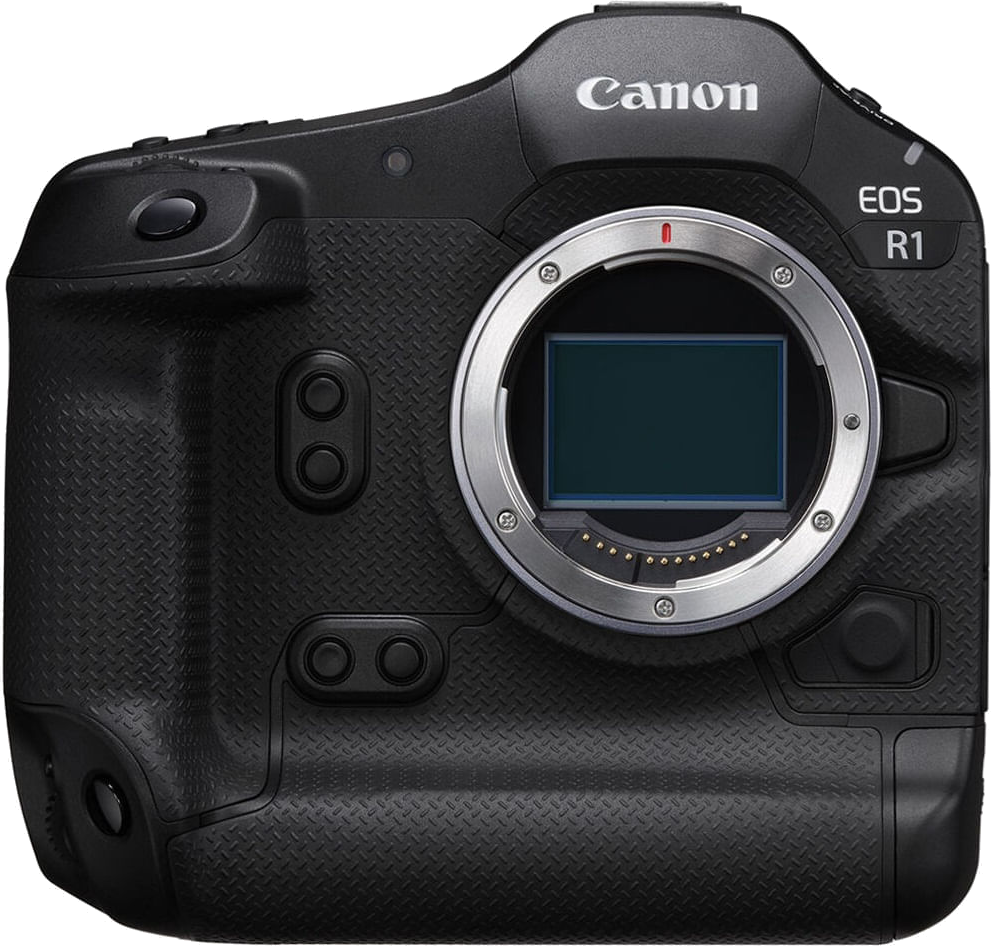
The Canon EOS R1 is the strongest fit here for action photographers already using Canon RF lenses. Its 24.2MP full-frame sensor supports up to 40 fps with the electronic shutter. A built-in vertical grip and dual CFexpress card slots suit a working camera used for long events.
The receiver adds location data without a phone or hot-shoe GPS accessory. As with the Nikon Z9, movie location data refers to the start of recording. Choose a GoPro if you need movement telemetry throughout a clip.
Canon provides two GPS power modes. Mode 1 can keep receiving while the camera is switched off. Mode 2 stops reception when you turn the power switch off, although reception can continue during automatic power-off. The GPS settings guide explains the distinction.
The R1 is a costly system purchase once you include a lens and suitable cards. Its lower resolution also gives you less cropping room than the Z9. Choose the R1 for its speed and your Canon lens investment, rather than for GPS alone.
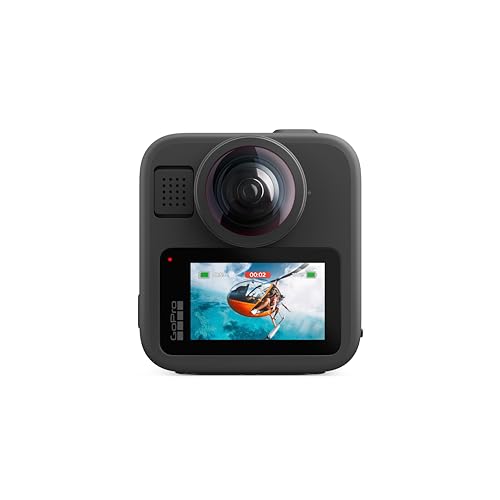
GoPro MAX2
- Location Output
- Video Telemetry
- Lens Setup
- Dual 360° Lenses
- Maximum Video
- 8K (360°)
- Weight With Battery
- 6.9 oz
Strengths
- 8K 360 capture for reframing later
- Built-in GPS telemetry
- Hand-replaceable glass lenses
- 4K60 single-lens recording option
Trade-Offs
- 360 video needs reframing for conventional delivery
- 8K is spread around the full sphere
The GoPro MAX2 is the choice when you want location telemetry and the freedom to frame a shot later. Its two lenses record the scene around the camera in 8K 360-degree video. You can then select a conventional view in editing instead of committing to one direction while recording.
Its built-in receiver supplies movement data for GoPro’s GPS telemetry workflow. The hand-replaceable lenses are also useful on a camera whose glass extends from both sides of the body.
The extra work comes after capture. You need to reframe 360 footage for a conventional video, and its full 8K resolution is spread around the sphere. The HERO13 Black is the simpler choice when you already know where the camera should point.
MAX2 earns its place for riders and travelers who value that editing freedom. It does not replace an optical zoom or the still-photo flexibility of the TG-7.
Built-In GPS or Phone Geotagging?
A built-in receiver is worth choosing when you want location capture without maintaining a phone connection. You still need a usable satellite signal. Buildings, cover and the camera’s position can affect reception, so these recommendations do not rank GPS accuracy or promise a fix indoors.
If a phone connection is acceptable, you may not need another camera. For example, the Sony RX100 VI’s location-link function records position supplied by a paired smartphone. For a wider choice of portable bodies, see our guide to cameras for hiking.
Location tags help organize photographs. They do not turn a camera into a remote theft tracker. Check what location information you are sharing before posting original files, especially photographs taken at home or at sensitive sites.
Which Camera With GPS Should You Buy?
Choose the OM System Tough TG-7 for geotagged travel photos and RAW editing. The Pentax WG-8 makes more sense for visible coordinates and exported route logs. For video with movement data, pick the HERO13 Black or the MAX2 for 360 capture.
The Nikon Z9 and Canon EOS R1 belong on your list when the photography already calls for a professional interchangeable-lens system. Their GPS is a useful part of that system, rather than the reason to carry it.