
Meike 35mm f/1.7 MF
Meike · 35 mm · f/1.7
Score Breakdown
Scores combine our editorial testing with published lab data.
General | |
|---|---|
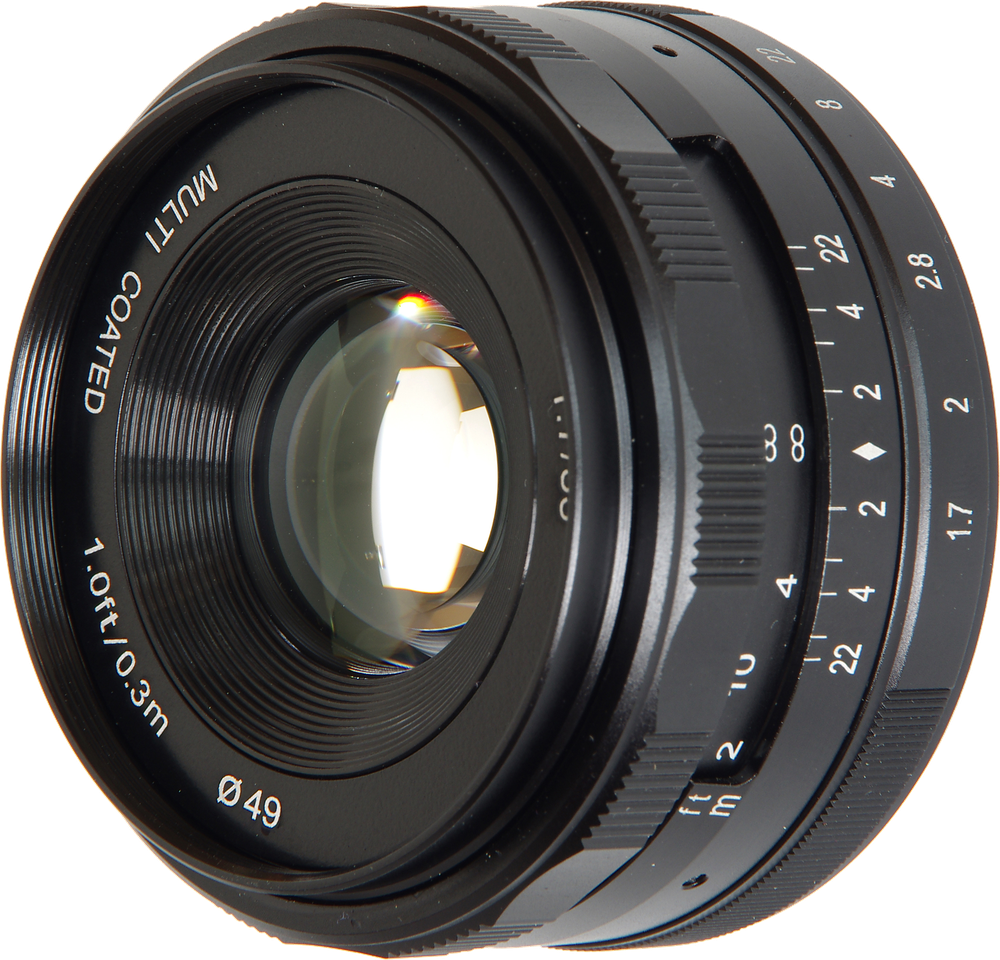
About This LensThis Meike prime is a 35mm manual-focus lens for mirrorless cameras. The MF in its name confirms the manual focus. It comes in Fujifilm X, Sony E and Micro Four Thirds versions, so pick the one made for your system. The Fujifilm X version covers APS-C, where 35mm works as a normal lens for everyday and portrait work. The Micro Four Thirds version frames more tightly, as a short telephoto. The main trade-off is focusing. You turn the ring by hand, with no autofocus motor to help, so it rewards a slower, deliberate way of working. With practice, presetting focus distance works well for quick street shots. The design dates from 2016, making it an older model. | |
| Brand | Meike |
Lens Mount ⓘThe lens mount will tell you what type of lens range you can fit onto the camera body. Often the same camera company will have different lens ranges for different cameras. | Micro Four Thirds |
System ⓘIndicates which camera system the lens is designed to attach to. | Micro Four Thirds |
Physical57/100 | |
About the BuildAt 6.2 oz (176 g) and 1.61 in (41 mm) long, this lens adds little to a mirrorless kit. The barrel measures 2.38 in (60.5 mm) across. Filters screw directly into the 49mm thread, a common size that is easy to find. Any filter type works as long as it matches that thread. | |
| Lens Weight | 176 g |
Lens Diameter ⓘWidth of the lens at its widest point | 60.5 mm |
Lens Length ⓘHow long the lens is from front to back. | 41 mm |
Front Filter Compatible ⓘSome lenses are compatible with front filters, some are compatible with back filters and some are compatible with both. Front filters are usually more convenient to add and remove. |  Yes Yes |
Front Filter Size ⓘDiameter of attachable filters. | 49 mm |
Optics74/100 | |
About the OpticsOn Fujifilm X, 35mm gives a view close to the way you naturally see a scene. That suits street photography, documentary pictures and relaxed portraits. Framing never changes, so you learn one view and move your feet to adjust it. You can stand near a subject and still include the setting. On Micro Four Thirds, the same 35mm acts as a short telephoto. It suits tighter head-and-shoulders portraits and picking a single subject out of a busy scene. You can fill the frame with a face from a polite distance. The f/1.7 aperture is the strongest optical asset. It passes plenty of light, so you can keep ISO low in dim interiors and at night. Opened wide, it also blurs the background behind a portrait, helping the subject stand out. The effect grows stronger the closer you stand to your subject. Closest focus is 1 ft (30 cm), so you can photograph food, flowers or objects on a table from a short distance. Eight aperture blades keep out-of-focus highlights round when you stop down. Its optics specification scores 74 out of 100. | |
Focal Range ⓘShortest to longest focal length of the lens (zoom range start - end ) | 35 mm |
Aperture Range ⓘLargest aperture at the lens's shortest focal length to longest focal length (aperture range start - end) | 1.7 |
Flange Focal Distance ⓘDistance from lens mount to sensor. | 19.25 mm |
Diaphragm Type ⓘStructure and design of the aperture |  Automatic Automatic |
Blades ⓘNumber of diaphragm blades in aperture | 8020 |
Zoom Lens ⓘZoom allows you to vary the focal length, change between long shots and close-ups | No |
Closest Focusing Distance ⓘMinimum distance for a subject to be in focus. | 30 cm01500 |
Maximum Magnification ⓘLargest size a subject can be reproduced | 0.11x |
| Autofocus Mode | No |
| Manual Mode |  Yes Yes |
| Manual Focusing Ring |  Yes Yes |
Features | |
About the FeaturesThis lens has no image stabilization, so nothing in the lens steadies the camera for you. At 35mm the effect is modest; handheld shutter speeds stay manageable in daylight. A camera body with its own stabilization can help in dim light, if your system offers one. Otherwise, plan on a fast enough shutter or a higher ISO. There is no weather sealing and no fluorine coating. Keep the lens sheltered in dust or drizzle, and wipe the front element by hand, since nothing repels water or oil. It suits fair-weather, careful use rather than rough conditions. | |
Weather Sealing ⓘWeather sealing capabilities will give you more confidence when shooting in unfavourable conditions. | No |
Fluorine Coating ⓘCoating to repel water and oil from lens elements. | No |
| Built In Lens Hood | No |
Teleconverter ⓘA teleconverter (extender) is an extra piece of equipment that fits between the lens and the camera body to enhance magnification | No |
| Image Stabilization | No |
Construction | |
About the ConstructionSix elements in five groups form a simple layout, with no aspherical or low-dispersion glass. You focus by hand on the focusing ring, and the single focal length removes any zoom mechanism from the body. The result is a plain, compact lens with no frills. | |
Elements ⓘLens elements refer to individual pieces of glass within the lens. | 6 |
| Groups | 5 |
Aspherical Elements ⓘThe number of aspherical lens elements which can help correct aberrations such as spherical aberration. | 0 |
Bi Aspherical Elements ⓘElements with two non-spherical surfaces | 0 |
Low Dispersion ⓘElements that reduce chromatic aberration | 0 |
Super Low Dispersion ⓘAdvanced elements further reducing chromatic aberration | 0 |
CA Reduction ⓘBuilt-in features to reduce chromatic aberration | 0 |
Internal Focusing ⓘInternal Focusing means that the lens does not change in size during focusing, and the front element does not rotate. | No |