
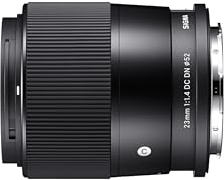
Sigma 23mm F/1.4 DC DN | C
Sigma · 23 mm · f/1.4 · Contemporary
Score Breakdown
Scores combine our editorial testing with published lab data.
General | |
|---|---|
About This LensThis Sigma prime pairs a 23mm wide view with a bright F/1.4 aperture on APS-C bodies. That combination suits street, travel and documentary photographers who work in varied light. The wide framing takes in a street corner or a small room without stepping back. It comes in Fujifilm X, Leica L and Sony E versions, so pick the mount made for your camera. The fixed focal length is the main trade-off. You frame by moving, not by zooming. The fast aperture buys back low-light freedom, but the lens has no stabilisation of its own. Released in 2024, it remains in current production. | |
| Brand | Sigma |
| Release Year | 2024 |
Production Status ⓘCurrent status of lens manufacturing (e.g., in production, discontinued). |  In Production In Production |
Pro Branding ⓘSpecific branding codes used for professional-tier lenses. | Contemporary |
Lens Mount ⓘThe lens mount will tell you what type of lens range you can fit onto the camera body. Often the same camera company will have different lens ranges for different cameras. | Sony E |
System ⓘIndicates which camera system the lens is designed to attach to. | Sony E APS-C |
Maximum Format ⓘLargest sensor size compatible with the lens. |  APS-C APS-C |
Physical86/100 | |
About the BuildAt 12.2 oz (345 g) and 3.03 in (76.9 mm) long, this prime stays a light carry for daily use. Screw-in filters attach directly at the 52mm front thread. The physical score is 86/100. | |
| Lens Weight | 345 g |
Lens Diameter ⓘWidth of the lens at its widest point | 69 mm |
Lens Length ⓘHow long the lens is from front to back. | 76.9 mm |
Front Filter Compatible ⓘSome lenses are compatible with front filters, some are compatible with back filters and some are compatible with both. Front filters are usually more convenient to add and remove. |  Yes Yes |
Front Filter Size ⓘDiameter of attachable filters. | 52 mm |
Optics87/100 | |
About the OpticsA 23mm lens on APS-C keeps a wide view with a natural perspective. Streets, markets, cafés and small interiors fit comfortably. You can step in close to make a subject larger and still keep its surroundings in the frame. For portraits, the wide view suits environmental scenes more than tight head shots. The F/1.4 maximum aperture is the reason to choose this prime. Indoors and after dark, it gathers light that slower zooms cannot, helping you keep shooting handheld. Wide open, it also blurs a busy background and lifts a subject out of a street scene. Stop down when both subject and setting should stay sharp. Closest focus sits at 0.8 ft (25 cm), so a café table or market stall can be shot from a short working distance. At 23mm, depth of field is less demanding than on longer fast primes, so focus stays manageable when you work quickly on the street. The nine-blade aperture helps keep out-of-focus highlights evenly shaped at middle apertures. The optics score is 87/100. | |
Focal Range ⓘShortest to longest focal length of the lens (zoom range start - end ) | 23 mm |
Aperture Range ⓘLargest aperture at the lens's shortest focal length to longest focal length (aperture range start - end) | 1.4 |
| Focal Length Angle of View | 63.038320386245566° |
Flange Focal Distance ⓘDistance from lens mount to sensor. | 18 mm |
Diaphragm Type ⓘStructure and design of the aperture |  Automatic Automatic |
Blades ⓘNumber of diaphragm blades in aperture | 9020 |
Zoom Lens ⓘZoom allows you to vary the focal length, change between long shots and close-ups | No |
Closest Focusing Distance ⓘMinimum distance for a subject to be in focus. | 25 cm01500 |
Maximum Magnification ⓘLargest size a subject can be reproduced | 0.14x |
| Autofocus Mode |  Yes Yes |
| Manual Mode |  Yes Yes |
| Manual Focusing Ring |  Yes Yes |
Features52/100 | |
About the FeaturesWeather sealing guards this prime against dust and moisture at the seams. That protection suits street and travel shooting that continues when the weather turns. You can keep working through drizzle and dust instead of packing the camera away. The lens has no image stabilisation, so slower shutter speeds risk blur from camera shake. In fading light, lean on the bright aperture to keep a workable shutter speed, or brace against a wall for slower shots. The front glass also carries no fluorine coating, so cleaning smears and dust takes a cloth and some care. The features score is 52/100. | |
Weather Sealing ⓘWeather sealing capabilities will give you more confidence when shooting in unfavourable conditions. |  Yes Yes |
Fluorine Coating ⓘCoating to repel water and oil from lens elements. | No |
| Built In Lens Hood | No |
| Lens Hood Type |  Petal Petal |
Teleconverter ⓘA teleconverter (extender) is an extra piece of equipment that fits between the lens and the camera body to enhance magnification |  Yes Yes |
| Image Stabilization | No |
Construction54/100 | |
About the ConstructionThe design uses 13 elements in 10 groups, including aspherical elements and low-dispersion glass. Aspherical surfaces help correct distortion and spherical aberration, useful when straight building edges run near the frame edge. Low-dispersion glass helps reduce chromatic aberration, the coloured fringes that can appear along high-contrast edges. Focusing moves internal elements only, so the barrel keeps a constant length while you focus. Construction scores 54/100. | |
Elements ⓘLens elements refer to individual pieces of glass within the lens. | 13 |
| Groups | 10 |
Aspherical Elements ⓘThe number of aspherical lens elements which can help correct aberrations such as spherical aberration. | 1 |
Bi Aspherical Elements ⓘElements with two non-spherical surfaces | 0 |
Low Dispersion ⓘElements that reduce chromatic aberration | 1 |
Super Low Dispersion ⓘAdvanced elements further reducing chromatic aberration | 0 |
CA Reduction ⓘBuilt-in features to reduce chromatic aberration | 0 |
Internal Focusing ⓘInternal Focusing means that the lens does not change in size during focusing, and the front element does not rotate. |  Yes Yes |